
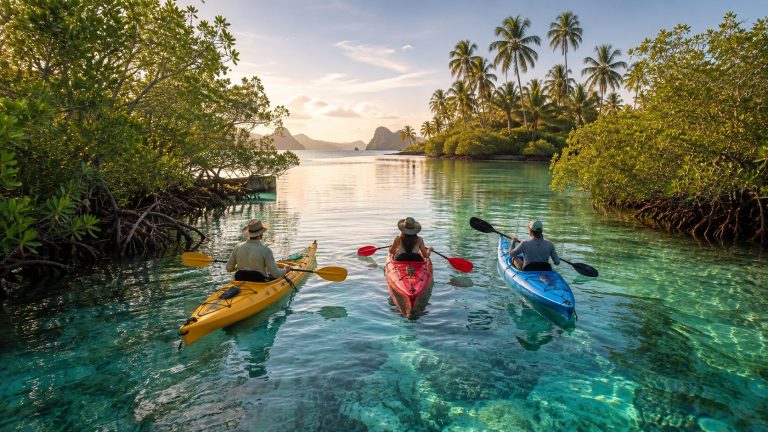
Florida can give a beginner a calm, clear spring run in the morning and a tide-dependent mangrove maze by afternoon. Across the state, paddlers move through spring-fed rivers, shaded forests, coastal lagoons, salt marshes, barrier-island backcountry, and remote wilderness. The best place to kayak in Florida depends less on a universal ranking than on skill level, wildlife goals, route length, tolerance for tides or boat traffic, season, and launch access.
This guide compares ten destinations by the experience they deliver. Each entry covers route character, difficulty, wildlife, seasonal timing, launch considerations, and the preparation that makes the day work. Florida's statewide network supports everything from short recreational outings to serious expeditions. The Florida Circumnavigational Saltwater Paddling Trail alone runs 1,515 miles, from Big Lagoon State Park near Pensacola to Fort Clinch State Park near Fernandina Beach, while Florida has more than 4,100 miles across over 60 state-designated paddling trails (Florida kayaking trail overview).
PADL can help turn destination research into a practical outing through kayak rentals, guided experiences, lessons, and other outdoor activities across Florida. Before transporting personal equipment, paddlers should also review this guide on how to secure a kayak on a roof, especially for longer drives to remote launches.
1. Ten Thousand Islands, Southwest Florida
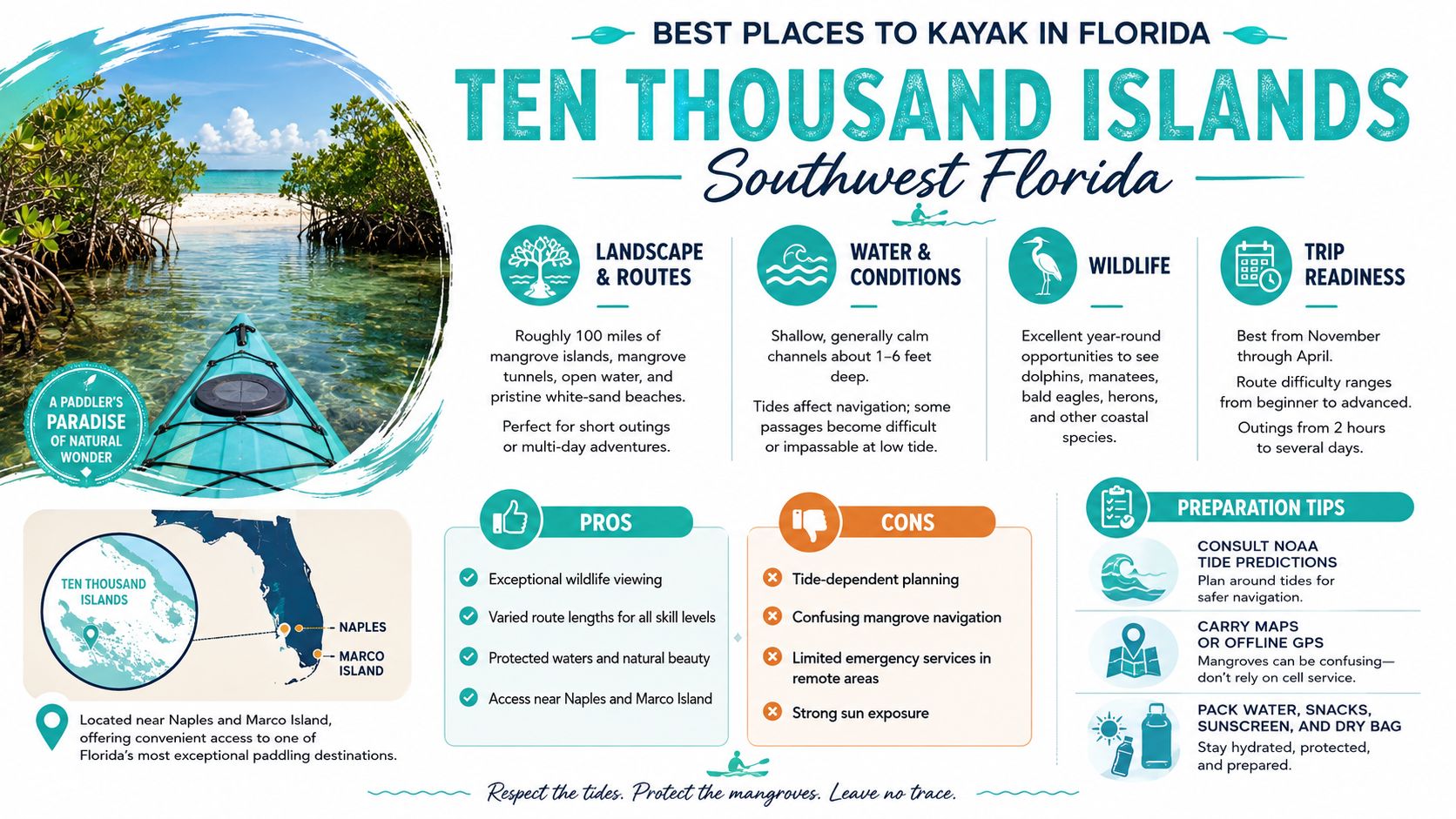
Ten Thousand Islands suits paddlers who want shallow-water exploration, mangrove navigation, and genuine backcountry immersion. The network stretches roughly 100 miles along Florida's Gulf Coast near Naples and Marco Island, with routes ranging from sheltered mangrove creeks to exposed crossings between islands. The area is recognized by UNESCO and includes protected marine habitats, secluded beaches, and waterways that can feel far removed from nearby towns.
Beginners can enjoy a short outing from an established launch near Everglades City or Chokoloskee Island, but the route becomes more demanding as soon as wind, tide, or distance increases. Experienced paddlers can plan multi-day trips, provided they carry navigation equipment, extra water, food, and emergency supplies. Cell service can be unreliable in remote areas, so a detailed chart or GPS device matters more than a phone alone.
Plan around moving water
Tidal timing determines whether a narrow creek feels manageable or becomes a tiring return route. Paddlers should check NOAA tide predictions for the exact launch area, start early to reduce exposure to afternoon storms, and use a guided tour for a first visit if coastal navigation is unfamiliar.
- Pack for self-sufficiency: Carry extra water, snacks, sunscreen, a rash guard, and a dry bag for essentials.
- Protect the route: Stay within established channels and avoid disturbing nesting or resting wildlife.
- Choose the right scope: Short routes work for beginners, while overnight loops require navigation skills and more thorough safety planning.
The trade-off is clear. This is one of Florida's most rewarding wilderness environments, but it isn't the place for an unplanned first paddle in changing weather.
2. Crystal River and Kings Bay, Nature Coast
Crystal River and Kings Bay suit paddlers who want clear spring water, coastal marsh, and seasonal manatee viewing without committing to a remote expedition. The spring-fed water stays about 72°F year-round, creating a stable environment for manatees and a comfortable setting for families and first-time visitors. Use paddling guidance for Florida routes to review general access and planning considerations before launching.
Manatee viewing is most dependable during the cooler winter period, particularly January and February. November, December, and March can feel quieter, though wildlife sightings are never guaranteed. Early morning usually brings calmer water and less congestion near popular launch areas, making it the strongest choice for a relaxed outing.
Keep wildlife encounters passive
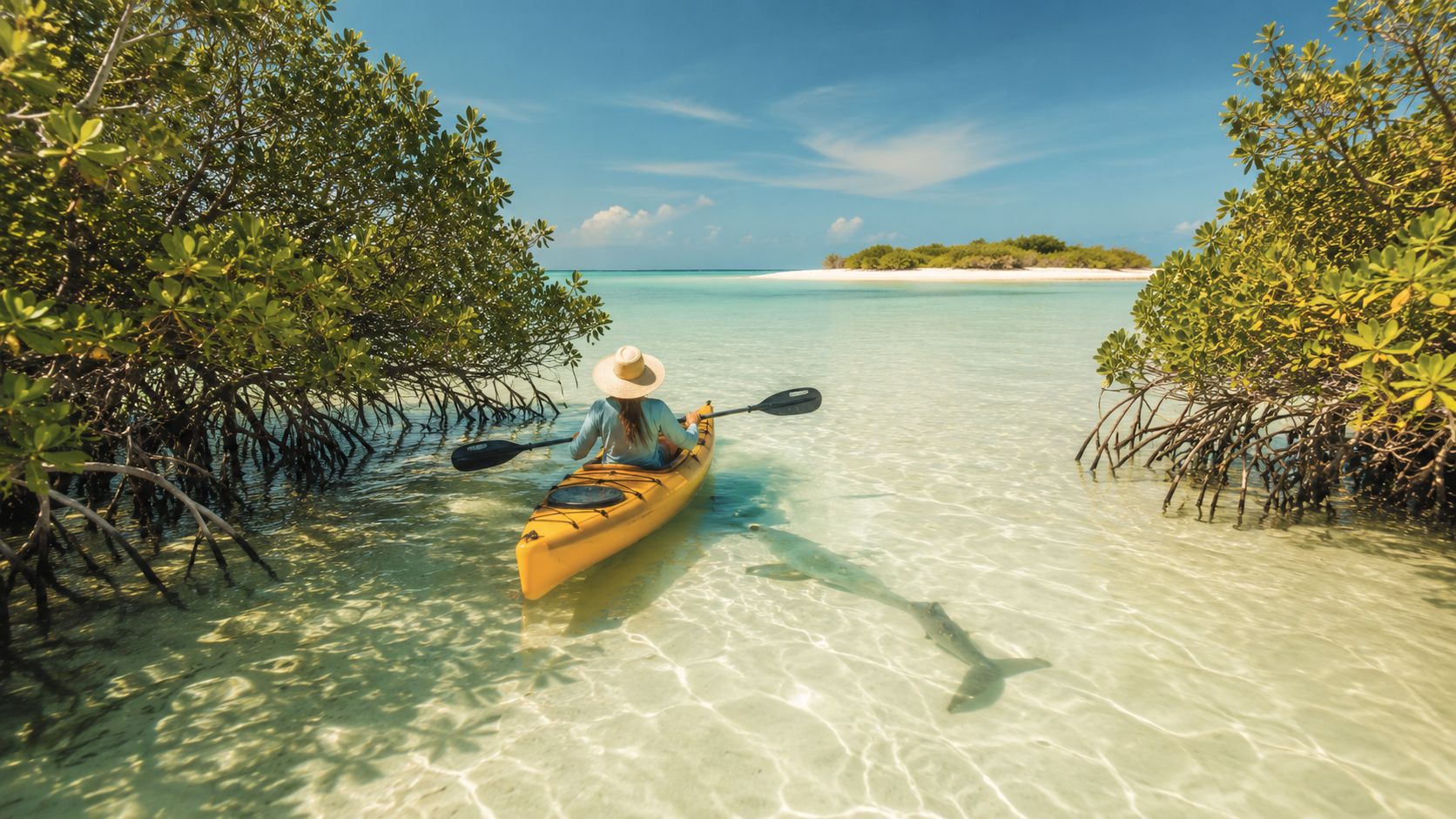
Licensed operators can explain current manatee interaction rules and help visitors avoid conduct that stresses the animals. Kayaks provide a quiet viewing platform, but paddlers still need to maintain distance, wait patiently, and avoid chasing, touching, blocking, or feeding manatees.
The clear water also supports a transparent-hull setup. Families who want to see springs, fish, and vegetation beneath the boat can compare see-through kayak options. A waterproof camera records those features without requiring paddlers to leave the kayak or approach wildlife.
The trade-off is popularity. Crystal River is easier to organize than a remote mangrove route, yet winter's strongest viewing period can become busy. Arrive early, choose a weekday when possible, and keep the outing focused on quiet observation. That approach preserves the wildlife-centered experience that makes Kings Bay distinctive.
3. Weeki Wachee River, Nature Coast
Clear spring water and a gentle downstream current make Weeki Wachee a practical choice for a first Florida kayak trip. The river offers a 7.4-mile paddling trip, enough distance for a substantial outing without the route demands of a technical wilderness expedition. Beginners can focus on steering, spacing, and wildlife observation while the current carries much of the workload. Weeki Wachee paddling details
Shallow sections reveal fish, turtles, and aquatic plants beneath the boat. Families can also combine the paddle with the historic spring attraction, although that broader itinerary means planning time for both activities rather than treating the river as a quick stop.
Route planning: The spring run suits beginners and families comfortable with moving water. A rental near the launch area can simplify parking, boat transport, and shuttle arrangements. Confirm the day's operating details before leaving, and pack water, food, sun protection, and a properly fitted personal flotation device.
Pick the right window
Start before 10 a.m. for calmer conditions and less motorized traffic. Weekday mornings generally provide more space near rental areas and popular river stretches. Weekends bring heavier use, so paddlers seeking a quieter trip should allow extra time around launch points and avoid rushing through narrow sections.
The riverbed deserves careful handling. Keep paddles and hulls away from aquatic vegetation, avoid landing in nesting areas, and maintain a steady distance from wildlife. A small picnic can make the route more comfortable, but leave enough daylight for the return, shuttle, and changing weather.
Weeki Wachee works best as an easy scenic paddle with dependable logistics. It is a weaker match for solitude, tidal route practice, or a multi-day expedition. Basic steering control and group awareness still matter, even on a current-assisted river.
4. Ichetucknee Springs and Santa Fe River, North Central Florida
Ichetucknee Springs offers a clear, forested spring-run experience with consistent conditions and a strong sense of natural protection. The state park's scenic spring run extends 6 miles, connecting the springs to the Santa Fe River system through limestone formations, wooded banks, and exceptionally clear water (Florida spring and river activity information).
The route is approachable for recreational paddlers, particularly on weekday mornings when the waterway feels less congested. During peak periods, visitors should arrive by 8 a.m. to improve the chance of entering before capacity fills. On-site kayak rental can simplify parking and equipment logistics, but facilities within the park are limited, so snacks, water, and basic personal supplies should be packed before launching.
Choose the spring run or the river
The spring section suits beginners who want a controlled scenic paddle. Extending toward the Santa Fe River creates a longer and potentially more advanced outing, with more distance, navigation demands, and exposure to changing conditions. That distinction matters for families who may be comfortable on calm spring water but not ready for a full river itinerary.
Paddlers should share the waterway courteously with tubers, avoid blocking narrow passages, and keep cameras secure before reaching limestone features or spring openings. Clear water is a major part of the appeal, so visitors looking for equipment that enhances underwater visibility can explore clear-water kayaking options.
Ichetucknee works best when access is treated as part of the trip, not an afterthought. A beautiful route can still produce a poor day if the group arrives late, lacks water, or assumes the park has unlimited entry.
5. Tomoka River and Daytona Beach Area, Central Florida
The Tomoka River is a practical choice for paddlers who want coastal ecosystems without leaving urban conveniences far behind. The river winds through 15 miles of coastal hammocks and salt marshes, linking calm tidal creeks with areas suited to broader open-water exploration. Near Daytona Beach, the route combines hardwood forest, maritime hammock, estuary habitat, and access to Tomoka State Park.
This destination favors paddlers who enjoy wildlife observation more than speed. Binoculars help visitors watch birds and other animals without closing the distance, and the varied shoreline gives a short outing a stronger sense of place than a simple straight-line route.
Use the tide as a planning tool
An incoming tide can make creek travel easier, but it can also complicate the return if the group doesn't monitor timing. Paddlers should study the route before launch, carry a map showing creek junctions and navigation points, and check weather shortly before departure because coastal wind and storms can change conditions quickly.
Early mornings are usually the most reliable operational window. Weekday visits tend to offer less congestion than weekends and major tourist periods, while a full-day plan can combine paddling with state park trails and facilities.
The Tomoka River's trade-off is exposure to tidal variability. It's more accessible than a remote wilderness route, but it requires better awareness of current, wind, and route orientation than a simple spring run. This is a good middle ground for someone moving from inland rivers toward coastal kayaking.
6. Juniper Run and Juniper Springs, North Central Florida
Juniper Run offers a remote, forested spring paddle inside Ocala National Forest. The spring-fed route covers 6.5 miles through dense forest, limestone features, and clear water before reaching Lake George. Its quieter, wilder character suits paddlers who can handle moving water and limited services.
Plan as if the launch is your last convenient supply point. Bring a high-capacity water reservoir, food, sun protection, insect protection, emergency supplies, and a dry bag. Replacement gear and refreshments may not be available after arrival.
A wilderness route with a fixed scope
Parking can fill during peak periods, so arriving around 7 to 8 a.m. improves the chance of securing a workable launch window. Midweek usually offers more solitude. Nearby commercial operators in the Ocala area may assist visitors who need a kayak, but confirm availability before traveling.
Use the route to test your preparation:
- Pack for the full distance: Carry enough drinking water, snacks, sunscreen, and emergency essentials for the complete paddle.
- Choose a suitable kayak: A recreational boat with dependable tracking is more practical than an ill-fitting craft selected only for convenience.
- Leave energy for the return: Ocala National Forest trails can extend the day, so reserve time and strength for the water route.
Juniper Run rewards quiet observation and steady pacing. Clear water and forest cover create a stronger wilderness feel than developed spring runs, while the route remains a single-day outing rather than a multiday coastal expedition. The trade-off is limited comfort and support, so it works best for prepared paddlers, not visitors seeking cafés, frequent facilities, or an effortless float.
7. Indian River and Banana River Lagoon, Space Coast
A quiet morning on the Indian River and Banana River lagoons can bring mangrove edges, open-water views, dolphins, and manatees within reach of Melbourne and Cocoa Beach. The Banana River usually feels calmer and shallower, while the Indian River offers broader crossings and greater exposure to wind and boat traffic. Together, they provide a wildlife-focused coastal outing with more route choice than a narrow spring run.
Choose the launch by the day you want. Mangrove-lined access points are better for sheltered observation, while open shoreline launches make longer crossings possible but demand stronger weather judgment. Water quality can change, so check current advisories before unloading. Red tide or another warning is a reason to postpone.
Build the route around conditions
The lagoon rewards a flexible plan rather than a fixed mileage target. Mark islands, channels, and a clear return point before launching. A chart or navigation app helps because familiar-looking shorelines can become confusing once several channels split.
Keep these decisions in view:
- For wildlife: Paddle slowly along mangrove margins, keep clear of animals, and use binoculars instead of closing the distance. Stay at least 50 feet from dolphins, as trip guidance requires.
- For comfort: Start early, when boat traffic and heat are often lower. Wind can make an apparently calm lagoon unpleasant, particularly across open water.
- For access: Confirm parking, launch conditions, and landing space before committing to a route. Less-developed access may offer more quiet but fewer nearby facilities.
- For a full day: Combine a shorter paddle with beach time or another Space Coast activity rather than forcing an extended crossing.
This destination fits paddlers with basic coastal navigation skills who want wildlife and flexible route length. It is easier to reach than remote backcountry, yet less predictable than a protected spring run. Respectful distance, a forecast-based route, and a planned exit point make the lagoon a practical choice for an introductory coastal paddle.
8. Florida Keys Backcountry and Mangrove Routes
The Florida Keys offer Florida's most distinctive tropical backcountry paddling. Behind barrier reefs, shallow flats, mangrove forests, and small islands create routes where the scenery changes constantly with tide and light. The setting stretches from Key Largo through Key West, giving paddlers options for short guided outings as well as longer island-focused itineraries.
The Keys are attractive to visitors who want warm water, tropical vegetation, and marine life, but the scenery can disguise real navigational demands. A route that looks protected may still involve current, shallow obstacles, exposed crossings, and limited shade. Tidal chart reading isn't an optional skill for longer independent trips.
Treat the Keys as a logistics project
Booking accommodations and rentals well ahead of the busiest winter travel period is sensible, particularly from December through April. A first visit is often easier with a guide who can explain channels, local hazards, launch procedures, and responsible wildlife behavior.
Paddlers planning a longer stay can reduce daily driving by choosing a base and scheduling multiple routes nearby. Those comparing options before committing can use this Florida Keys kayaking guide to connect the destination with suitable rental and experience planning.
Reef-safe sunscreen is a practical environmental choice, and high-SPF protection plus a rash guard helps limit sun exposure during long hours on bright shallow water. The main trade-off is that the Keys deliver unusual scenery but demand more attention to tides, heat, equipment, and marine habitat than a sheltered spring.
9. Blackwater River and Okaloosa Area, Northwest Florida
Blackwater River offers a completely different answer to the question of the best places to kayak in Florida. Instead of clear springs or tropical mangroves, paddlers encounter dark tannin-stained water, pale sandbars, and relatively undeveloped forest in the Panhandle. The river's character suits travelers who want quiet moving water, low development, and the possibility of building a river-camping itinerary.
The route works for a strong day paddle, but a multi-day trip can justify the drive and reveal more of the river's changing scenery. Sandy beaches may provide distinctive camping locations where permitted, although visitors must confirm current rules and carry every required supply because facilities near the waterway are limited.
Favor low-impact travel
A scenic waterway rewards restraint. Paddlers should minimize shoreline disturbance, pack out waste, avoid damaging vegetation, and keep camp activity contained. Early morning brings better light and often a quieter launch, while nearby state parks and natural areas can extend the trip beyond the river.
The river is also a useful place to build technique before tackling more complex coastal routes. Beginners can review kayaking techniques for beginners before departure, then practice efficient strokes, boat control, and group spacing in a setting where navigation is more straightforward than in a mangrove maze.
Blackwater isn't the right pick for someone whose priority is bright blue water or guaranteed facilities. It is a stronger fit for paddlers who prefer river rhythm, forest, sandbars, and a quieter North Florida atmosphere.
10. Everglades Backcountry and Ten Thousand Islands Loop, South Florida
Choose the Everglades for a planned wilderness expedition, not a casual rental hour. Freshwater, brackish, and coastal mangrove routes create different challenges, with water level, tide, weather, and wildlife shaping each day. From the Gulf Coast Visitor Center near Everglades City, paddlers can connect established routes with larger backcountry itineraries across the Ten Thousand Islands.
A ranger-led program or guided tour gives beginners a safer introduction. Independent paddlers need detailed nautical charts, prior navigation practice, and a clear plan for changing tides and water levels. The area rewards careful route selection, but remote sections offer limited help when conditions deteriorate.
Prepare for remoteness
The dry season, from November through April, is generally the more practical period for access and planning. Multiday trips require permits and camping reservations well in advance. Pack communication equipment, navigation tools, protective clothing, insect repellent, water, and emergency supplies, and confirm access conditions before launching.
Wilderness rule: Treat every return journey as part of the route. A paddler who has enough supplies to reach a destination but not enough to get back hasn't packed for the trip.
Wildlife deserves particular care. Keep at least 30 feet of space from alligators and crocodiles. Never feed, approach, block, or provoke them, and avoid cutting close to resting animals along narrow mangrove channels.
Tide-dependent routes can change character quickly, so review mangrove kayaking tours when a professional guide would make route planning safer. Short protected-water outings suit prepared beginners with supervision, while longer loops demand stronger navigation, extra supplies, and comfort with isolation. Expect heat, insects, exposed stretches, and limited landing options. The reward is a rare combination of mangrove maze, open water, remote beaches, and wildlife-rich wilderness.
Top 10 Florida Kayak Destinations Comparison
| Destination | Planning & Navigation | Resources & Logistics | Expected Outcomes | Ideal Use Cases | Key Advantages |
|---|---|---|---|---|---|
| Ten Thousand Islands (SW Florida) | Moderate–High, tidal timing, mangrove maze; GPS recommended | Rentals/guides available; tide charts, dry bags; limited emergency access | Rich wildlife (dolphins, manatees), beaches; varied short to multi‑day routes | Day trips to multi‑day expeditions; mixed-skill groups | Diverse routes; protected waters; excellent wildlife; less crowded |
| Crystal River & Kings Bay (Nature Coast) | Low–Moderate, regulated zones; heavy winter traffic | Licensed guides recommended; permits for manatee areas; strong local infrastructure | Close manatee encounters, crystal‑clear springs; excellent photography | Manatee viewing tours; beginner‑friendly spring paddles | Largest manatee population; exceptional water clarity; ample services |
| Weeki Wachee River (Nature Coast) | Low, gentle current, straightforward navigation | On‑site rentals and facilities; limited parking at peak times | Turquoise spring water, calm family‑friendly paddling | Families, beginners, short leisurely paddles | Very accessible; minimal effort paddling; affordable |
| Ichetucknee Springs & Santa Fe River (N. Central) | Low–Moderate, day‑use capacity limits; arrive early | Park facilities and on‑site rentals; reservations sometimes needed | Outstanding clarity, shaded spring run; peaceful scenery | Beginner to intermediate day paddles; nature photography | Protected park setting; exceptional water clarity; well‑maintained |
| Tomoka River & Daytona Beach Area (Central) | Moderate, tidal influence and variable wind | Multiple launch points; tide charts and maps advised; park amenities nearby | Mix of hardwood hammocks, estuary wildlife, occasional open‑water sections | Day trips from Daytona; varied routes for mixed skills | Close to urban services; diverse habitats; flexible route choices |
| Juniper Run & Juniper Springs (N. Central) | Moderate, remote access, limited signage | Bring own kayak or rent off‑site; limited facilities and parking | Pristine, undeveloped springs; solitude and clear water | Wilderness seekers, photography, quiet day paddles | True wilderness feel; low crowds; excellent clarity |
| Indian River & Banana River Lagoon (Space Coast) | Low–Moderate, lagoon maze, boat traffic at times | Many public ramps and rentals; monitor water quality (red tide) | Abundant dolphins, manatees, mangrove shorelines; calm paddling | Family outings, beginner exploration, coastal wildlife tours | High biodiversity; good facilities; easy access from Space Coast |
| Florida Keys Backcountry & Mangroves | High, tidal currents, navigation complexity; route planning crucial | Guided trips advised for first visits; multi‑day planning; permits sometimes needed | Tropical mangroves, flats, snorkeling/fishing, island hopping | Multi‑day expeditions; experienced paddlers; snorkel/fish combos | Unique tropical environment; year‑round warm water; excellent snorkeling |
| Blackwater River & Okaloosa Area (NW Florida) | Low–Moderate, clear corridors, straightforward downstream navigation | Limited rentals/infrastructure; good for multi‑day camping; bring supplies | Tannin‑stained waters, white sandbars, forest canopy; camping options | Multi‑day trips, sandbar camping, quieter paddling escapes | Protected scenic waterway; sandbar camping; low crowds |
| Everglades Backcountry & Ten Thousand Islands Loop (S. Florida) | High, complex mangrove navigation, strong tidal effects; permits often required | Permits, nautical charts, safety/comm gear; guided trips recommended | Immersive wilderness, diverse wildlife (including crocodiles), multi‑ecosystem routes | Experienced paddlers seeking multi‑day wilderness expeditions | UNESCO site; unparalleled wilderness immersion; extensive multi‑day routes |
Match the Route to Your Day on the Water
The best places to kayak in Florida become easier to choose once the desired experience is clear. For clear water and easier conditions, a spring run is the logical starting point. Weeki Wachee is especially approachable because its current reduces effort, while Ichetucknee offers a protected forest setting and Juniper Run adds a stronger wilderness feel. The choice among them comes down to access, crowd tolerance, and how much remoteness the group wants.
Crystal River and Kings Bay are better for visitors whose priority is seasonal wildlife viewing. The spring-fed environment supports manatee habitat, and early starts make the experience quieter. A guided outing is useful for visitors who want to understand wildlife rules rather than rent a boat and search independently.
For accessible coastal wildlife, the Indian River and Banana River lagoons provide a practical balance of established launches, mangrove shoreline, and urban proximity. Tomoka River offers a similar coastal transition near Daytona Beach, with tidal creeks, salt marsh, and state park access. Both require more attention to wind, tides, and boat traffic than inland spring runs.
The Florida Keys and Ten Thousand Islands suit paddlers who specifically want tide-dependent mangrove exploration. The Keys deliver tropical scenery and shallow flats, while Ten Thousand Islands offers a broader backcountry network with routes that can grow from a short outing into a multiday expedition. Neither should be treated like a simple flatwater rental if the route includes exposed crossings or remote channels.
Blackwater River is the quieter river-and-sandbar choice. It trades tropical color for tannin-stained water, forest, and a less developed atmosphere. Paddlers who enjoy camping and low-impact travel may find it more satisfying than a heavily visited spring or lagoon.
The Everglades belongs at the expedition end of the spectrum. Its rewards include isolation, mangrove networks, and an unmatched sense of wilderness, but it demands navigation practice, tide awareness, permits where required, communication equipment, and a realistic plan for weather and wildlife.
Before launching anywhere, confirm:
- Weather and wind: Coastal forecasts can change the risk level quickly.
- Tides and current: These matter most in mangroves, lagoons, estuaries, and open coastal routes.
- Water conditions: Florida's 2026 assessment report uses an aquatic-life and recreation benchmark of E. coli ≤ 410 colonies per 100 mL (Florida Department of Environmental Protection assessment report). Paddlers should check current advisories and avoid questionable water after heavy runoff or contamination notices.
- Access requirements: Verify opening status, capacity rules, launch restrictions, rental availability, and closures before driving.
- Route fit: A short spring paddle and a remote mangrove loop require very different skills and supplies.
- Wildlife conduct: Observe from a distance, never feed animals, and avoid blocking their movement.
- Equipment and support: Choose a properly fitted kayak, personal flotation device, navigation tools, sun protection, water, and a dry storage system.
Access details can change. For example, Florida State Parks lists the Sea Hunt Deck at Silver Springs State Park as closed effective October 23, 2025, while Curry Hammock's paddling route is described as a 1.5-mile, approximately one-hour loop (Silver Springs State Park information). Those details show why a destination list can't replace checking the specific launch, route, and operating conditions before departure.
PADL can help visitors compare local rentals, guided trips, lessons, memberships, camps, and group experiences across Florida. A reliable rental or guide option reduces equipment and logistics friction, especially for visitors traveling to a new spring, lagoon, mangrove system, or state park.
Use PADL to find kayak rentals, guided experiences, and lessons near Florida's springs, lagoons, mangroves, and coastal waterways. Choose the destination that matches the group's skill level and conditions, then plan the launch, equipment, tides, weather, and wildlife practices before heading out.