
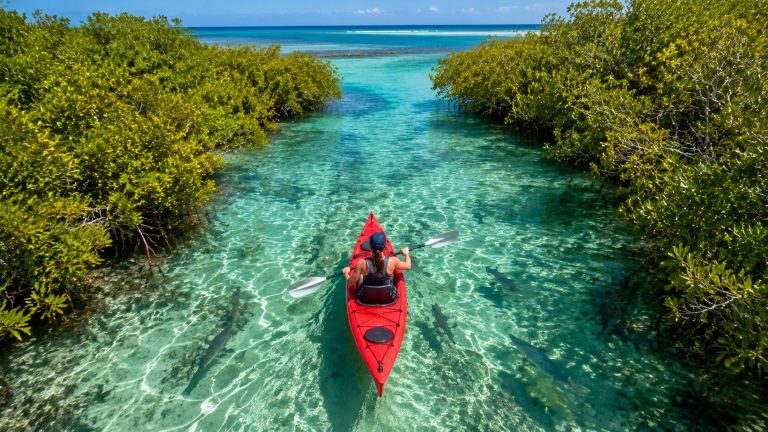
You can feel the day starting before the kayak even touches the water. The light turns the flats silver, the mangroves look close enough to touch, and the first stretch of a Florida Keys paddle seems like the kind of easy, beautiful escape people remember for years.
That part is real. So is the part that catches visitors off guard. Florida Key kayaking works best when the launch, the tide, the wind, and the route all match the paddler's skill level. In a place shaped by a 125-mile coral-cay chain and famously shallow nearshore water, the wrong timing can turn a dream paddle into a drag over mud or a slow fight back to shore.
The good news is that the Keys reward people who plan smart. The region sits inside a mature outdoor travel market, not a sleepy local backwater, and paddling fits into a broader tourism economy where water access, rentals, and guided outings matter. That is why a practical guide matters here, one that treats scenery and safety as equal parts of the experience. For a quick starting point on calm-water gear and trip basics, PADL's clear water kayaking guide fits neatly into the planning process.
Your Dream Florida Keys Paddle Starts with a Plan
A good Keys paddle often starts with a quiet launch, calm water, and a shoreline that makes even a short trip feel worth the drive. Mangrove tunnels, shallow flats, and protected backcountry stretches create the postcard version of the experience, but those same features also demand attention to timing, access, and the route you choose. Locals do not treat kayaking here as one simple outing. They treat it as a set of practical decisions.
The biggest mistake visitors make is assuming the Keys behave like a generic flatwater destination. They do not. Water depth changes fast, wind can build through the day, and some routes that look peaceful on a map turn into poor choices once tide or exposure enters the picture. A launch that feels easy at one tide can become awkward later, especially if you are carrying gear or trying to keep a steady pace.
A better first step is to match the water to your comfort level, then build the rest of the plan around that. If you want a clearer starting point for calm-water planning, PADL's clear water kayaking guide fits neatly into the process. The point is simple, choose the route first, then check whether the conditions support it.
Practical rule: If the route depends on shallow water, mangroves, or a narrow launch window, plan the paddle around conditions first and scenery second.
That mindset separates a relaxing outing from a frustrating one. It also explains why the best Florida Keys trips are rarely the longest ones. A short paddle through the right water usually beats a longer route chosen for scenery alone, especially when wind and tide are working against you.
Choosing Your Florida Keys Kayaking Adventure
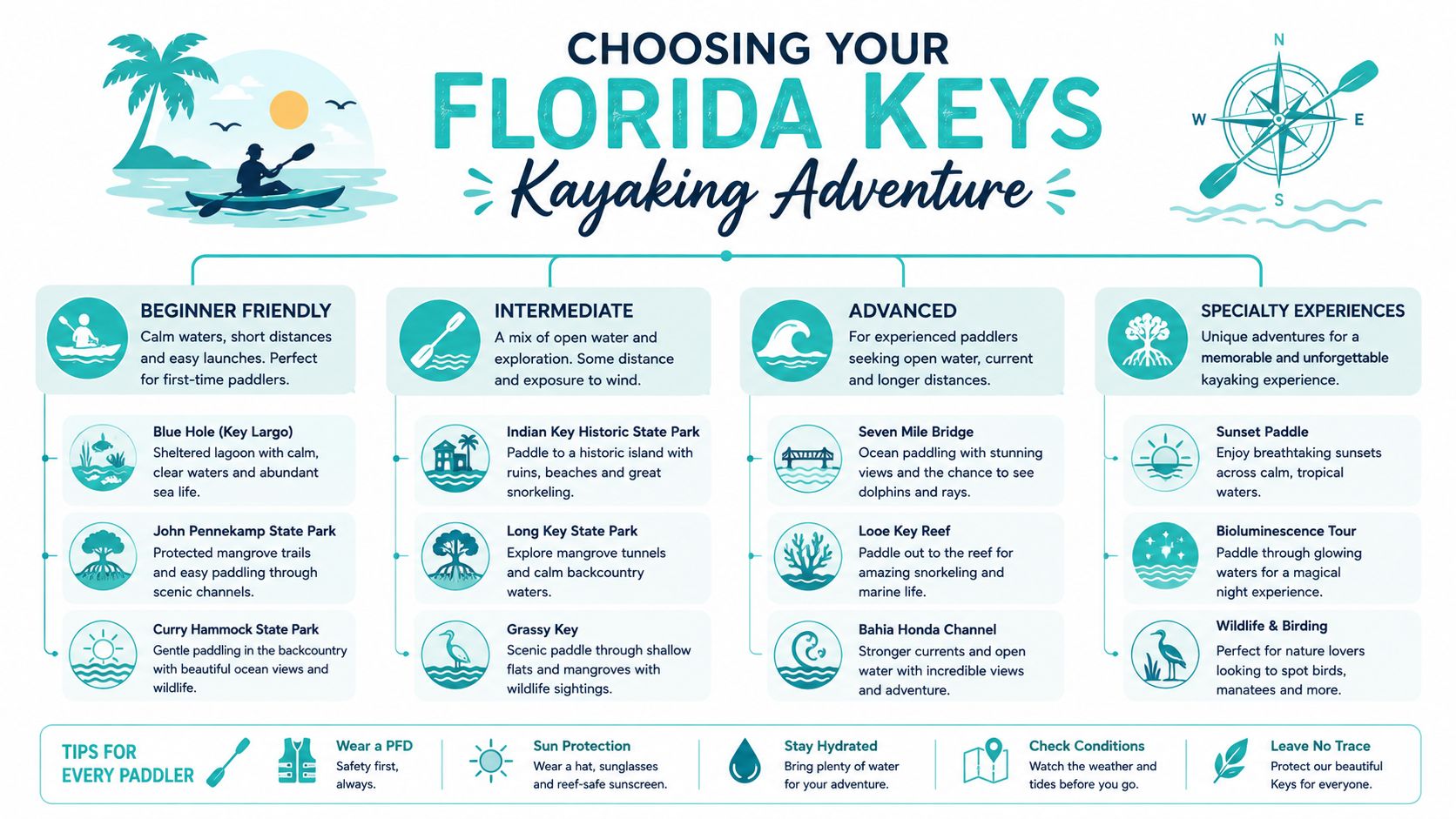
The right Florida Keys paddle depends on how much water you want between you and shore, how steady the wind is likely to be, and how comfortable everyone in your group feels handling changing conditions. A mangrove route is the safest place to start because it gives you shelter from wind and boat traffic, especially when the launch puts you close to protected water. Wider flats add open views and better birdwatching, but they ask for more attention because the route can feel easy right up until tide or wind changes the plan. Open-water and reef-adjacent trips suit paddlers who are comfortable with distance, self-rescue, and conditions that can shift while they are still on the water.
How to match route type to ability
A beginner-friendly day in the Keys usually means protected water, shorter mileage, and a launch that does not force an exposed crossing right away. That simple idea matters because route difficulty comes from more than scenery. It comes from wind, route length, and launch location too (Keys Voices on kayak difficulty).
For newer paddlers, choose routes that keep mangroves or shoreline nearby and avoid long stretches where you are committed to open water. Intermediate paddlers can handle wider flats and longer loops if they are comfortable reading conditions and changing plans on the fly. Advanced paddlers are the ones who can manage open exposure, self-rescue, and longer days that ask for more endurance than a casual outing.
That practical split is why I steer first-timers toward sheltered water and away from routes that look short on a map but feel exposed in real life. A calm launch matters just as much as the distance. A route that gives you room to relax usually delivers a better day than one chosen only because it looks ambitious.
What each setting really feels like
Mangrove routes usually feel close and protected, with turns, shade, and more obvious wildlife viewing. If you want that kind of outing, PADL's mangrove kayaking tours fit naturally into the plan. Flats feel wider and more exposed, which is great when the water is calm and the tide is right. Open-water paddles deliver the big-sky Keys feeling, but they are less forgiving and far less suitable for a casual first day.
The smartest choice is straightforward. Match the route to the least experienced person in the group, then pick a launch that keeps the day manageable instead of turning it into a test.
A good Keys trip is one where the group still has energy when the kayak comes ashore.
Navigating Florida Keys Tides and Weather
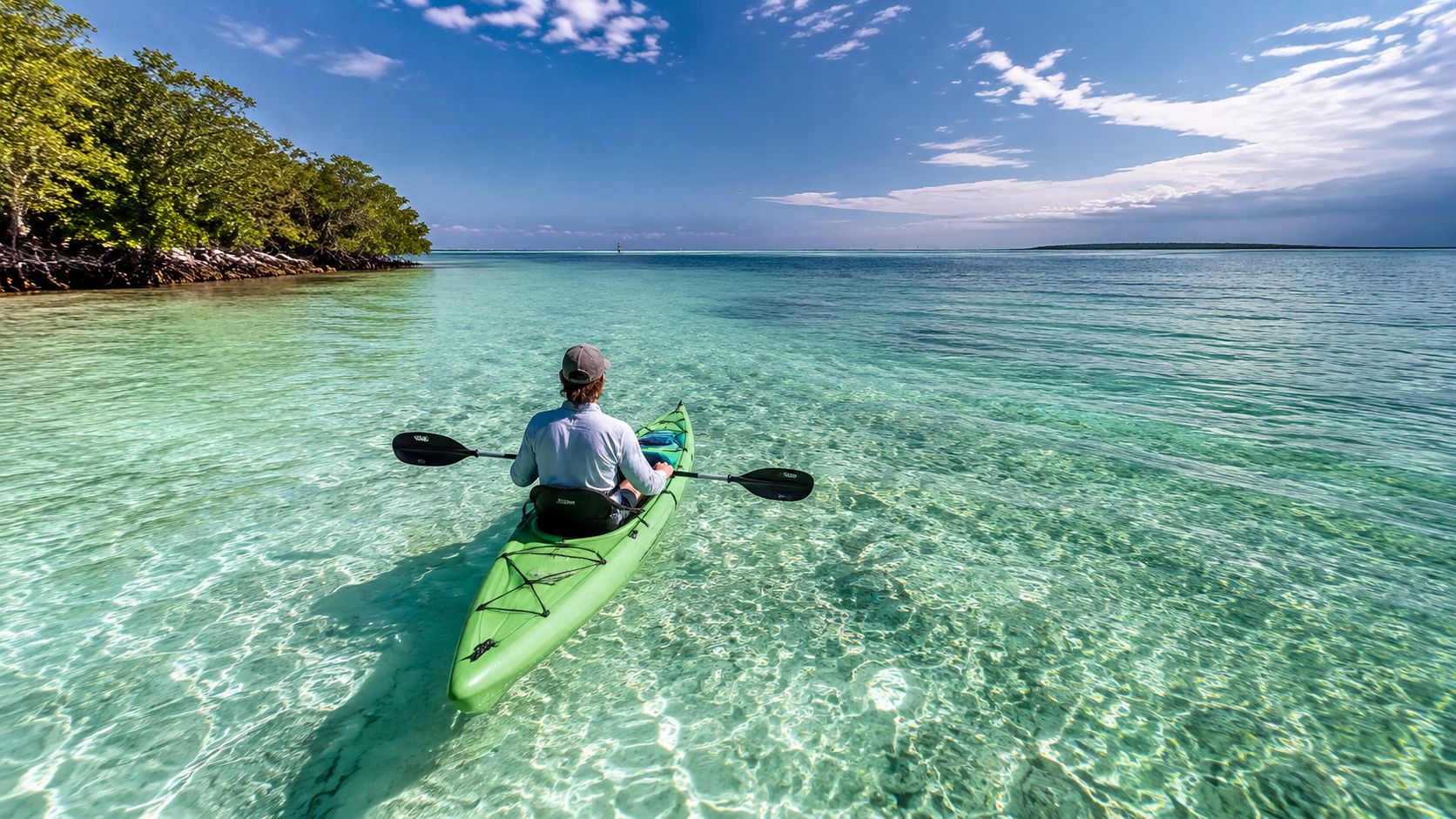
A launch that looks easy on the dock can turn awkward fast once the tide starts moving. In the Keys, shallow water changes the whole feel of a route, so a flat that seems simple at high water may become slow, muddy, or impossible to cross later in the day. Check the tide before you commit, because a route that looks short on a map can demand much more effort once the water drops.
Check the water level before you commit
The right launch depends on tide timing, not just the route name. If you plan to cross shallow flats, build the paddle around a tide window that leaves enough water for both the outbound and return legs. That matters most in spots where the obvious shortcut disappears as the tide falls.
Morning launches usually give paddlers the best margin. Winds often build later, and open stretches get less forgiving once the chop stacks against current or outgoing water. A sheltered route in the early hours can feel relaxed, while the same water can feel busy and tiring by afternoon. For visitors comparing launch areas and trip types, PADL's Miami kayak tours page is a useful place to start thinking about what kind of outing fits the conditions.
Read wind as seriously as rain
Wind changes the day more than rain does. In the Keys, an onshore breeze or a steady crosswind can push a paddler off course, slow the return, and make a simple outing feel much longer. Choose routes with a lee when you can, even if that means giving up a little scenery or adding a longer drive to the launch.
A beginner-friendly day is usually the one with the shortest practical route, the earliest start, and the fewest exposed stretches. If the water already feels choppy at launch, that is a signal to shorten the plan, not to push through. For paddlers who want a quick refresher on stroke basics and boat control, the expert guide on lens polarization is not the right fit, so use kayaking techniques for beginners instead.
Match the route to the day
The same route can feel friendly one day and demanding the next. A protected mangrove run, a shallow flat, and an open-water crossing all ask for different levels of skill, and the weather decides which one is realistic. That is why I tell guests to choose the launch that fits the least experienced paddler in the group, then adjust the plan to the tide and wind instead of forcing the day to match the original idea.
If conditions are soft, there is room to linger and explore. If the tide is falling and the wind is rising, the smart move is to keep the outing short and stay close to cover. That is how you get a good day on the water without turning the return trip into a grind.
Wildlife and Habitats You Will Encounter
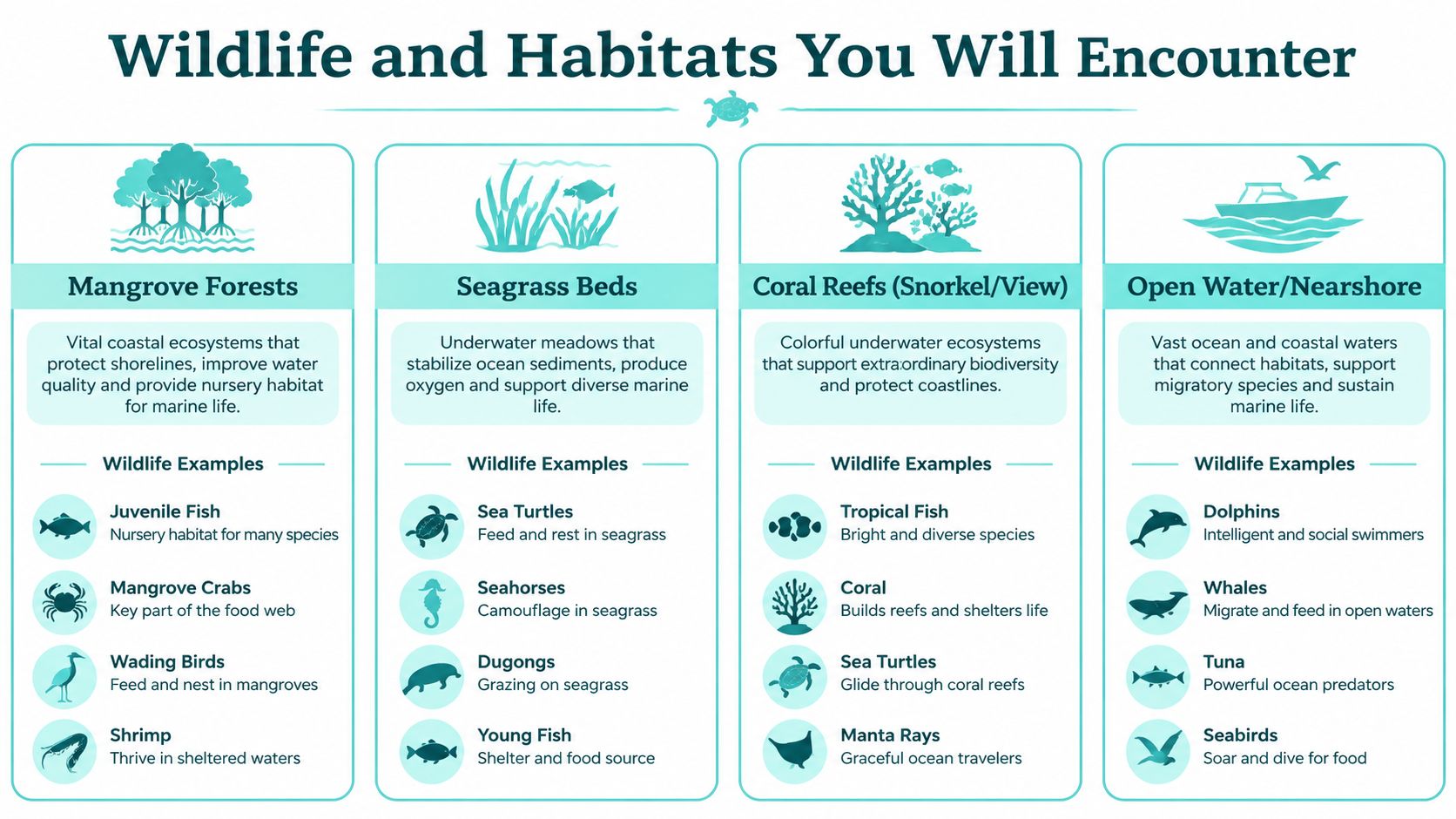
A Keys paddle is often really a wildlife tour in disguise. Mangroves shelter juvenile fish and offer shade and cover for birds, while seagrass beds open into a quieter, greener underwater world that rewards a slow pace. That mix of habitat is why paddlers so often remember not just the route, but the creatures that showed up along it.
What usually shows up first
In sheltered water, wading birds are often the first thing people notice. Egrets and herons work the edges, and small fish flash beneath the kayak in the shallows. In more open pockets, paddlers may spot dolphins, sea turtles, or manatees, though distance and patience matter more than speed if the goal is a respectful sighting.
The sensitive habitat story matters here. The Florida Keys National Marine Sanctuary is a designated environment, so route choice and behavior aren't background details, they're part of the experience. A quiet kayak causes less disturbance than a noisy, close, or careless approach, which is why stillness often beats curiosity. For paddlers especially interested in large marine animals, PADL's manatee tour Miami is a relevant option to know about.
How to watch wildlife without messing it up
Respectful viewing is simple, even if it takes discipline. Keep distance, stay quiet, never feed wildlife, and don't chase animals just to get a better angle. The goal is to leave the encounter brief and natural.
Lighting matters too. Low-angle sun can make a beautiful scene hard to read, which is why polarized lenses are such a practical upgrade for seeing into water and reducing glare. For a clear explanation of that difference, the expert guide on lens polarization is a useful read for paddlers who want better visibility on the water.
The best wildlife sightings usually happen when the kayak becomes the least interesting thing in the lagoon.
That's the mindset that keeps the experience memorable for the right reasons.
Essential Kayaking Safety in the Keys
Safety in the Keys is not a generic checklist. It's sun, hydration, boat traffic, shallow water, and timing, all working together. The region sees real kayaking incidents, and the numbers are enough to justify respect, not panic. The U.S. Coast Guard's 2024 recreational boating statistics report 113 total kayak incidents in the referenced reporting year, and a Florida summary notes 11 reportable boat accidents attributed to kayaks and canoes in a recent year, including 3 fatalities (kayak accident statistics summary).
Build the day around protection
Sun protection comes first because the Keys rarely forgive a casual approach to exposure. That means sunscreen, a hat, UPF clothing, and more water than seems necessary at the parking lot. A small sunscreen packet is easier to stow in a dry bag and reapply from than a bottle that gets lost in the bottom of the car, which is why some paddlers keep Custom Mark's SPF 30 packets in the trip kit.
The other overlooked threat is dehydration. Heat and reflected light make it easy to feel fine until the paddle home suddenly feels longer and slower than expected. A dry bag with a phone, a snack, and a water supply should be treated as standard, not optional.
Handle traffic and shallow spots with care
The Keys have plenty of shared-waterway situations, so kayaks need to move predictably around boats and keep well clear of channels. Shallow flats can also become a trap if the tide drops faster than expected, which is why a launch plan should include an exit route, not just an entrance. If the kayak becomes stuck on a falling tide, the safer move is to wait it out, conserve energy, and avoid walking blindly across unknown bottom.
For families and newer paddlers, a float plan helps more than people think. Tell someone where the route starts, where it should end, and when the group expects to be off the water. That simple habit makes a scattered day much safer.
Planning Your Trip with PADL in the Keys
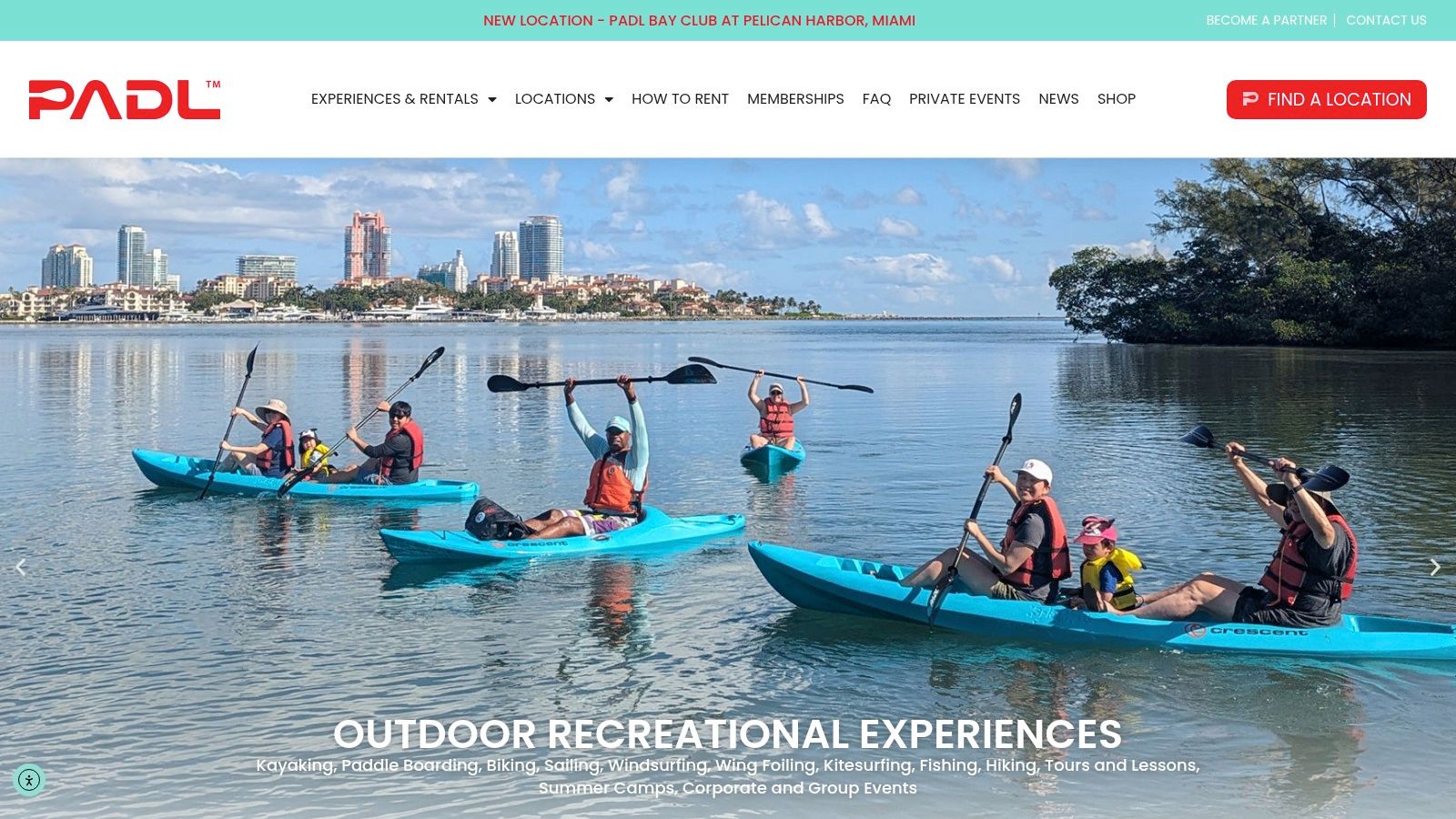
Getting a private kayak to the Keys sounds simple until parking, launch legality, and timing all show up at once. Finding where to launch legally is a real friction point, and user confusion about launch points and parking is common, with some popular spots no longer permitting private launches and alternatives adding miles to the trip (Florida Rambler on Keys launch access). That's where a rental-and-launch model saves a lot of hassle.
Why a launch network changes the day
A self-service station removes several decision points at once. There's no roof rack to wrestle with, no guessing about where to park, and no need to drag personal gear through a crowded waterfront. For visitors trying to fit one paddle into a short stay, that simplicity matters.
It also makes spontaneous paddling more realistic. If the tide looks good and the wind is still calm, a station-based launch lets the day happen without a long setup. PADL's network is built around that idea, with self-service rentals and guided options available for different trip styles. For people who want a structured outing, a guided experience offers more direction. For people who just want to get on the water quickly, the self-service side is the easier fit.
Choose the format that fits the day
The choice comes down to confidence and planning style. A guided outing works well for visitors who want route help, local context, and less guesswork. A self-service rental works better for paddlers who already know how to read conditions and want flexibility on timing.
The key advantage is that the logistics stay small. Once the kayak is available near the water, the rest of the day can be spent choosing the right launch window, the right side of the islands, and the right amount of distance for the group. For a state built around water access, that's a serious improvement over trying to piece together the trip on the fly.
A First-Timers Itinerary for a Perfect Day
8:00 AM. Arrive at a sheltered launch with easy parking, check the wind, and look at the water before you carry a kayak down to the edge. If the surface already has small whitecaps or the breeze is building across open water, stay inside the mangroves or choose a shorter protected route.
8:30 AM. Get on the water while the morning is still calm. Paddle at an easy pace through a quiet channel, keeping the route simple enough that everyone in the group can stay relaxed and keep up. A first day works better when the current is light, the turns are obvious, and the distance to the turn point still feels comfortable.
9:30 AM. Slow down in the prettiest stretch and watch the route, not just the scenery. In the Keys, wind can push harder than visitors expect, especially once the paddle opens up away from shore. If the water starts feeling rougher on the way out, turn earlier rather than waiting for the return to become a grind.
10:00 AM. Use the planned turnaround point and head back while the group still has energy. That gives you a buffer for drift, small route changes, and a few extra minutes if someone needs a break. For a first paddle, a short out-and-back is usually a better call than trying to cover too much water.
11:30 AM. Land, rinse off, and get lunch close to the water. A good first outing should end with everyone still wanting another paddle, not with sore shoulders and a long slog back to the car. If the route felt calm, clean, and manageable, that is a true win.
The best first day in the Keys is the one that matches the launch to the skill level, respects the wind, and keeps the route inside the group's comfort zone. A protected paddle can feel peaceful and memorable. An open-water route can turn demanding fast if the weather shifts, so the safer choice is usually the smarter one for a first-timer.
PADL makes it easier to match the right kayak experience to the right launch, whether the goal is a quiet self-service paddle or a guided outing with more structure. If a Keys trip is on the calendar, visit PADL and choose the option that fits the water, the weather, and the day.