
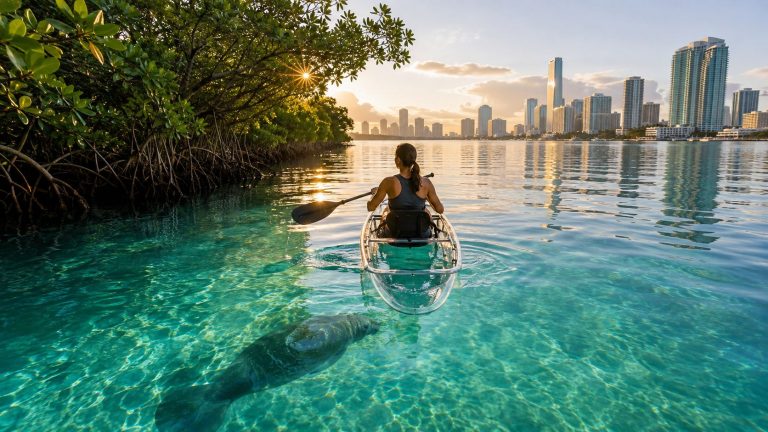
A lot of people book Miami kayak tours the way they book a hotel room, by chasing the nicest photo and hoping the rest works itself out. That's how someone ends up sweating on a windy bay edge, or standing on a dock realizing the kayak capacity doesn't fit the group they brought. The better way to choose in Miami is simple, match the route, season, weather window, equipment limits, and booking format to the day in front of them.
Miami rewards paddlers who plan like locals. The city's water-based tourism economy is big enough to support serious kayak demand, with $2.1 billion annually tied to water-based activities, equal to 10% of total tourism revenue, and kayaking and paddleboarding alone accounting for $52 million and about 156,000 participants a year, according to the Miami water tourism impact study study summary. That demand is real, but it doesn't mean every tour works for every paddler on every day.
What a Miami Kayak Tour Actually Feels Like
The dock usually tells the truth before the marketing page does. One side of Miami gives a calm mangrove launch, shaded water, and a route where beginners can settle into the stroke without fighting chop. The other side opens into a broader bay view, where the sky looks bigger, the water can get lively, and the wrong timing turns a pretty outing into a tiring one.
The real pace on the water
Most Miami kayak tours move at a conversational pace, not a fitness pace. That matters because the point is usually the setting, mangroves, canals, Biscayne Bay, or clear-water routes, not covering miles for the sake of distance. On a guided outing, the group stays compact, the guide controls the pacing, and stops for wildlife or route changes are part of the experience, not a detour.
A first-time paddler often expects a straight-line workout. Miami doesn't really reward that mindset. The best tours here feel more like a moving nature walk, with enough motion to stay engaged and enough pause to notice birds, roots, water clarity, and the shifting conditions around the boat.
Practical rule: a good Miami tour should feel manageable before it feels impressive. If the route, weather, or equipment setup makes the launch feel rushed, the day usually goes downhill from there.
See-through kayak options in Miami tend to draw people who want the visual payoff first, but the same rule still applies. The route has to suit the day, and the day has to suit the paddler. A calm launch beats a photogenic launch every time when the wind starts building.
What a first-time paddler should expect
First-timers usually do best when the route is protected, the group is small, and the guide can adjust on the fly. Miami's water is not uniform. Mangrove channels, intracoastal cuts, and open bay stretches can feel like completely different sports depending on wind and tide.
That's why the smartest booking question isn't “What looks coolest?” It's “What will still feel good after twenty minutes on the water?” If that answer is clear before the booking, the tour is usually a good fit.
The Main Miami Kayak Environments
Miami kayak tours cluster into a few very different environments, and each one asks for a different kind of paddler. The best choice depends on whether the goal is wildlife, scenery, an easy beginner paddle, or a more open-water feel. Naming the environment first makes the rest of the decision easier.
Mangroves, intracoastal water, bay routes, and park launches
Mangrove tunnels and cuts are the classic beginner-friendly choice. The water is usually more sheltered, the route feels intimate, and the whole point is often the ecosystem itself. Mangroves matter because they shape the paddling experience, they create shaded corridors, protect shorelines, and give wildlife a place to move through the water.
The Intracoastal Waterway is a different experience. It's not as enclosed as a mangrove route, so traffic, wakes, and exposure can change the feel of the trip. That makes it better for paddlers who want a bit more movement and don't mind sharing water with other boats.
Biscayne Bay and clear-kayak routes near Key Biscayne are the photo-forward option. They can be excellent when visibility is good and wind is light, but they're also the routes where weather and chop show up fastest. That's why these trips reward flexible planning more than impulse booking.
Self-service park paddles, including rentals at places like Crandon Park, suit people who already know what they want and don't need a guide to make the day work. Miami-Dade's ecotourism newsletter notes that fully equipped sit-on-top ocean kayaks were available at Crandon Park Visitor and Biscayne Nature Center in Key Biscayne, with weekday rentals and weekend or holiday hours from 10:00 AM to 4:00 PM, at $15 for a single or two-person kayak ecotourism newsletter. That's a different proposition from a guided tour, and it's ideal for paddlers who want flexibility.
Here's a quick way to read the options.
| Miami kayak environments at a glance | Water type | Typical conditions | Best for |
|---|---|---|---|
| Mangrove tunnels and cuts | Sheltered, shallow channels | Calmer, more protected, wildlife-rich | Beginners, families, wildlife viewing |
| Intracoastal Waterway | Connected coastal water | More boat traffic and wake | Confident paddlers who want a broader route |
| Biscayne Bay and clear-kayak routes | Open bay water | More wind-sensitive, more exposed | Scenic outings, clearer water, strong planners |
| Park launches and self-guided rentals | Variable park water | Depends on the site and tide | Experienced paddlers, flexible schedules |
For a deeper look at one of the most reliable beginner settings, the mangrove kayaking tours guide is useful because it shows why shelter matters more than hype in Miami.
A mangrove route is often the safest place to start, but not because it's boring. It's because the water does less work against the paddler.
Season, Weather, and Tides in Miami
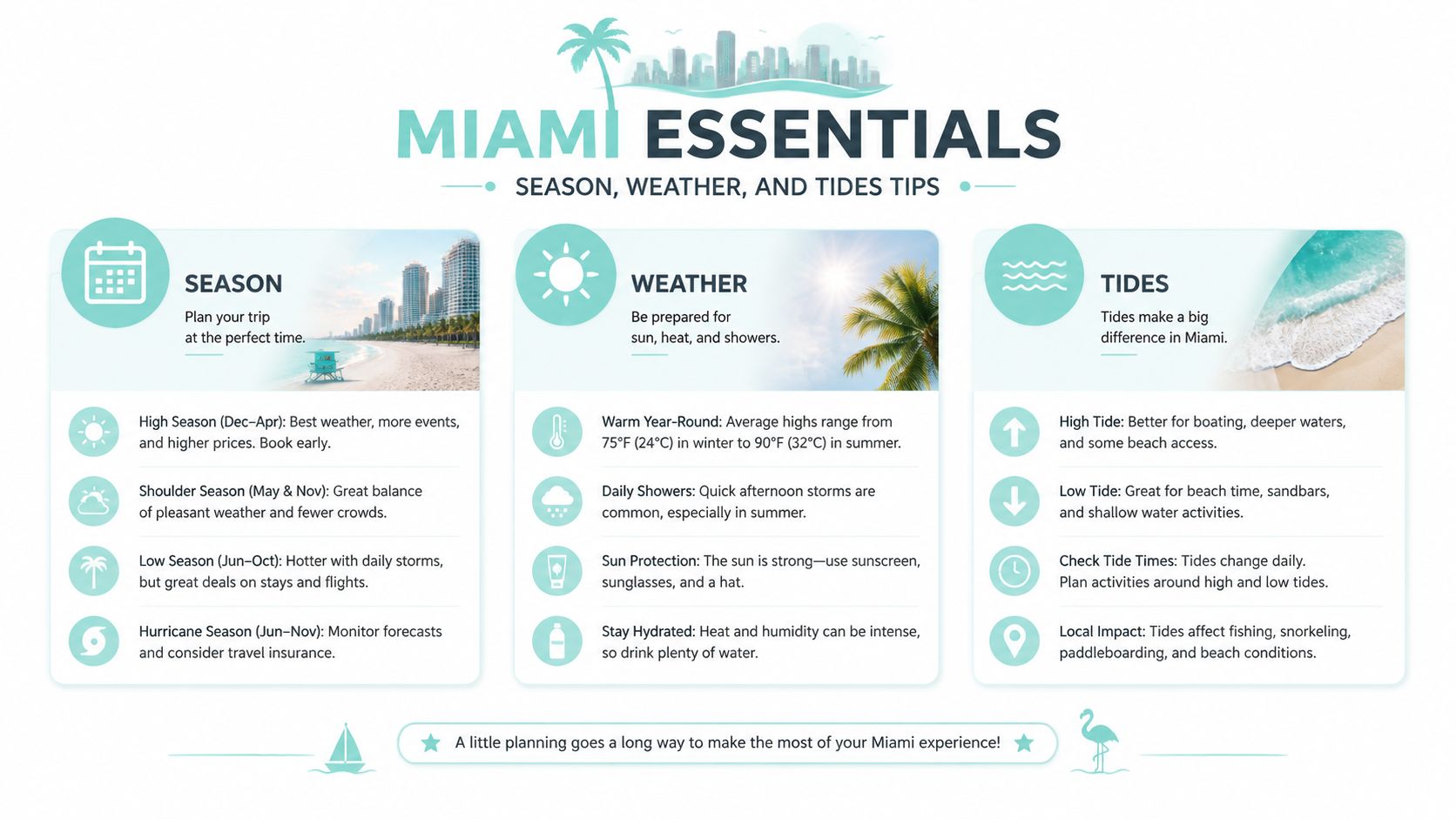
Miami's paddling calendar is driven by weather, and the city's wet season runs roughly May through October, bringing more rain and thunderstorm risk, while the drier months are generally more comfortable for outdoor activities Miami-Dade weather and visitor guidance. That matters on the water more than it does on land because wind, heat, and storms change the route itself, not just the mood of the day.
Why morning launches usually win
Early mornings are the safest bet for comfort. The air is cooler, the sun is less punishing, and the water is often calmer before afternoon heating starts building clouds and wind. That doesn't guarantee perfect conditions, but it does stack the odds in favor of a better paddle.
Late afternoons can look beautiful and still be the wrong choice. In summer especially, the evening window often trades glare for weather risk, and the water can feel less forgiving by the time the sky starts changing. That's why local paddlers treat the morning as the serious launch window and the late day slot as a gamble.
Why tide quietly changes the route
Tide doesn't just move water, it changes whether a route feels open, shallow, or awkward. In the Intracoastal and Biscayne Bay, low tide can expose mangrove roots and make some cuts look tighter than they did an hour earlier. A strong outgoing tide can also turn a calm-looking stretch choppier than expected.
That's where a lot of first-time visitors get caught. They look at a map, see a short route, and assume the water will cooperate. On Miami waters, the water gets a vote.
For paddlers who want to understand wildlife timing as part of the weather picture, the manatee tour Miami guide is a useful companion because it connects route choice with the places where calm water and wildlife viewing overlap.
Weather rule of thumb: if the plan depends on visibility, comfort, and calm water, the best window is usually an early launch in the drier part of the year.
Guided Tours vs Self-Guided Rentals
Guided tours and self-guided rentals solve different problems, and the wrong one is where many bookings go sideways. A guide adds route choice, safety checks, and context about what's being seen. A rental adds flexibility and lets experienced paddlers move at their own pace without waiting on a group.
What guided tours do better
Guided trips are the safer bet for first-time visitors, families, and anyone trying to understand the water instead of just crossing it. A guide can adjust the route when wind, tide, or group pace changes. That matters in Miami, where a route that looked simple from shore can feel different once the water starts moving.
A guided tour also keeps the decision load low. Nobody in the group has to guess where to turn, whether the launch is too exposed, or whether the water is too rough for the plan. For many visitors, that alone is worth it.
What rentals do better
Self-guided rentals work best for paddlers who already know their comfort zone. They're a stronger fit when the group wants to linger, take photos, or paddle a familiar route without a set itinerary. They also suit locals who already understand the day's weather and can read the water without help.
The trade-off is that responsibility shifts to the paddler. Route choice, timing, launch planning, and turnaround decisions all sit with the person in the boat. If that sounds fine, rental access is a practical option. If it sounds like guesswork, a guided trip is the better choice.
A few operator rules make the difference concrete. One Miami Beach operator says its double kayaks have a maximum of 250 pounds per person and 425 pounds per two people in the same kayak, and alcohol isn't allowed on tours operator policy. Another guided paddle operator requires reservations for all tours, recommends booking 72 hours in advance, asks guests to arrive 15 minutes early, and sets age and safety rules including a minimum renter age of 18, children 10+ on their own equipment only with an adult on the water, and children 12 and under wearing a PFD at all times booking and safety policy.
| Booking format | Best fit | Main trade-off |
|---|---|---|
| Guided tour | Visitors, beginners, wildlife-focused outings | Less flexibility, fixed timing |
| Self-guided rental | Confident paddlers, locals, repeat visitors | More planning responsibility |
The how to rent guide is useful for understanding how rental-based outings work when the goal is flexibility rather than instruction.
What to Bring and Capacity Rules That Matter
The weight limit on a Miami kayak isn't just a checkout rule, it affects trim, freeboard, and stability. That's why the 425 lb per kayak and 250 lb per seat ceilings matter before anyone pushes off the dock, especially in tandem clear kayaks where two adults are sharing one craft capacity guidance. A solo paddler assigned a two-seat kayak still has to respect those limits because the boat's handling changes when the load is off balance.
What goes with the paddler and what stays behind
The simplest packing list is the one that doesn't fight the boat. Wear quick-drying clothes, secure footwear, and sun protection that won't turn into a mess once the spray starts. Leave bulky bags in the car whenever possible, because the less clutter in the kayak, the easier it is to keep the craft stable.
Food and water should stay simple on a short paddle. A bottle that's easy to reach and a snack that won't melt or leak are enough for most brief outings. Phones and keys need dry storage, not loose pockets, because small items become the first casualties when someone reaches across the boat.
A clean deck is a safer deck. The more loose gear piled around the seat, the harder it is to keep weight where it belongs.
Safety gear and hard rules
PFDs are not optional for children 12 and under on the operator that sets that rule, and that's the kind of policy that gets enforced at launch age and safety policy. Alcohol is also a no-go on at least one Miami tour operator's boats, which is a common sense policy on a hot, exposed waterway tour policy. Those are not nice-to-have details, they decide whether the trip starts or stops at the dock.
A practical pre-launch checklist helps:
- Confirm the combined weight of everyone sharing a kayak before arrival.
- Check the seat assignment if a solo paddler is put into a tandem craft.
- Pack light and keep the deck uncluttered.
- Bring sun protection that can handle reflected light off the water.
- Plan dry storage for phones, IDs, and keys.
- Skip alcohol before and during the paddle.
If the launch feels crowded, rushed, or unclear on capacity, that's a warning sign. Miami waters reward clean setup, not improvisation.
Matching Routes to Skill and Goal
The best Miami route is the one that matches the paddler's skill and the day's conditions, not the one with the prettiest thumbnail. A calm mangrove loop with a guide is usually more satisfying for a beginner than a choppy bay crossing that looks better in photos. Confidence on the water should drive the route, not the other way around.
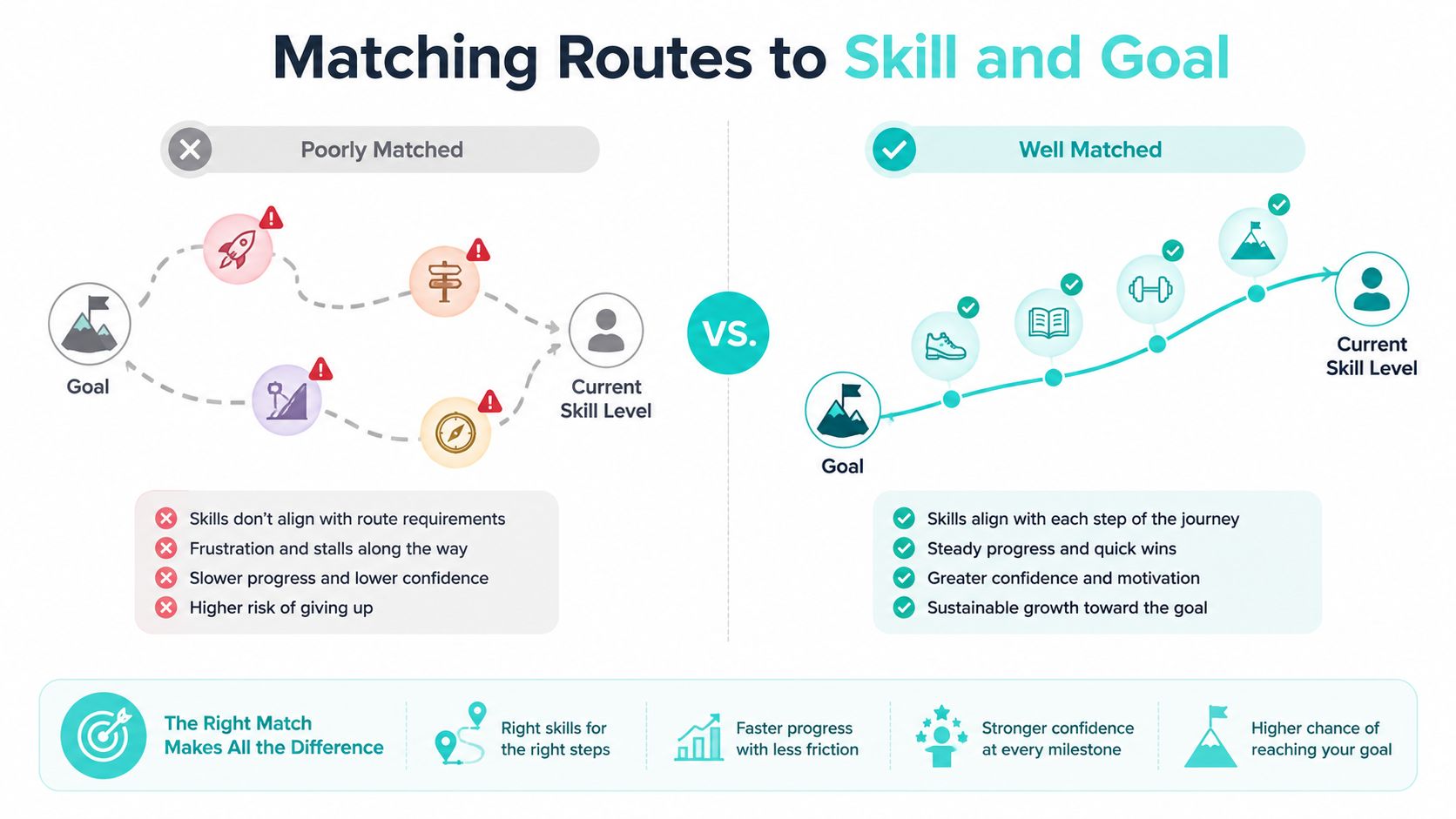
| Goal | Good route match | Skill level |
|---|---|---|
| See wildlife without a hard paddle | Mangrove cuts with a guide | Beginner |
| Get water movement and city-edge views | Intracoastal route | Beginner to intermediate |
| Chase the clearest visual payoff | Clear-kayak bay route | Intermediate or flexible beginner |
| Paddle quietly and stay in control | Park-based self-guided loop | Confident paddler |
A quick decision framework
Start with the route, then ask whether the weather window supports it. After that, check whether the booking format matches the group. Families and first-timers usually benefit from a guided route in sheltered water, while experienced paddlers can use rentals to shape the day around their own pace.
Virginia Key launch options are worth considering for paddlers who want a Miami launch point with room to choose between guided and independent formats. The point isn't to pick the most famous route. It's to pick the one that feels calm enough to enjoy and structured enough to finish well.
Booking, Safety, and PADL-Specific Options
The booking checklist in Miami is short, but skipping one item can end the day before it starts. Reserve early when the operator requires it, arrive 15 minutes early when that's the rule, confirm kayak capacity for the full group, and verify age and PFD requirements for children before showing up booking policy. A clear weather window matters just as much, because Miami's paddling conditions shift fast.
If a paddler wants a broader water-sports context while planning, this boat insurance tips for Miami boaters resource is a useful reminder that water access always comes with responsibility, even when the trip is small and human-powered. That mindset fits kayaking well.
PADL's platform brings guided tours, rentals, and lessons together across staffed clubs and self-service stations in Florida, including Miami-area launch points, so the planning piece can stay in one place. That makes it easier to compare formats without bouncing between disconnected booking systems.
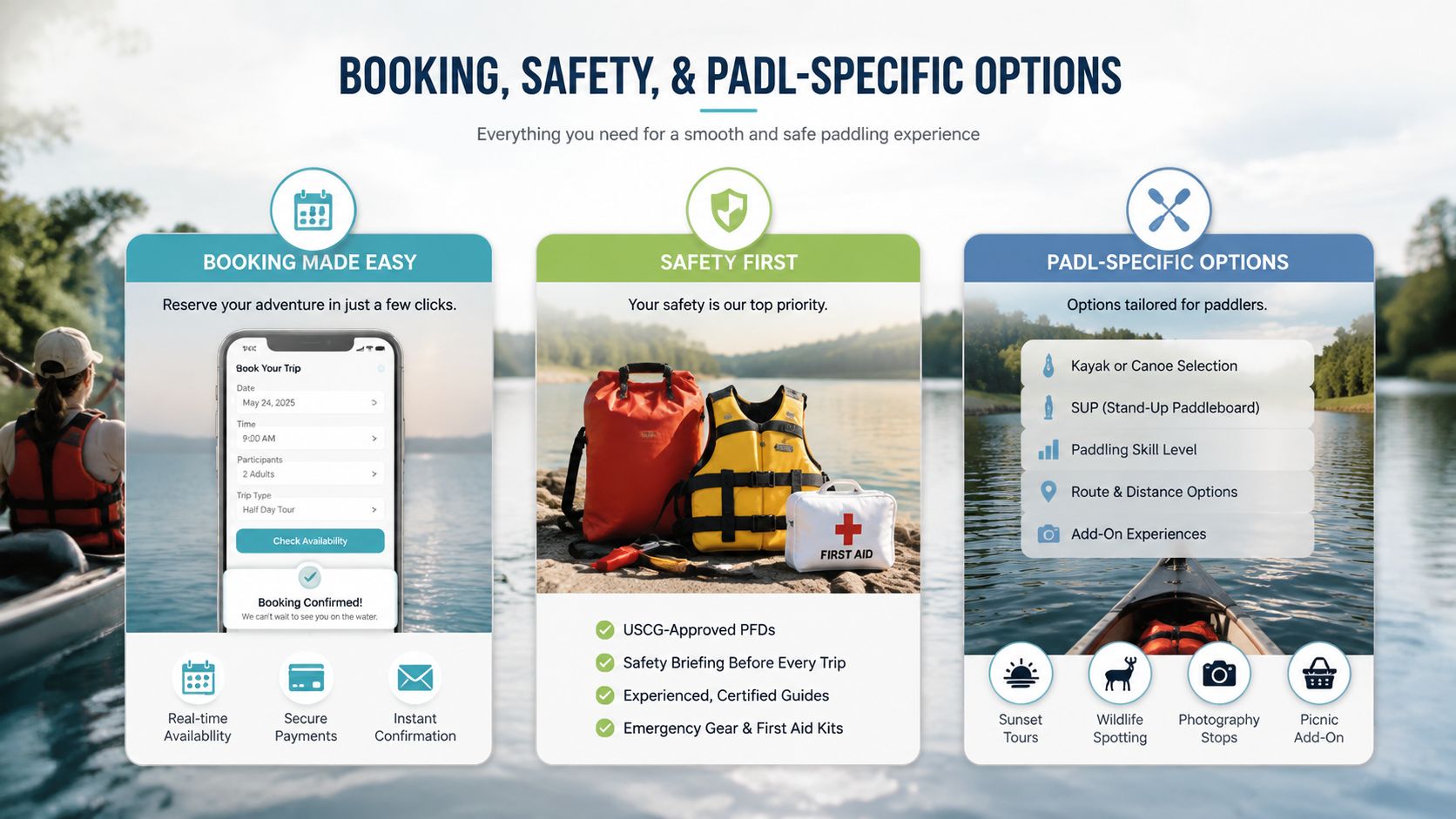
For Miami paddlers who want a route that fits the day, not just the feed, PADL offers a practical way to book equipment, tours, and lessons in one place. Check the weather, choose the right water, and then make the reservation once the fit is clear.