
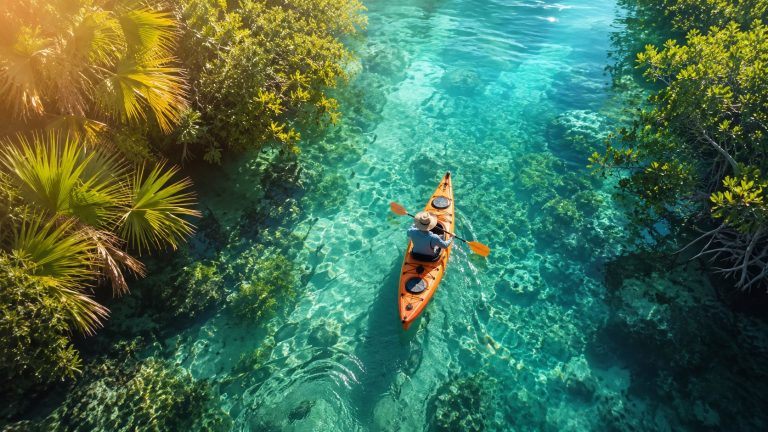
What makes a clear-water kayak trip worth the drive, the launch hassle, and the weather watch, beautiful scenery alone, or the way the right water turns an ordinary paddle into a better trip? In Florida, the answer is usually conditions. Clear water kayaking works best where visibility, current, access, and wildlife line up, and that's why some spots feel magical while others are just bright water with a kayak in it.
Florida has the kind of paddling base that makes this category matter. In 2018, 22.9 million Americans participated in at least one paddling activity, and recreational kayaking was the most popular paddlesport with more than 11 million participants (American Canoe Association report). That scale matters because clear kayaks are not a novelty floating outside the market, they're a format built on top of mainstream kayak demand. For Florida trips, that means the strongest options are the ones that combine easy logistics with water clarity that adds value.
1. Crystal River
Crystal River is one of the few places where clear water kayaking feels tied to a real wildlife moment, not just a pretty launch photo. The spring-fed system keeps conditions clear enough to spot fish, seagrass, and, in season, manatees moving through the water. That mix is why the area works for beginners, families, and paddlers who want a scenic outing that still feels active.
The best trips here are the ones that match the route to the day, not the other way around. A protected loop around Three Sisters Springs keeps the water calm and controlled, while the longer Kings Bay open-water option asks more from the paddler and gives back more room to explore. Early morning starts usually make the experience better because the water is calmer, the wildlife is more active, and the launch areas are less crowded.
Practical rule: If the goal is to see more than the kayak itself, plan for a short, early paddle and treat wildlife viewing as the main event.
For a local booking start point, the PADL kayaking page is the right place to look for nearby rental and trip options. It fits especially well for people who want to keep the planning simple and spend more time on the water. The key is to treat Crystal River as a spring system first and a sightseeing spot second, because that's where the value comes from.
A few things work well here:
- Use polarized sunglasses to cut glare and make it easier to spot manatees below the surface.
- Bring a camera with a polarizing filter if underwater detail matters, because flash isn't the move around wildlife.
- Check tide charts before launching, since shallow water can change the feel of the route fast.
- Stay patient on weekdays, especially Tuesday through Thursday, when crowds tend to be easier to manage.
Respect matters here. Manatee viewing should stay at a distance, and touching or chasing wildlife ruins the trip for everyone around it. The best Crystal River outing is calm, slow, and intentional.
2. Rainbow Springs State Park
Rainbow Springs is the kind of place that sells clear water kayaking without needing much explanation. The water looks vivid, the river feels smooth, and the surroundings do a lot of the work for the experience. It's also one of the better spots for people who want a scenic paddle without committing to a long or technical day.
The value here is in the balance. Rainbow Springs works for first-timers on shorter loops, but it also gives experienced paddlers enough water to make the trip feel worthwhile. The lagoon sections are where the color really pops, while the river run adds movement and a little more structure to the outing.
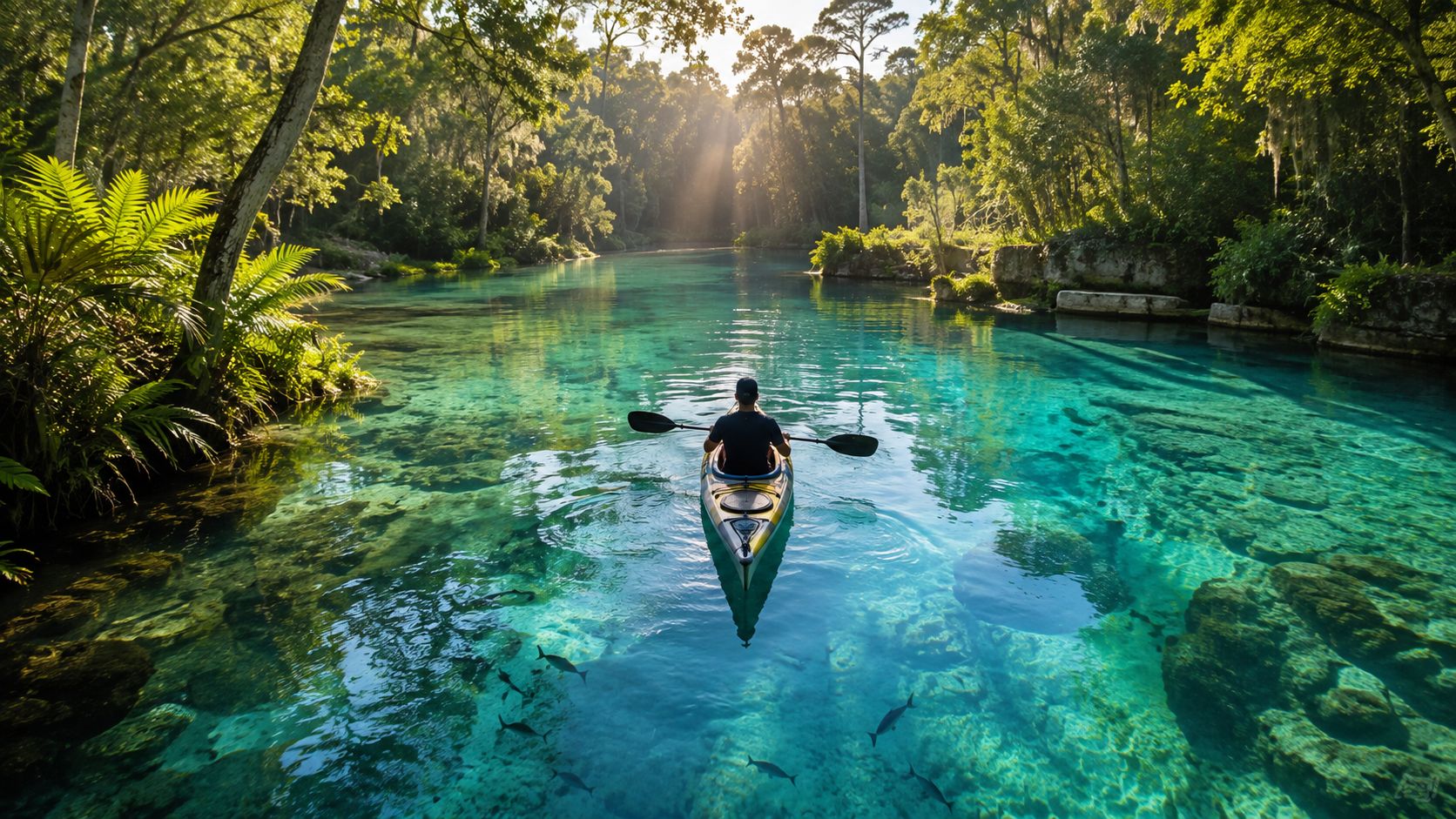
The smartest move here is to keep the day light and flexible. On-site rental access removes transport friction, and that matters because spring trips are easier to enjoy when the gear side stays simple. Morning light is also better for photography and for seeing what's below the surface, which is one reason early paddles usually feel more rewarding.
Paddle it early, keep it short, and use the calm water for photography and shoreline time.
Rainbow Springs is also a good place to think about comfort, not just visuals. If the goal is a relaxed outing with a little snorkeling or a shoreline pause, this is one of the most forgiving clear-water environments in Florida. For people comparing spring destinations, Rainbow Springs tends to reward those who want scenery without a heavy logistics load.
3. Weeki Wachee Springs
Weeki Wachee is not a lazy drift paddle. The current here gives the trip a different personality, and that's part of why it's so memorable. The clearer lagoon areas are easiest for beginners, but once the route moves into the spring run, the water starts to ask for better timing, better footing, and a little more physical effort.
That's where the trip gets interesting. Clear water kayaking here isn't only about seeing through the water, it's about using the current well and staying comfortable while the river does some of the work. The setting adds another layer too, since the historic character of the area gives the outing more than one reason to stay all day.
The smartest approach is to treat Weeki Wachee like an active paddle, not a sightseeing float. Going upstream first leaves more energy for the return, and morning conditions are usually easier to manage before the river gets busier. Water shoes help a lot during entry and exit, especially on spring run rocks that can feel awkward under bare feet.
The PADL paddle board tours and lessons page is useful for paddlers who are trying to build water confidence before taking on more current-heavy routes like this one. It's a practical fit for families or newer paddlers who want more instruction before a trip that demands better balance and timing.
A few details matter here:
- Use the current as a training tool, especially if the trip is part of a fitness routine.
- Wear a rashguard, because the spring water stays cool enough to matter even on warm days.
- Plan the shuttle before launch if the full river run is on the agenda.
- Combine the paddle with other park activities, since Weeki Wachee works well as a half-day or full-day outing.
Weeki Wachee is best for paddlers who want scenic water with a real physical rhythm. If the goal is pure relaxation, other springs are easier. If the goal is to feel the river moving under the kayak, this one delivers.
4. Ichetucknee Springs
Ichetucknee feels different from the busier spring stops because the place is managed like a protected natural system first and a recreation site second. That changes the pace of the trip in a good way. The water stays exceptionally clear, but the bigger story is how the setting encourages quieter, more controlled paddling with less environmental pressure.
This is one of the clearest answers to the question of whether clear water kayaking is worth it when the goal is actual nature time. At Ichetucknee, the view below the surface matters, but so does the sense that the river corridor is being handled carefully. That makes it a strong choice for paddlers who care as much about the setting as the photo.
Practical rule: Book this trip as a full experience, not a casual add-on, because the protected nature of the basin changes how you plan the day.
The most effective way to paddle here is to go early and stay present. Dawn entry gives the water its cleanest look and the best chance of seeing wildlife with less disturbance. Binoculars help, neutral clothing keeps attention low, and an underwater camera makes sense because the visibility is one of the main reasons to choose this river.
The PADL camping and paddling guide for North Florida fits naturally for visitors who want to turn Ichetucknee into part of a larger spring weekend. That matters because nearby spring country often works best as an overnight plan rather than a one-off drive.
A few useful habits make the day smoother:
- Commit to the full paddle plan before launching, since partial convenience is not the point here.
- Bring nature tools, not just boating gear, because observation is a major part of the payoff.
- Use quiet clothing and calm movements, especially in the more protected areas.
- Pair the paddle with nearby spring stops, if the goal is to make a full North Florida water trip out of the drive.
Ichetucknee is for paddlers who want clean water and a quieter experience with fewer distractions. It's not the place for rushing.
5. Weissenbornsprings Kayaking Route Near Jacksonville
Jacksonville-area paddlers often want the spring-water feel without driving deep into central Florida, and this route fills that gap. It combines protected lagoon sections with tidal river water, so the trip gives a useful mix of calm water and real-world paddling variables. That makes it especially helpful for families, fitness paddlers, and newer kayakers trying to build comfort in changing conditions.
The biggest advantage is access. A clear-water paddle close to Jacksonville saves time, and local conditions can turn this into a practical weekday outing instead of a major road trip. The lagoon sections are the easiest part of the route, while the tidal stretch teaches timing and attention in a way that can help on other coastal paddles later.
This is the kind of trip that rewards preparation more than gear obsession. Checking the tide table before launch matters a lot, and slack tide is usually the cleanest window for easier paddling. Early morning also helps because boat traffic is lower and visibility tends to be better.
Paddlers who want a gentler day should treat the lagoon as the main route and the tidal section as a skills add-on.
The local angle matters here. Jacksonville outfitters can help with current conditions and shuttle support, which is useful when the route depends on tide timing. The area also works well as a stepping stone for paddlers who want more confidence before taking on a bigger spring system or a more exposed coastal route.
A few practical moves stand out:
- Paddle at slack tide if comfort matters most.
- Choose neap tide as a beginner, since the range is easier to manage.
- Save spring tide conditions for experienced paddlers, especially if current handling is still developing.
- Use polarized sunglasses, because lagoon clarity is easier to read with less glare.
This route is not the most famous spring paddle in Florida, but it may be one of the most useful. It gives Jacksonville paddlers a real clear-water option without the long haul.
6. Lake Worth Lagoon Clear Water Paddling
Lake Worth Lagoon is where clear water kayaking starts to feel more coastal and more dynamic. The experience is less about spring boils and more about a living tidal system with mangroves, seagrass flats, and wildlife that changes with the water. That makes it a strong choice for paddlers who want variety in a single outing.
The best part of this lagoon is how flexible it can be. Calm sections work well for beginners, while the longer traverses and flats routes are better for people who want to read tide, depth, and wildlife movement. Dolphins, tarpon, permit, manatees, and wading birds all fit into the same general paddling conversation here, which keeps the trip from feeling repetitive.
The route choice should depend on comfort with shallow water and open exposure. A launch near Jupiter Inlet or Lantana can make parking and access easier, while slack tide usually gives the smoothest paddle. Early morning is still the best time to see active wildlife and avoid the more hectic feel of later departures.
The PADL mangrove kayaking tours page is a sensible starting point for people who want guided help reading coastal conditions and spotting wildlife. That matters here because the lagoon rewards people who can recognize what the water is doing.
A few habits make this kind of trip work better:
- Use a shallow-draft kayak if the goal is to explore flats.
- Choose polarized sight-fishing sunglasses, since glare can hide fish and birds fast.
- Avoid peak weekend periods, especially if quiet water matters.
- Treat the route like a tidal paddle, not a stationary lake outing.
Lake Worth Lagoon is one of the better reminders that clear water doesn't have to mean inland springs. It can also mean tides, marsh edges, and a lot more species movement.
7. Silver Springs State Park
Silver Springs is the heavyweight clear-water paddle on this list because the setting feels developed without losing the spring-water appeal. It's a good choice for families, beginners, and experienced paddlers who want a straightforward logistics setup with a lot to look at. The park format also means the outing can sit comfortably inside a bigger day of activities.
The water is the main draw, but the infrastructure matters too. On-site rentals simplify the planning, marked paddle routes reduce confusion, and the broader park experience gives the day more range than a simple out-and-back paddle. That's useful for visitors who want a spring trip that feels easy to organize.
The best time to go is early. Parking is easier, water is calmer, and the morning window gives the cleanest light for photography. A shorter route usually makes more sense than trying to overextend, because the park already offers enough visual interest to justify the trip.
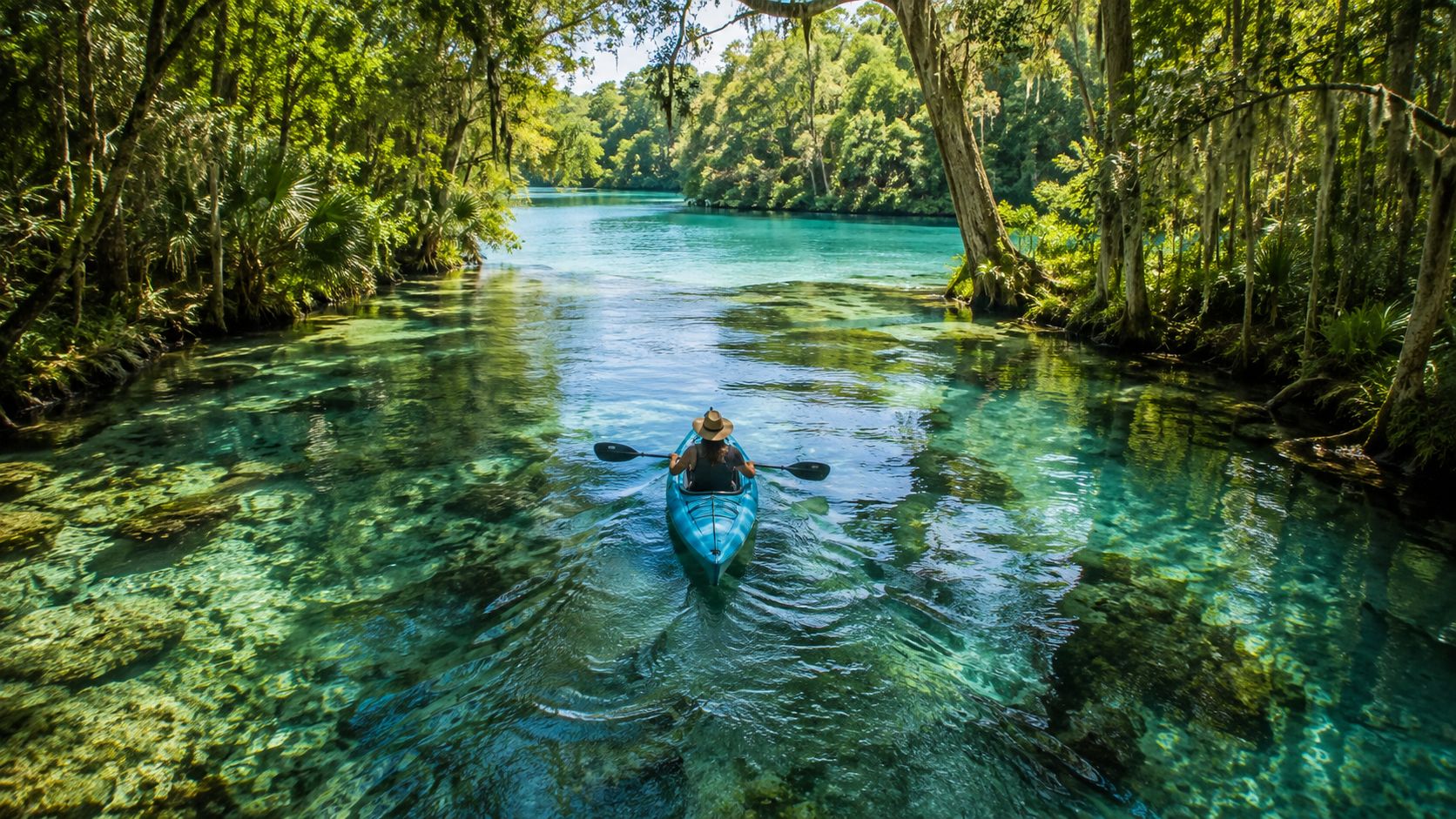
Standout advantage: Silver Springs works well when the goal is to keep the day simple, stay close to amenities, and still get a real clear-water paddle.
The PADL kayak see-through page is a natural fit for visitors comparing clear-kayak options and wanting an easy place to start. That kind of planning is useful here because Silver Springs appeals to a wide range of trip styles, from quick family outings to more deliberate photography days.
A few things make the experience better:
- Arrive at opening, because the earliest hours are usually the calmest.
- Use the morning paddle window, especially before afternoon wind and boat traffic build.
- Follow marked routes, since the park setting can get busier than expected.
- Leave room for other activities, because the destination works best when the paddle is one part of the day.
Silver Springs is the most polished version of the spring paddle experience on this list. For visitors who want clarity, structure, and easy access in one place, it's a strong pick.
Clear-Water Kayaking: 7-Site Comparison
| Destination | Logistics complexity | Resource & access requirements | Expected outcomes | Ideal use cases | Key advantages |
|---|---|---|---|---|---|
| Crystal River: Manatee Kayaking Through Spring-Fed Waters | Moderate, seasonal crowds (winter), parking constraints | Rentals/guides common; follow manatee interaction regulations; modest fees | High probability of manatee sightings; 30+ ft clarity; calm, protected waters | Wildlife viewing, beginner-friendly paddles, clear-water photography | Close manatee encounters, consistent 72°F springs, multiple route options |
| Rainbow Springs State Park | Low, park infrastructure and marked trails simplify logistics | On-site rentals, day-use fee (~$6); no special permits | Spectacular turquoise water with 40+ ft visibility; scenic, family-friendly | Photography, families, beginner to intermediate paddlers | Brilliant lagoon colors, maintained facilities, varied trail lengths |
| Weeki Wachee Springs | Moderate–High, stronger currents; shuttle logistics for one-way trips | On-site rentals available; shuttle often required; fitness for current paddling | Active paddling with strong currents; 60+ ft in lagoons, 8–15 ft in river runs | Intermediate/advanced paddlers, fitness training, combining with attractions | Exceptional lagoon clarity, historic attractions, engaging current-driven paddling |
| Ichetucknee Springs | High, strict reservation limits and permit/guide requirements | Mandatory permits or licensed guides for many trips; advance booking needed | Pristine, uncrowded 40+ ft clarity; conservation-focused experience | Conservation-minded paddlers, photographers, solitude seekers | Protected spring basin with limited daily visitors and exceptional preservation |
| Weissenbornsprings (St. Johns River area) | Low–Moderate, accessible but tidal planning required | No special permits; check tides; local rentals/shuttle options in Jacksonville | Mixed clarity: 20–30 ft in lagoons, 8–12 ft in tidal sections; variable conditions | Skill development, accessible clear-water introduction, local outings | Proximity to Jacksonville, combines lagoon and tidal training environments |
| Lake Worth Lagoon (South Florida) | Moderate, coastal/tidal navigation and urban boat traffic | Tide planning, shallow-draft kayak recommended; urban launch logistics | Coastal marine wildlife viewing; 8–15 ft clarity; diverse habitats across long routes | Urban wildlife paddles, coastal ecosystem exploration, longer route trips | Urban accessibility, rich marine biodiversity, extensive (22 mi) route options |
| Silver Springs State Park | Low, developed park with clear launch sites but tourist crowds | On-site rentals and amenities; entrance fee; no special permits typically | Large spring complex with 40+ ft lagoon clarity and 15–25 ft river runs | Families, beginners, photographers wanting amenities | North America's large spring system, strong amenities, varied route choices |
Your Next Clear Water Adventure Awaits
Crystal River, Rainbow Springs, Weeki Wachee, Ichetucknee, the Jacksonville spring route, Lake Worth Lagoon, and Silver Springs each solve a different version of the same problem. Some are best for wildlife. Some are better for families. Some reward current handling, while others are built for easy scenic paddling. That's the test of clear water kayaking, not just whether the water looks good in a photo.
The smartest trips start with the conditions, not the destination name. Water clarity, wind, tides, launch access, and the kind of wildlife the route supports all shape whether the outing feels worth it. For people planning a Florida paddle weekend, that means choosing the spot that matches the day instead of chasing the most famous name on the list.
PADL fits naturally into that planning process because it gives paddlers a way to look for rentals, lessons, and guided options without turning the outing into a logistics project. For visitors who want to pair a kayak day with other outdoor planning, a plan a backpacking trip approach to scheduling can help build a better weekend around the water. The best clear-water trip is usually the one that matches the launch, the weather, and the group.
PADL gives Florida paddlers a simple way to get on the water with kayak rentals, guided tours, and lessons in the same platform. If a clear water kayaking day is on the calendar, visit PADL to find a route, compare options, and plan the kind of trip that fits the water you want to paddle.