
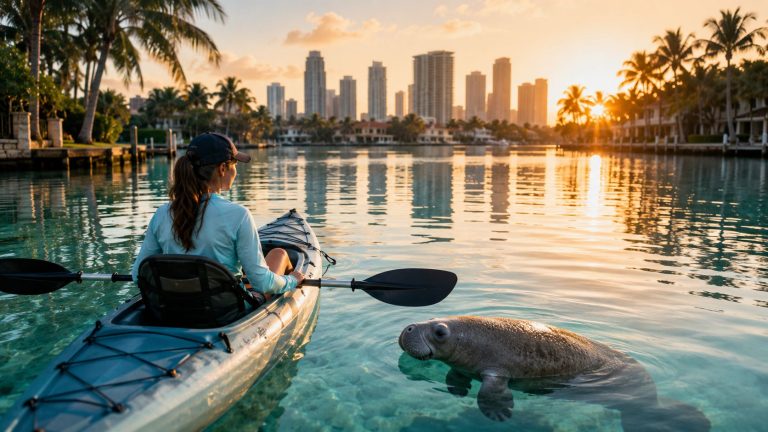
If a paddle through Biscayne Bay suddenly brings a gray shape to the surface beside the hull, the question hits fast, what brought a manatee here, and what should happen next? In Miami, that sight isn't a fluke. It's usually a sign that warm water, sheltered channels, and urban shoreline habitat are lining up in a way manatees can use.
Miami's waterways can feel busy and built-up, but they're still part of a living estuary system. Manatees move through canals, rivers, and protected bay edges because those places can offer refuge, feeding opportunities, and safer passage than open water. For paddlers, that means seeing manatees in Miami is less about luck than learning the patterns that shape where they surface.
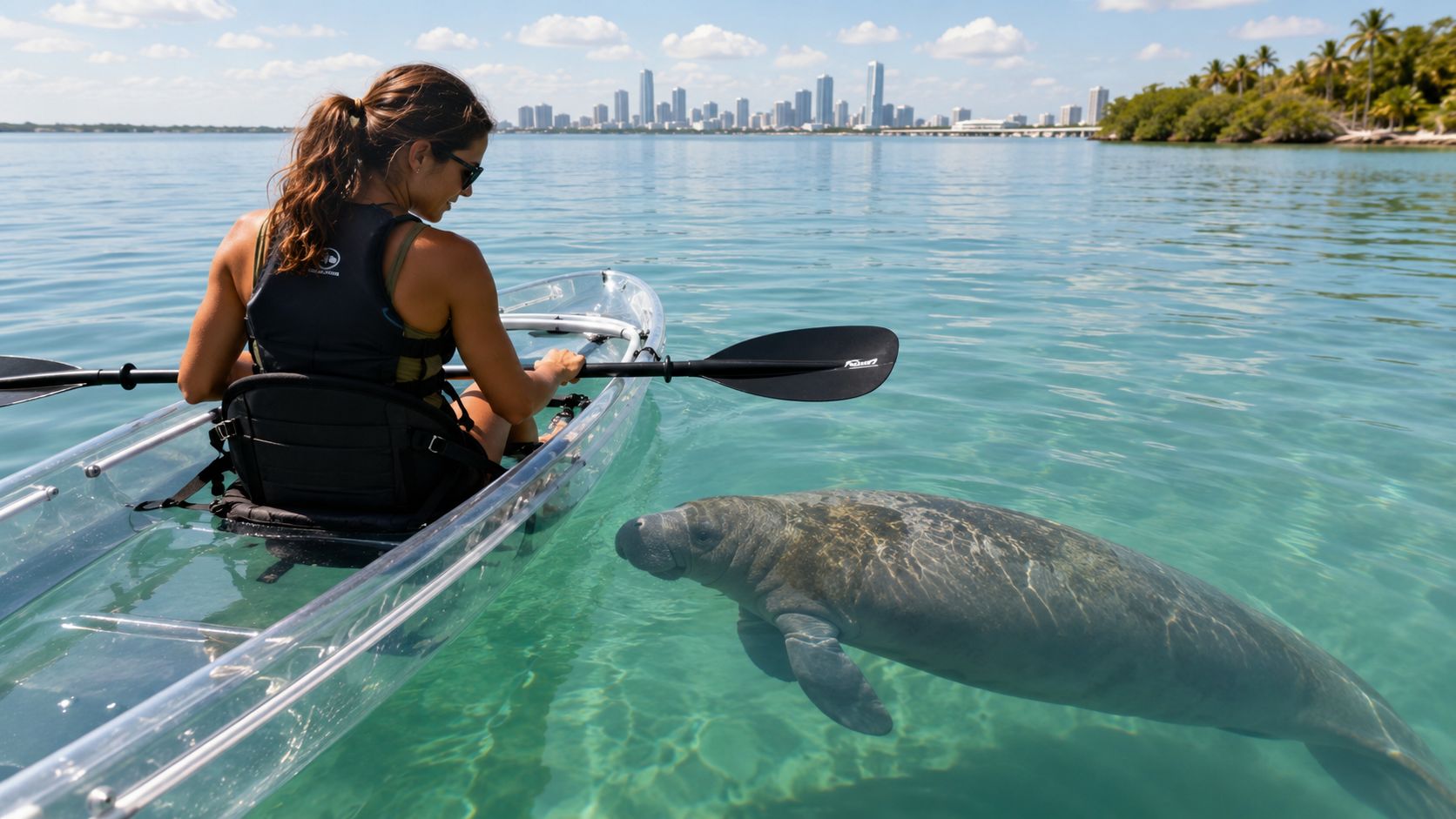
Why Manatees Show Up in Miami's Urban Waterways
A quiet paddle can change in seconds. One moment the water is empty except for ripples and a passing mullet, and the next a broad nose breaks the surface near a seawall, then disappears again with almost no splash. That kind of encounter feels surprising in a city, but in Miami it makes ecological sense.
Miami's canals, tributaries, and bay edges are not just scenic backdrops. They function as real habitat within a larger coastal system, and manatees use them as conditions shift through the year. The key idea is simple, manatees in Miami follow water that stays usable, not water that just looks pretty to people.
Urban water is part of their range
Florida's statewide recovery picture shows how adaptable the species has become. A recent statistically sound estimate placed the population at 9,790 individuals in 2021 to 2022, with 5,160 on the east coast and 4,630 on the west coast, well above earlier modern estimates such as 6,350 in 2011 to 2012 and 8,810 in 2015 to 2016 (USGS population estimate). That broader east-coast presence is why metropolitan waters can still host regular sightings.
Miami sits inside that east-coast story. The city's shoreline, canals, and sheltered passages give manatees places to move through without needing to cross exposed open water all the time. For a paddler, that means an urban channel can be as biologically relevant as a remote mangrove edge.
A manatee sighting in Miami usually says more about habitat than about novelty.
The best way to think about it is as a working corridor, not a petting-zoo setting. A manatee passing under a bridge or along a seawall is using the same network people use for recreation, commuting, and boating. That overlap is exactly why patience matters on the water.
What that means for a paddler
Miami's setting creates both opportunity and responsibility. A calm launch, a quiet stroke, and attention to shoreline shape all matter because the animals are responding to structure, shade, refuge, and human pressure at the same time.
For a paddler, the takeaway is practical. Stay alert near canal mouths, slow water, and protected edges, because those are the places where the city's waterway system and manatee movement intersect most often. For a quieter route that still keeps wildlife in view, a mangrove kayaking tour can be a useful starting point for understanding how sheltered habitat works in South Florida.
Understanding Manatee Biology and Thermal Needs
A manatee can look almost easygoing at the surface, but its body runs on a strict set of limits. Adults are typically 9 to 10 feet long and around 1,000 pounds, and some exceed 13 feet and 3,500 pounds (FWC facts). That size surprises a lot of first-time paddlers because the animal seems slow and soft-edged in the water, yet it is massive.
Think of temperature like a thermostat
Manatees don't handle cold water the way seals or dolphins might. Their bodies have relatively little insulation, so water temperature acts like an invisible boundary that shapes where they can survive. When that water gets too cold for too long, they have to move to warmer refuge areas.
That's why the idea of a thermostat works so well here. If the water drops below the comfort zone, the animal's choices narrow quickly. Warm-water refuges become survival points, not just preferred hangouts.
Warm water isn't a luxury for manatees, it's part of how they stay alive.
Miami's geography matters. The city's connected waterways, plus infrastructure that can create warm pockets or sheltered conditions, help explain why manatees keep returning. Paddlers who understand that pattern stop seeing sightings as random and start seeing them as predictable responses to temperature.
Why size matters for viewing distance
Because these animals are so large, a close encounter can happen faster than expected. A manatee surfacing beside a kayak doesn't need much room to show its back, snout, or tail. That's one reason stillness matters more than chasing a better view.
A good rule is to let the animal choose the spacing. A manatee that is comfortable may surface, breathe, and drift away on its own. A manatee that feels boxed in will often change direction or leave the area entirely.
Readers also often assume large size means high speed or high energy use. It doesn't. Manatees are built around slow movement and conservation of effort, which is why warm water is so critical when their metabolism has to keep them functioning through colder months.
Seasonal Patterns That Drive Manatee Movement in Miami
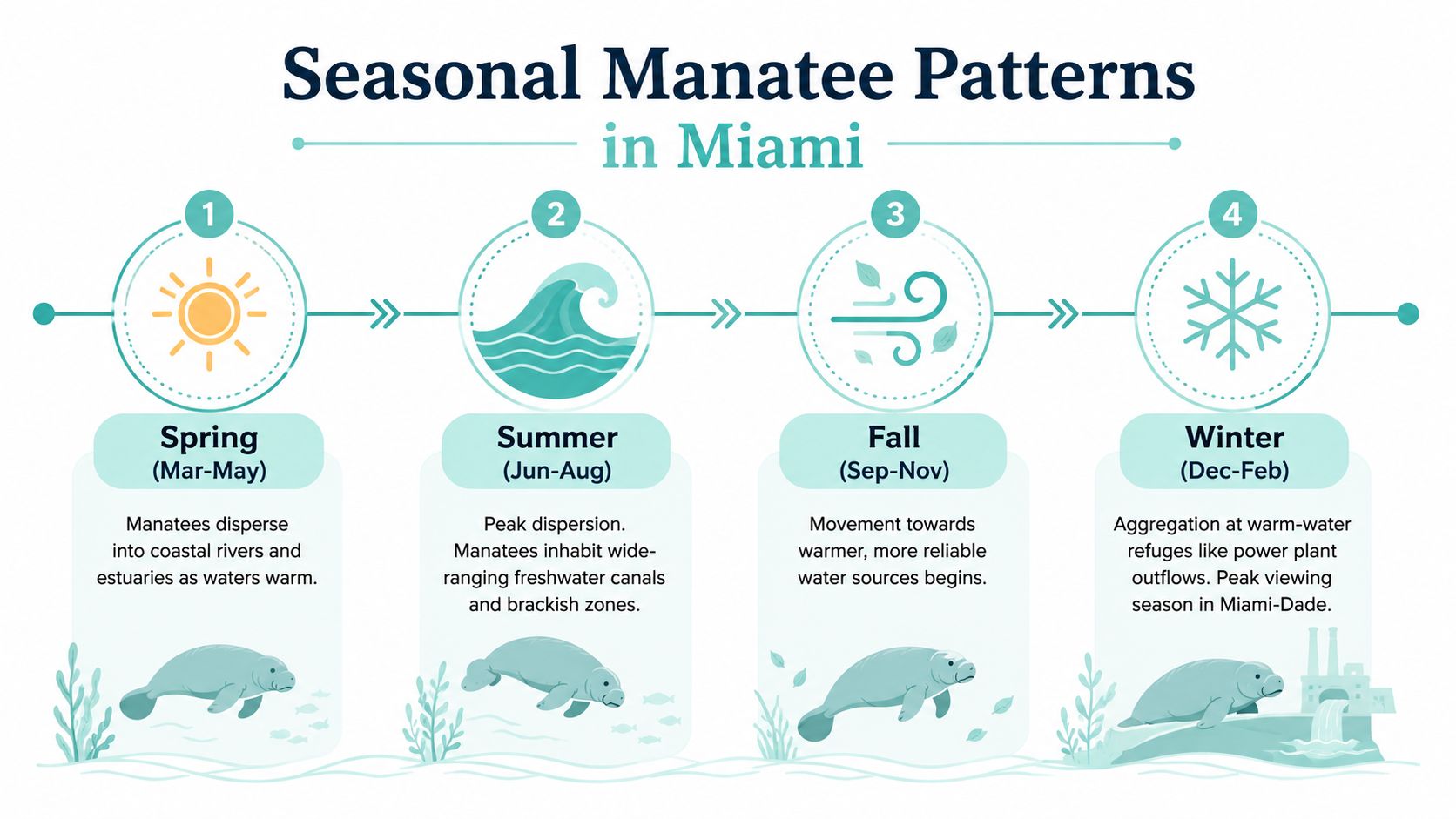
Miami manatee sightings follow a seasonal rhythm, and that rhythm explains most of the confusion people feel when they hear one person saw several animals and another saw none. During warm weather, manatees use freshwater canal systems more broadly. In winter, they concentrate in natural tributaries such as Little River, the Miami River, Coral Gables Waterway, and Black Creek (Miami-Dade manatee protection plan).
Warm months spread them out
In the warmer part of the year, Miami's manatees don't just cluster in one signature spot. They move through a wider network of canals and estuarine waters, which makes sightings feel scattered. One day they're near a quiet canal bend, another day they're moving through a tide-influenced creek.
That spread-out pattern is why summer paddlers should keep their expectations flexible. A slow, observant route through connected waters can produce an encounter, but there's no single guaranteed lane. The habitat itself is the clue.
The statewide seasonal backdrop helps too. The Marine Mammal Commission notes that Florida manatees can range as far north as Massachusetts in summer, while in winter they congregate in Florida because they require warm-water habitat to survive (MMC Florida manatee overview). That broader movement pattern is the frame Miami fits into.
Winter pulls them into refuge zones
Cold weather changes everything. Manatees tighten their range and gather where warmth is more reliable, which is why tributaries and sheltered urban channels matter so much in Miami-Dade. The result is a more concentrated winter viewing pattern, especially around calmer, warmer water.
In winter, look for concentration. In summer, expect dispersion.
That distinction helps paddlers plan smarter trips. If the goal is a better chance of seeing a manatee, winter is the most focused season for Miami-Dade waters. If the goal is a more relaxed outing with wildlife possible but less concentrated, warmer months still offer opportunity, just with more variability.
For a trip planner who likes timing clues, the Florida manatee season guide can help frame the year without turning the outing into a checklist hunt. The important point is that season shapes movement, and movement shapes where paddlers should look.
Best Spots to See Manatees in Miami
Two places stand out because they're named for a reason, not because they happen to sound scenic. The boat basin fronting the Deering Estate on Biscayne Bay is a good place to see manatees, and Biscayne National Park guidance says the harbor just north of the Visitor's Center is the best place to spot them (Biscayne Bay Foundation guidance).
Deering Estate and the surrounding basin
The Deering Estate boat basin works because it combines sheltered water with the kind of edge habitat manatees use often. For paddlers, that usually means slower movement, careful scanning near the surface, and a willingness to pause where the basin meets open bay water.
A quiet approach matters more than a perfect angle. Short paddle strokes, low voices, and no sudden turns give the animal room to breathe and continue moving naturally. The basin also gives viewers a chance to observe other coastal life without crowding the animal in the process.
Biscayne National Park's harbor area
The harbor north of the Visitor's Center is another good place to slow down and watch. Calmer protected water tends to hold wildlife movement in a tighter space, which helps observers who are scanning patiently rather than covering distance quickly.
That kind of location also helps first-time paddlers understand how urban and protected waters differ. A manatee may surface in a harbor, but the scene is still governed by the same rule set that applies everywhere else, quiet observation first.
For those planning a launch around Biscayne, a paddle board rental at Bill Baggs State Park can pair well with a careful wildlife-focused outing nearby, depending on conditions and access. A useful comparison for any paddler is to watch a similar calm-water feed on a live shoreline camera, such as a Manteo NC live web cam, to get a feel for how marine life often appears in sheltered, readable water.
The best viewing spots are usually the ones where the water slows down and the boat traffic does too.
That's the pattern. Reliable viewing in Miami comes from choosing places where refuge, structure, and calmer movement overlap.
Responsible Viewing Practices and Legal Protections
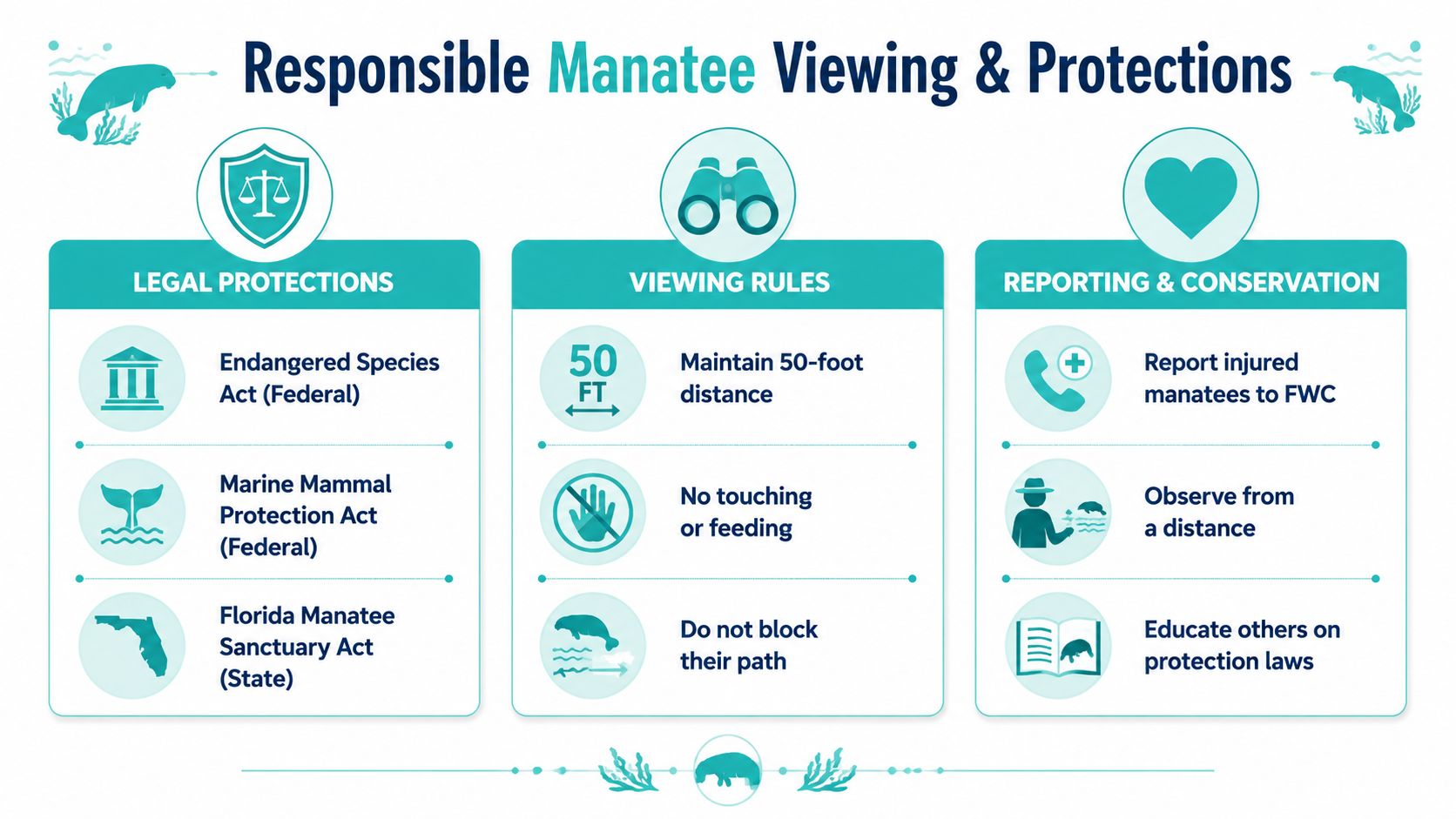
Seeing a manatee is a privilege, not a cue to close the distance. In Miami-Dade, the Florida manatee is protected by three overlapping legal frameworks, the Florida Manatee Sanctuary Act, the federal Marine Mammal Protection Act, and the Endangered Species Act (Miami-Dade manatee protections). Those laws exist because manatees are still vulnerable to human pressure even in places where they're visible.
Translate the laws into water behavior
The legal framework becomes simple once it's put into paddling terms. Don't pursue a manatee. Don't touch or feed one. Don't block its path. Move slowly enough that the animal can keep its own route.
A responsible paddler also watches the water ahead, not just the skyline or the camera screen. Manatees surface, and a sudden drift into their line can startle them more than people realize. The safest encounters are the ones that happen without forcing them to change course.
Why Miami needs careful risk management
Miami-Dade planning materials note that carcass recoveries cluster near tributaries and shorelines rather than open bay waters. That pattern matters because it shows where mortality is more likely to be detected, and where transit corridors, flood-gate areas, and nearshore edges deserve the most caution.
Near canal mouths and shoreline crossings, every boat should assume a manatee could be passing through.
That doesn't mean avoiding the water. It means using better judgment about where speed and noise can harm wildlife. Areas near flood gates should also be kept clean of pollutants and debris, because water quality and infrastructure affect the places manatees use.
For a quick pre-launch reminder, a paddle board safety checklist can help keep habits sharp before anyone heads out. In a city like Miami, safe viewing and lawful viewing are the same thing.
Are Manatees Really Safe or Still at Risk
The downlisting of the Florida manatee in 2017 changed the public conversation, but it didn't end the conservation story. The long-run trend is real, the population was 1,267 in 1991 and 6,620 by early 2017, which supported the U.S. Fish & Wildlife Service's May 2017 reclassification from endangered to threatened (peer-reviewed review). That is recovery, but not the same thing as safety.
Recovery doesn't erase current threats
Manatees still face serious pressures from watercraft collisions, loss of warm-water refugia, and seagrass decline. Those threats matter in Miami because the city's waterways carry both heavy recreation and fragile habitat. More people on the water can mean more opportunities to see wildlife, but it also means more ways to disturb it.
Recent conservation debates show the issue is still active. Miami Waterkeeper reported in March 2024 that advocates were moving to sue the U.S. Fish and Wildlife Service over what they called a failure to respond to a request for stronger protections for West Indian manatees in Florida and Puerto Rico, which shows the protection conversation is ongoing, not finished (Save the Manatee overview of current safeguards).
More animals can also mean more visible mortality
A Miami-focused interpretation matters here. Higher population numbers can come with proportionally higher mortality counts, so more sightings don't automatically mean lower risk. In a busy urban estuary, conservation success can make manatees more visible while also making it more important to track where harm happens.
More manatees in the water doesn't mean fewer reasons for caution.
That's the contradiction many casual readers miss. The species has recovered enough to be seen regularly in Miami, yet it still needs disciplined protection from boats, degraded habitat, and careless human behavior.
The best local response is steady, not dramatic. Follow the rules, keep distance, and treat every encounter as part of a larger ecosystem story. For readers who want a deeper local context, the PADL advisory board update sits in the same conservation-minded space, where recreation and habitat care are meant to work together.
Planning Your Manatee Paddling Trip in Miami
A good Miami manatee outing starts before launch. Pick a calm route, go when the water is quieter, and choose a place where manatee habitat persists rather than just looks scenic from shore. Around flood gates and canal edges, clean water and clear passage matter, so a careful launch point often matters more than a famous name on a map.
For most paddlers, the smartest plan is simple. Match the season to the goal, use quieter launch times, and stay alert near sheltered corridors where manatees move naturally. If the trip is about seeing wildlife respectfully, the best reward is usually a calm sighting, not a close chase.
PADL offers Miami paddling options that fit this kind of outing, including guided experiences that help visitors read the water and choose a respectful pace. For anyone planning a trip around manatees in Miami, start with a route that keeps the focus on the habitat, not the rush.
PADL helps paddlers explore Miami's waterways with more confidence, whether the goal is a guided outing or a self-paced day on the water. Visit PADL to plan a trip that fits the season, the route, and the kind of wildlife encounter that keeps manatees safe.