
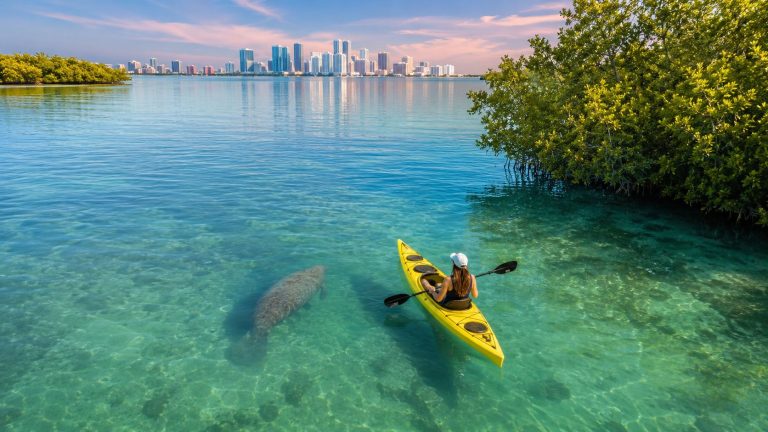
A Miami morning on the water can look simple from shore, but the right launch changes everything. A calm bay, a patient guide, and a cool-season tide can turn a short paddle into a real wildlife encounter, while the wrong timing leaves visitors staring at empty water and wondering why a manatee tour Miami search didn't deliver what they expected.
Why Miami Manatee Tours Are Seasonal and Place-Specific
A winter launch on Biscayne Bay has a different rhythm from a summer outing in open coastal water. In the cold months, paddlers tend to notice more slow, careful movement near sheltered edges, because Miami sits at the margin of consistently reliable manatee habitat rather than inside one big, year-round spring system. That's the first thing to understand about a manatee tour Miami search, the experience is shaped by season, water temperature, and local habitat, not by a standing guarantee.
That distinction matters because Miami's best viewing spots are tied to tidal bays, canals, mangrove edges, and protected harbor water. Those places concentrate wildlife when conditions are right, but they don't behave like an aquarium. A good operator treats the route as a wildlife search, not a sightseeing cruise with a promised outcome.
For readers comparing options, the practical question is not only “Can manatees be seen in Miami?” It's “Where do they tend to show up, and what kind of trip gives the clearest odds without making the encounter feel rushed or intrusive?” That's why a local planning mindset beats a blind booking. The right choice usually comes down to launch point, season, and whether the outing is built for observation rather than speed.
Practical rule: If a listing sounds like it is selling certainty, treat that as a red flag. Wild manatees don't run on a schedule.
The most useful way to search is to pair Miami with the right habitat and the right month, then choose a route that stays aligned with that setting. For a visitor deciding between a rental, a guided paddle, or a boat-based outing, a clear starting point is the local approach to calm-water paddling at PADL's clear-water kayaking guide, which fits the same planning logic, choose the water first, then the activity.
Understanding Manatee Season in Miami Waters
Manatees prefer warm water and rarely enter water below 68°F, which is why sightings rise when Biscayne Bay cools and wildlife compresses into warmer refuges. They also surface for air every 3–5 minutes and may stay submerged up to 20 minutes, so a sighting is often brief, then gone again before a distracted paddler realizes what moved. That behavior explains why patient viewing tends to outperform hurried, noisy travel. The biology behind those temperature and breathing patterns is the core of any realistic Miami plan.
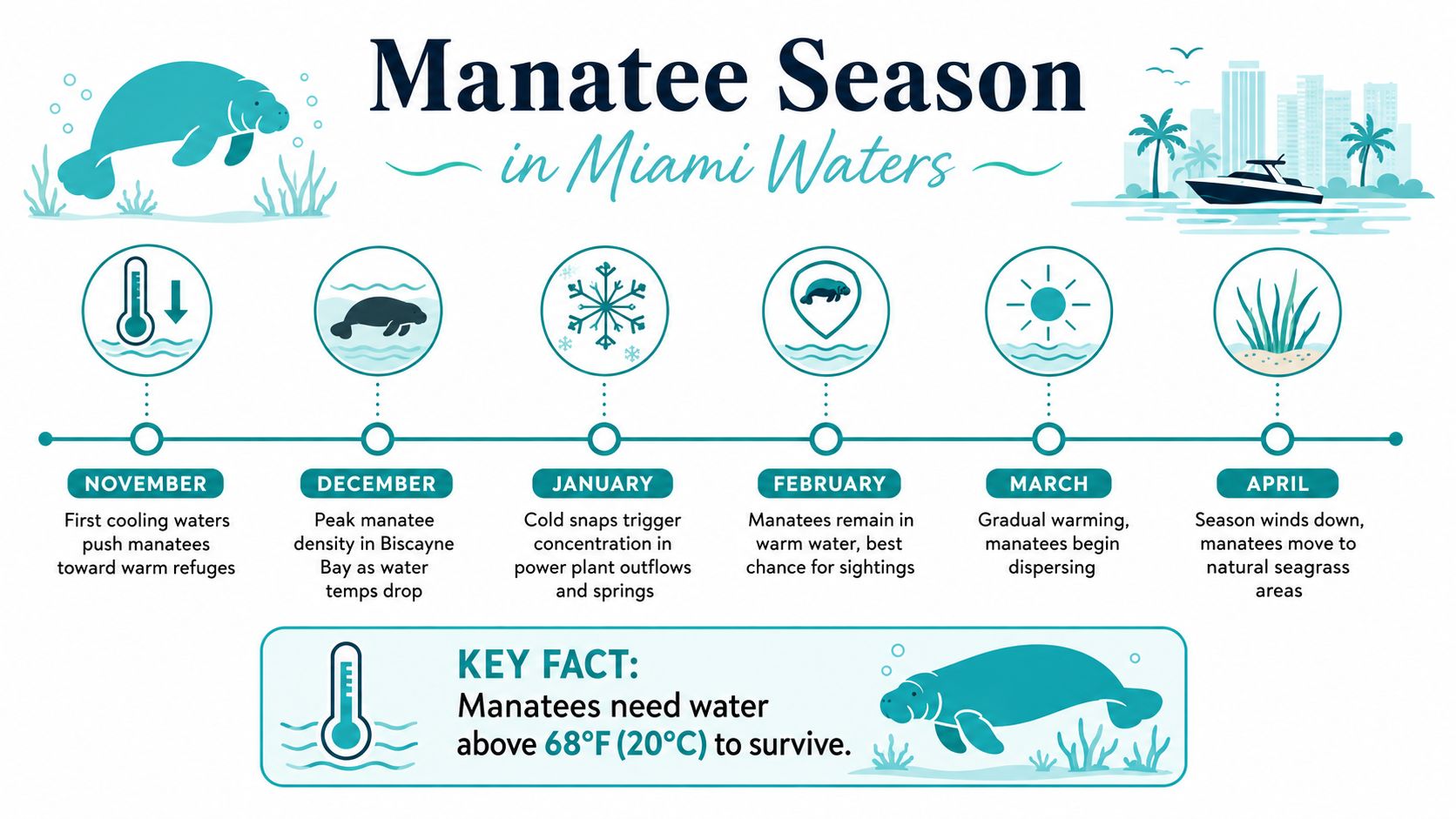
In Biscayne Bay, the useful window is the cooler stretch from November through April, when guides and visitors are most likely to overlap with manatee movement. A launch in that period still depends on weather and location, but it lines up the trip with the season when sightings are most plausible. A visitor planning around that timing is making a wildlife decision, not just a calendar choice.
The most effective on-water habit is simple. Slow down, scan ahead, and let the animal's breathing pattern work in your favor. Because manatees can disappear underwater for a while, a good sighting day often looks like a few short, patient pauses rather than constant forward motion.
For trip planning, the question becomes whether the date and water conditions support a calm paddle or a frustrating search. That's where timing and route choice matter more than enthusiasm. A warm afternoon in the wrong place may produce nothing, while a cool morning in a protected pocket can produce repeat observations.
A planning resource worth keeping in mind for launch timing and trip structure is the broader ecosystem around Shopify SMS guides from the blog, since visitors often need reminders and updates tied to weather changes, booking windows, and day-of decisions. In practice, the best Miami manatee outings are the ones that respect the season instead of pretending every day is equal.
Why Boat Speed and Guide-Led Viewing Matter in Miami
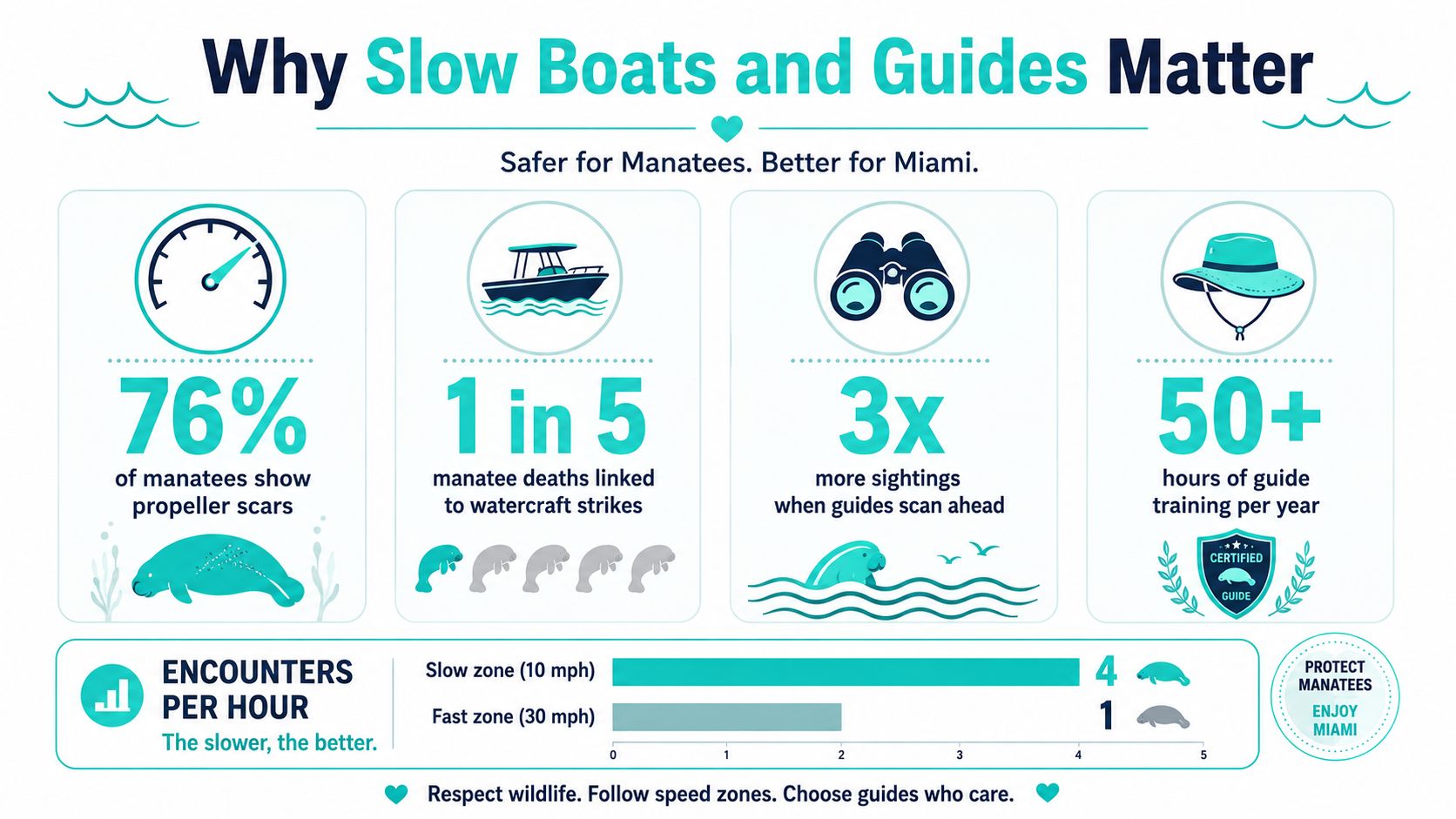
The conservation backdrop is stark. From 1974 through 2016, 21% of reported manatee deaths in Florida were watercraft-related, and researchers found that about 96% of adult manatees have been hit by a watercraft at least once, with one in four adults hit 10 or more times in the statewide study. Those figures explain why Miami operators who take manatees seriously keep speeds low and use careful spotting rather than pushing wake and noise through a habitat zone.
What responsible viewing looks like
A strong Miami outing usually does three things well. It keeps the vessel slow enough to spot a surfacing animal early, it puts a guide in the role of scanner and interpreter, and it concentrates the group in areas where wildlife viewing fits the habitat rather than forcing the habitat to fit the group.
Good tours feel quiet before they feel exciting. That's usually a sign the operator is watching the water instead of chasing movement.
The trade-off is straightforward. Fast, high-volume trips may cover more water, but they also make it easier to miss a surfacing animal and harder to view it responsibly. Slow routes are not only better for manatee welfare, they're often better for the guest, because the guide can interpret behavior, point out cues, and keep the group from drifting into a rushed chase.
How to spot a better operator
A credible operator talks about slow zones, observation, and route flexibility. It doesn't lean on aggressive language or promise guaranteed sightings. It also treats protected bays, canals, and mangrove edges as working habitat rather than a stage set.
For paddlers who want a safety-first mindset before any wildlife trip, the checklist at PADL's paddle board safety guide lines up with the same idea. On a manatee outing, the best conduct around the animal matters more than the vehicle itself.
Best Miami Locations for Reliable Manatee Viewing
Miami doesn't have one single manatee zone that fits every visitor. The strongest locations differ by access, water type, and how much paddling confidence they demand. The harbor just north of the Visitor's Center in Biscayne National Park and Black Point Marina are both listed by the Biscayne Bay Foundation among the top Miami-area manatee-spotting locations for local viewing. Those are the kind of place-specific details that help a visitor choose wisely instead of guessing.
The Deering Estate boat basin and nearby Miami hotspots such as Manatee Bend Park and Virginia Key also belong in the decision set, but they serve different users. Some are better for a relaxed shoreline scan, while others make more sense for paddlers who want a guided route with changing water conditions. A visitor with limited time should think about access first, then choose the viewing method that matches that access.
Miami Manatee Viewing Locations Compared
| Location | Habitat Type | Access Notes | Best Viewing Method |
|---|---|---|---|
| Harbor north of Biscayne National Park Visitor's Center | Protected harbor water | Best for visitors who want a clear, public viewing area | Shoreline observation and calm-water paddling |
| Black Point Marina | Marina and nearby sheltered water | Useful for structured trips and easy planning | Guided paddle or boat viewing |
| Deering Estate boat basin | Basin and sheltered edge habitat | Better for visitors focused on a known Miami-area stop | Calm observation, light paddling |
| Manatee Bend Park | Canal and edge habitat | Location-specific, good for careful scanning | Paddling and patient shoreline watching |
| Virginia Key launch areas | Bay and coastal routes | Best for guided outings with route flexibility | Guided kayak or paddleboard tour |
The practical difference is skill and certainty. Sheltered harbor or marina viewing works well for beginners and short visits, while a more open Virginia Key route rewards guests who can handle wind, current, and a longer search window. A paddler who wants the simplest logistics may prefer a launch tied to PADL's Bill Baggs rentals page, while someone who wants a more guided wildlife experience may choose a route built around Biscayne Bay conditions.
Best-fit rule: Pick the spot that matches your paddling comfort, then let the habitat decide the rest.
What a Miami Guided Manatee Paddle Tour Actually Includes
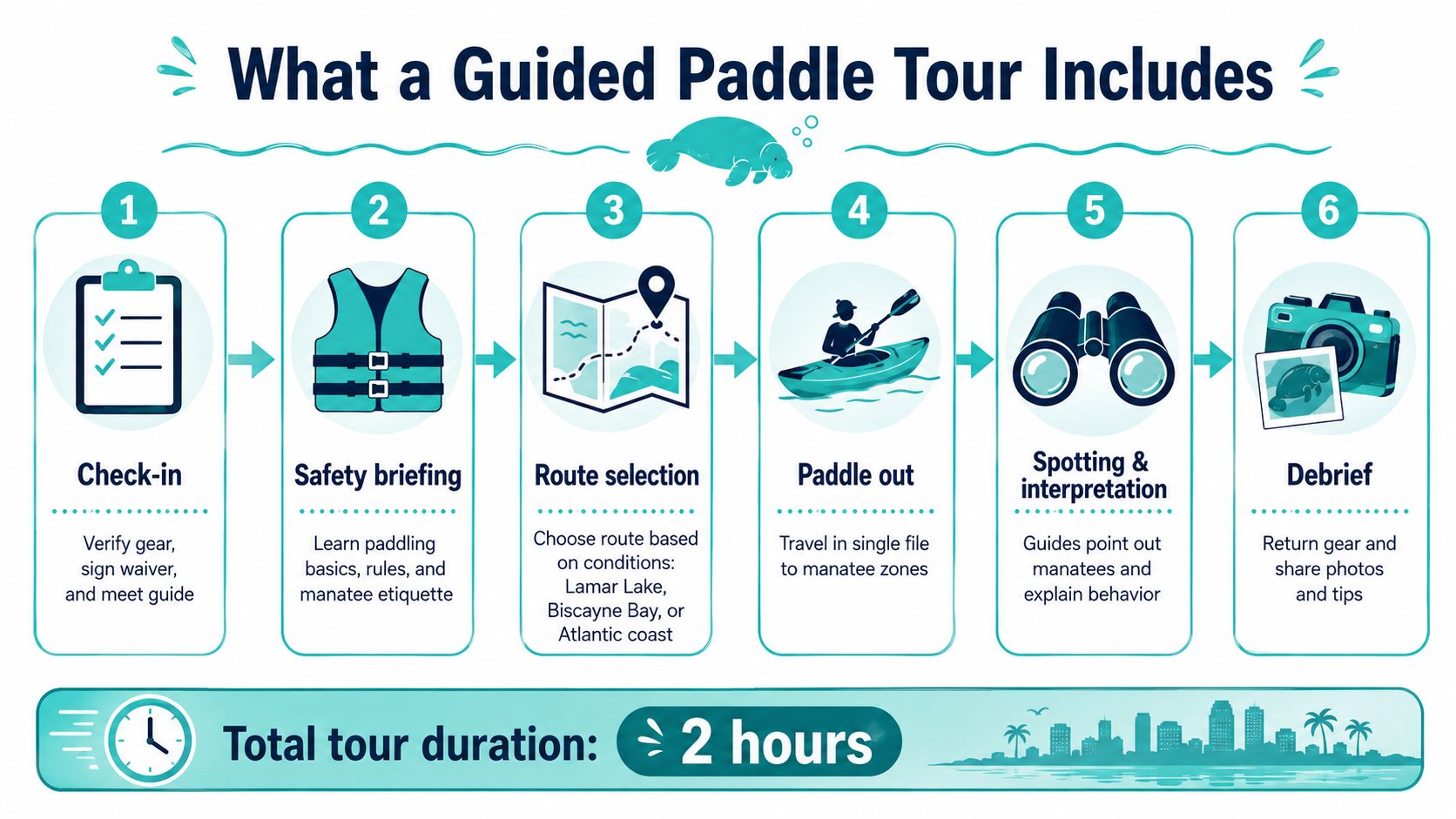
A real Miami guided paddle tour is usually a 2-hour outing with a pre-launch safety briefing and a route that depends on wind, current, and where the wildlife is holding. One published Virginia Key listing includes kayak or paddleboard rental, paddles, US Coast Guard-approved life jackets, and a waterproof phone or wallet bag, which is the kind of basic package most visitors should expect when the operator is serious about the experience route details here.
The parts that matter before launch
The check-in matters because it tells the guide who is new, who needs help, and what gear needs adjustment. The safety briefing matters because the group needs to know how to paddle in formation, how to handle a pause, and how to avoid crowding wildlife. Route selection matters because Lamar Lake, Biscayne Bay, and the Atlantic coast don't behave the same way under changing weather.
The best question to ask before booking is not “Is the tour nice?” It's “What route gets used when wind or current shifts?” That answer shows whether the operator has a real plan or just a fixed script.
Why exposed water changes the trip
When conditions push the outing into more open coastal water, paddling effort rises and the wildlife search can become less efficient. A flatter bay gives the group more time to scan, while a choppier edge can make a sighting feel brief and scattered. That's why good guides stay flexible, because they're trying to keep the trip aligned with both safety and viewing quality.
For a reader comparing options, a structured paddle lesson or rental setup can help build confidence before any wildlife outing, which is why PADL's paddle board tours and lessons page fits naturally into trip planning. Visitors should still verify what's included, what the launch point is, and whether the guide will adjust the route when conditions change.
PADL's Manatee-Focused Paddling Experiences in Miami
PADL fits this Miami setting as a platform for guided tours, kayak and paddleboard rentals, and beginner-friendly support across Miami's Biscayne Bay and coastal waterways. For a traveler planning around manatee season, that matters because the goal isn't just to rent gear, it's to line up the right water, the right timing, and a launch that makes sense for the day.
The most useful version of a manatee outing is the one that helps a visitor move from research to the water without guessing. PADL's Miami options work for people who want a guided outing, a self-service rental, or a simple way to choose a route after checking the season. That makes the platform practical for families, first-time paddlers, and tourists who want support without a heavy learning curve.
Who benefits most
Beginners usually need the most structure, because wildlife trips are harder when the guest is also learning balance, steering, and launch etiquette. Families often want a calmer launch with clear instructions and gear included. Visitors with limited time benefit from a setup that reduces friction, since the season window already does most of the work.
What to bring is simple, a willingness to stay patient, respect for wildlife, and a plan that matches the weather. What should already be included is the basic paddle gear, a proper life vest, and enough launch guidance that the outing starts smoothly.
Strongest fit: Use a guided or supported rental model when the goal is not just to paddle, but to look for wildlife without wasting the best part of the season.
PADL belongs in the planning mix because it turns a manatee-focused Miami paddle into a more structured trip instead of a vague hope. For visitors deciding how to book, the smartest move is to match support level to experience level, then use the season and location guidance above to narrow the choice.
Planning a Miami Manatee Tour That Actually Delivers
A Miami manatee trip works best when the visitor treats it like a wildlife appointment, not a generic boat ride. The best odds come from booking inside the November to April window, choosing a location tied to sheltered habitat, and picking an operator that talks openly about conditions instead of selling certainty. That's the difference between marketed encounters and reliable viewing.
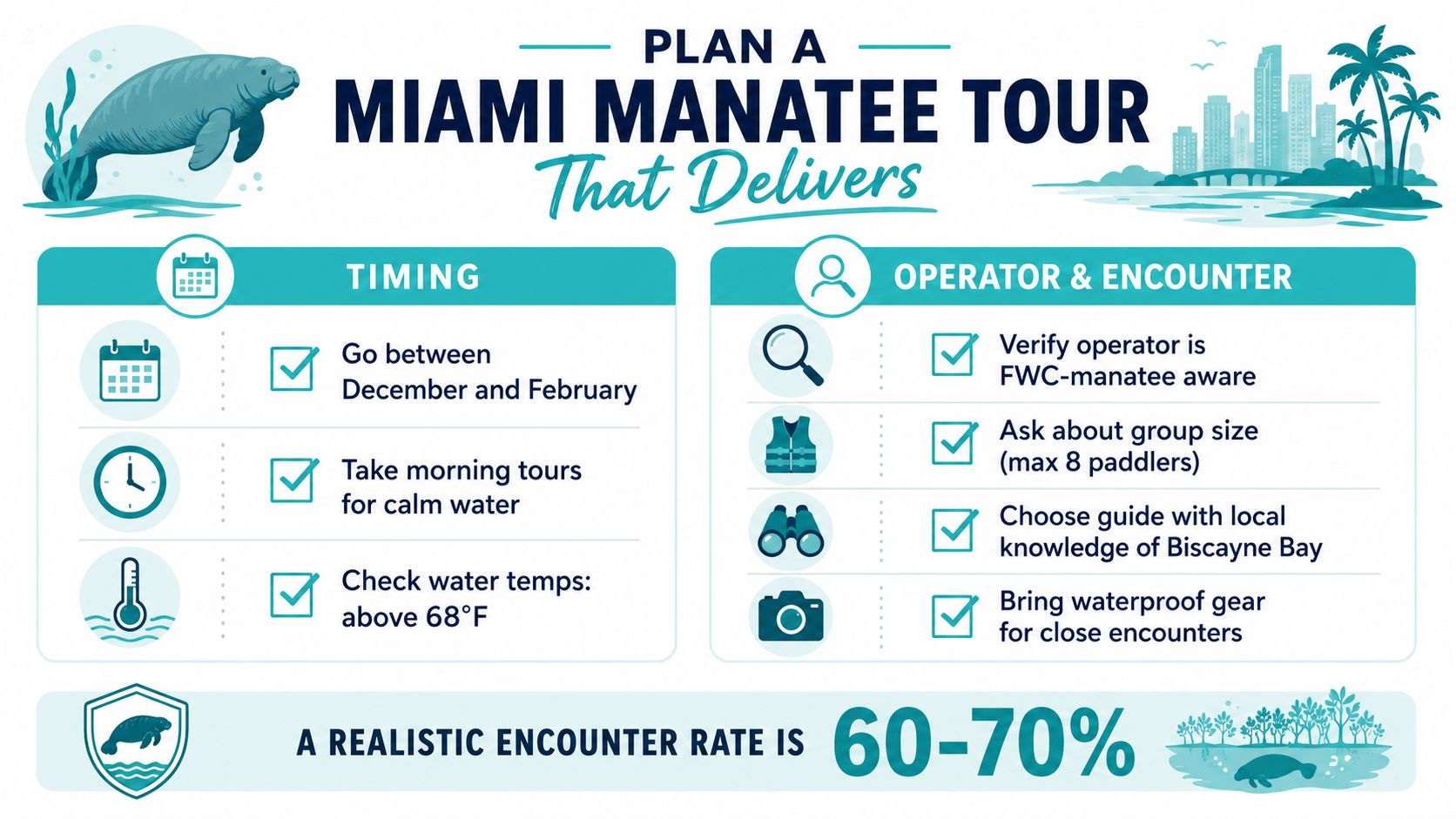
Morning water is usually the cleaner bet, because the surface is calmer and the guide can read movement more easily. Water temperature still matters, and the best days are the ones when the route, the weather, and the season line up rather than fight each other. A trip that starts with that logic usually feels more honest and more rewarding.
Before booking, check three things. First, the launch point and whether it sits near protected water. Second, whether the operator explains manatee etiquette and route flexibility. Third, whether the experience is built around observation instead of speed.
Simple booking test: If the listing doesn't tell a visitor where the trip goes, when manatees are most likely, and how the guide handles changing conditions, it's not a strong wildlife listing.
For travelers who want a practical next step, PADL's Miami paddling options give a direct way to compare guided outings and rentals against the season instead of making a blind choice. Visit PADL to find the Miami setup that matches the date, the launch, and the level of support needed for a real manatee search.