
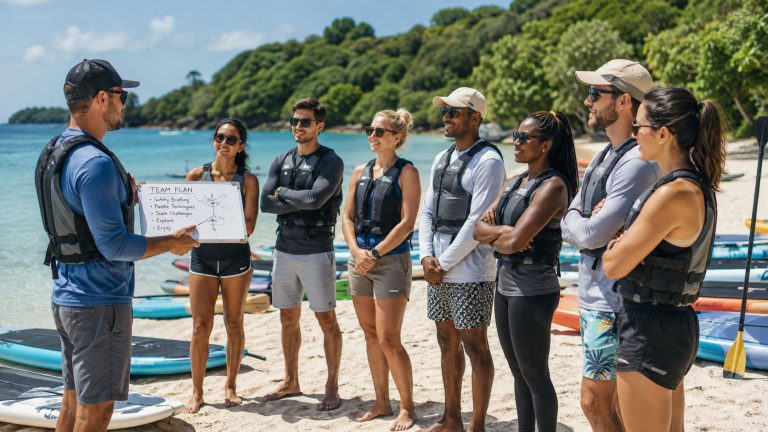
A planner can have the ballroom secured, the agenda approved, and the executive team excited, then get handed one new sentence that changes everything, “Can this be on the water in Florida?” That's where corporate event planning stops being a spreadsheet exercise and turns into a live coordination problem. Tides move, weather shifts, guests arrive in work shoes, and the day's success depends on decisions that indoor guides rarely have to make.
That's also why outdoor corporate events can be unforgettable when they're planned well. The market around corporate events is expanding, with one industry roundup estimating the global corporate events market at $325 billion in 2023 and projecting about $595 billion by 2029 at a 10.6% CAGR, while another places the broader events economy at $1.35 trillion in 2025 and $2.1 trillion by 2032. Directionally, the message is clear, this is not a side project anymore, it's a strategic business function that needs sharper planning. For a practical starting point on the fundamentals, planning your next corporate gathering is useful context before the outdoor specifics come into play.
The Outdoor Corporate Event Reality Check
A retreat planner can walk a site with a venue rep, approve the lunch menu, and still miss significant risks until the first guest steps onto a dock in office clothes. Water-based corporate events introduce moving variables, tide windows, wind, heat, wet surfaces, and a group that may have never held a paddle before. That's not a reason to avoid the format. It's a reason to plan it like a scenario, not like a banquet.
The first mental shift is simple. Indoor events reward standardization, while outdoor events reward preparation for change. A conference room doesn't care if the agenda is compressed by weather, but a waterfront launch point does, and a group of first-timers does not forgive vague instructions once they're standing in sun and spray.
Practical rule: if the venue, activity, and weather all need to cooperate, the event needs a backup path before the invitation goes out.
That mindset is especially useful in Florida, where outdoor corporate gatherings can look effortless on paper and still need careful operational design in real life. A planner who has a clear recovery plan for delays, a location-specific safety protocol, and a realistic arrival experience will usually outperform the planner who books a beautiful setting. For common event questions about group outings, the PADL FAQ is a sensible place to check details before locking in assumptions.
Guests remember whether they felt guided, informed, and comfortable. They rarely remember whether the checklist was impressive.
Defining the Event Goal Before You Book Anything
The first decision in corporate event planning is not the venue. It's the outcome. A retreat aimed at leadership alignment, a client appreciation day, and an employee reward outing all need different levels of structure, energy, and privacy. If the brief is fuzzy, every later choice gets expensive and awkward.
A clean one-page brief should answer three questions. What business result matters, who is attending, and what kind of experience fits the group? Once those are clear, the planner can translate them into a budget and a format that makes sense. The budget should also include a 10 to 15% contingency reserve from day one, with major allocations often landing in venue, catering, AV or production, and travel or lodging if those apply. That reserve matters because outdoor events change more often than indoor ones, and the cost of a weather pivot is easier to absorb when it's planned.
A useful way to talk to leadership is to ask what success would look like in observable terms. That could mean stronger team connection, a smoother leadership offsite, or a better experience for high-value guests. The point is not to force a metric onto everything. The point is to keep the event from becoming a “nice day out” with no business purpose attached.
A second filter is the audience profile. Group fitness, comfort in the sun, travel distance, and whether people are local or flying in all affect the agenda. More than 60% of corporate event attendees travel 50+ miles in one dataset, and that should change how planners think about arrival windows, lodging, and fatigue. The bigger the travel burden, the more the itinerary needs breathing room.
For a planning template that pairs better with private outings, 2026 event planning playbook is helpful as a broader reference point. The better the brief, the easier it is to decide whether a paddle outing, a guided eco-tour, or a quieter shoreline gathering fits the moment.
PADL private events and corporate outings can fit into that brief when the goal is a hosted outdoor gathering with activity support rather than a standard meeting room format.
Choosing Activities That Actually Fit Your Group
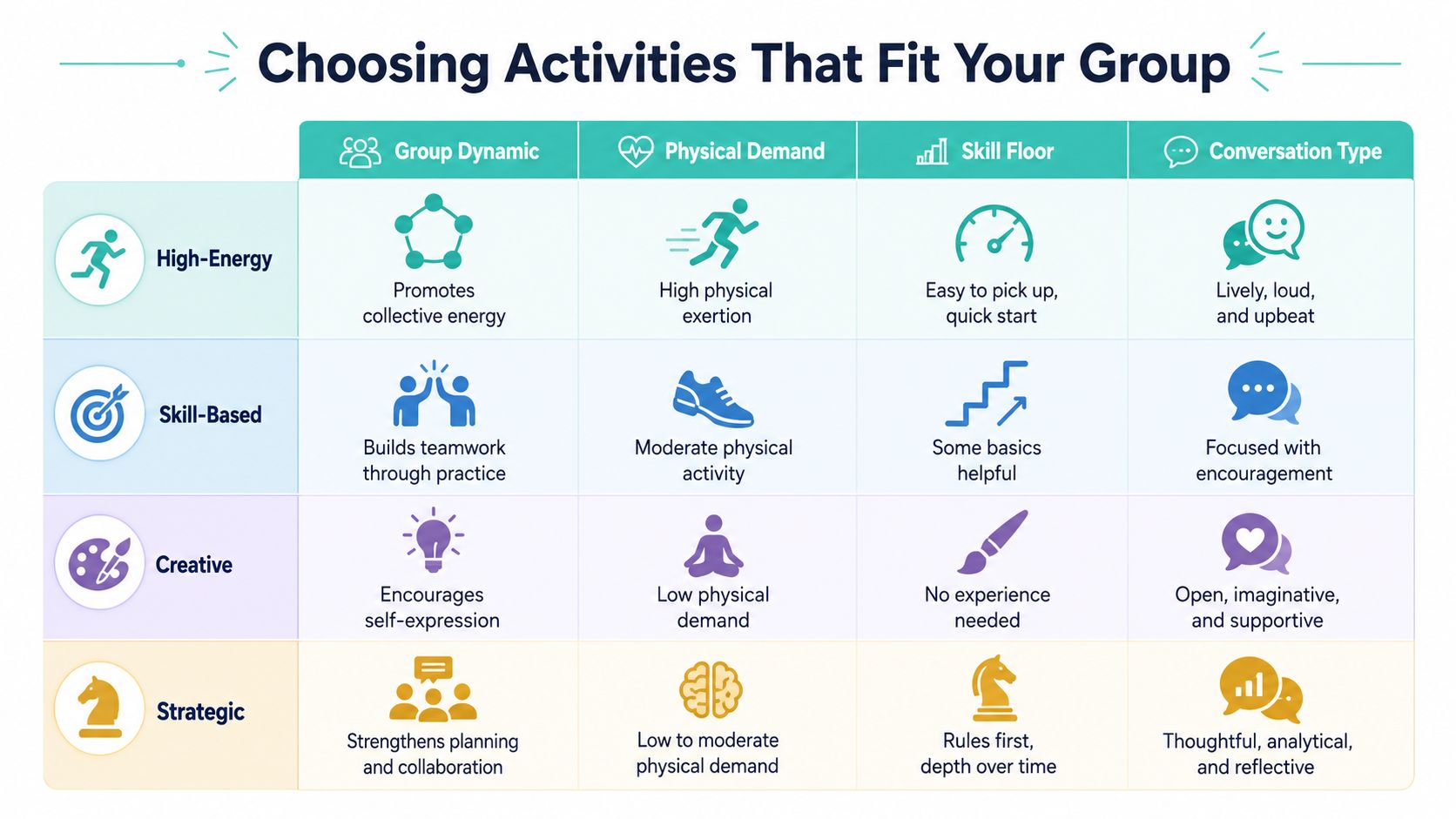
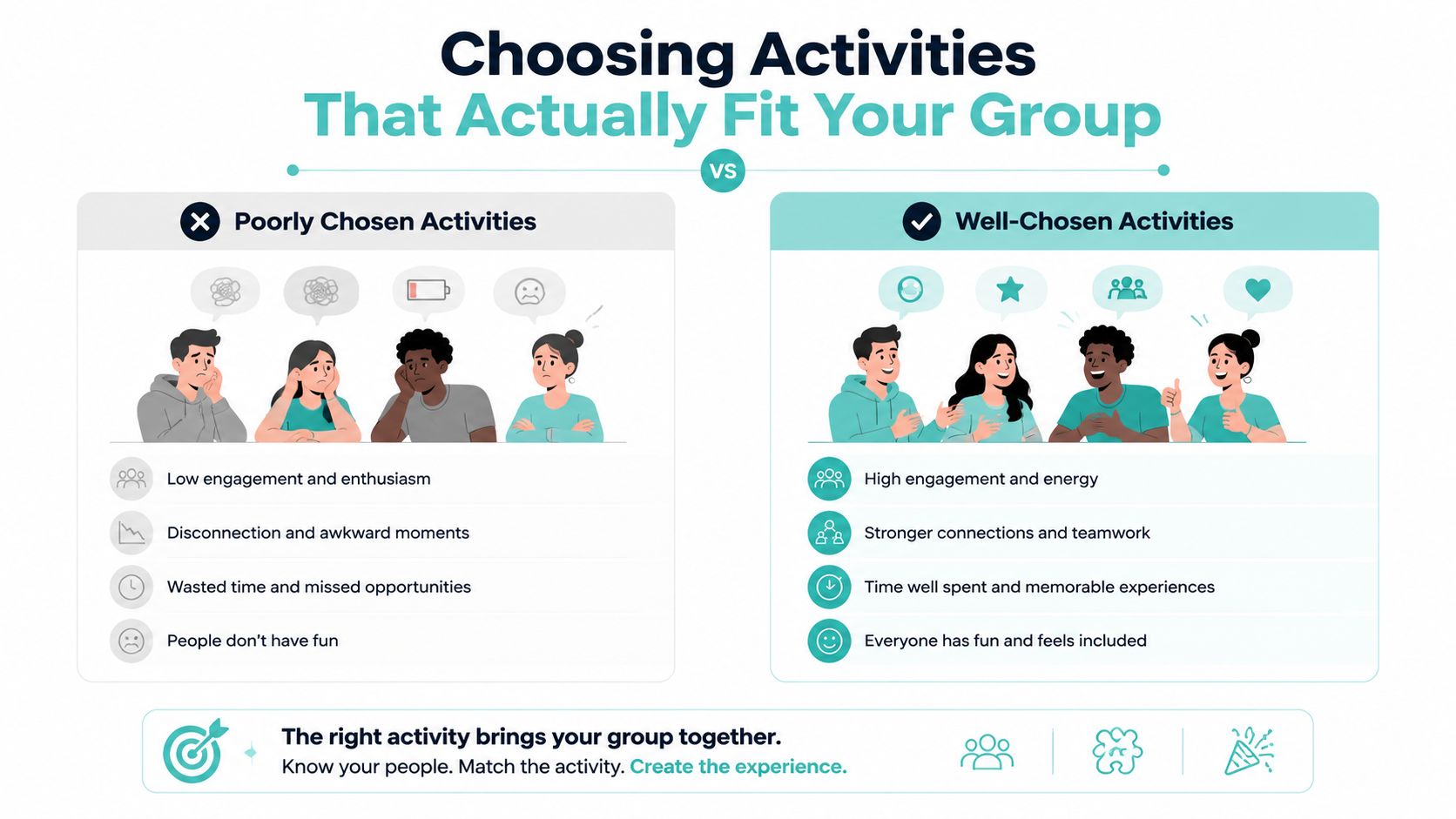
Bad activity selection is one of the fastest ways to flatten a corporate event. The brochure version of planning says every group wants adventure. Real groups don't work that way. Some teams need novelty and light challenge, some need gentle participation, and some need an activity that creates conversation without turning lunch into a fitness test.
Match the activity to the social outcome
High-energy activities work when the goal is shared momentum. They're strongest for groups that already know each other well enough to laugh through mistakes and keep moving. Skill-based activities are better when leadership wants novelty and a little learning curve, because the shared challenge gives people something to discuss besides their job titles.
What usually works: activities that create a reason to talk while people are doing something simple together.
Creative formats fit teams that need reflection or fresh thinking. Strategic formats fit groups that want to solve something together, often with less physical strain and more room for observation, planning, and quieter collaboration. The wrong move is assuming that more intensity equals better bonding. It usually just means fewer people relax.
Where paddleboarding and kayaking fit
Paddleboarding and kayaking work well for mixed groups because the skill floor is approachable, the conversation is casual, and the activity can be scaled by pace rather than by bravado. They also suit outdoor Florida settings where the setting itself does a lot of the work. Sailing, surfing, biking, and guided eco-tours each solve different problems, though. Sailing often feels more novel and socially oriented, surfing is a bigger ask physically, biking can suit ground-based exploration, and eco-tours are often the safest answer when the group needs light movement and a low intimidation factor.
For a 100-person employee reward day, scalability usually matters more than novelty. For a smaller leadership team, a more skill-based outing can create better memory and better conversation afterward. PADL experiences can be used as one option in that mix when the group needs an outdoor format that feels active without being overly technical.
Logistics, Permits, and Weather Risk for Outdoor Venues
Outdoor plans either stay tight or start unraveling. A waterfront site might be beautiful at noon and awkward by midafternoon if parking is distant, shade is limited, or the group has to move gear across uneven ground. The scouting process should start with access, not aesthetics. Where do guests arrive, where do they wait, where does equipment stage, and what happens if the water is not usable at the original time?
Build the venue checklist around movement, not just capacity
For Florida outdoor events, the venue needs to be evaluated as a living system. A planner should confirm guest arrival flow, transport from out of town, gear handling, restroom access, shade, and the path between check-in and the activity launch point. If the group includes people coming from several cities, travel behavior matters. One dataset says more than 60% of corporate attendees travel 50+ miles, which is a reminder that “easy to get to” is not the same as “easy to execute.”
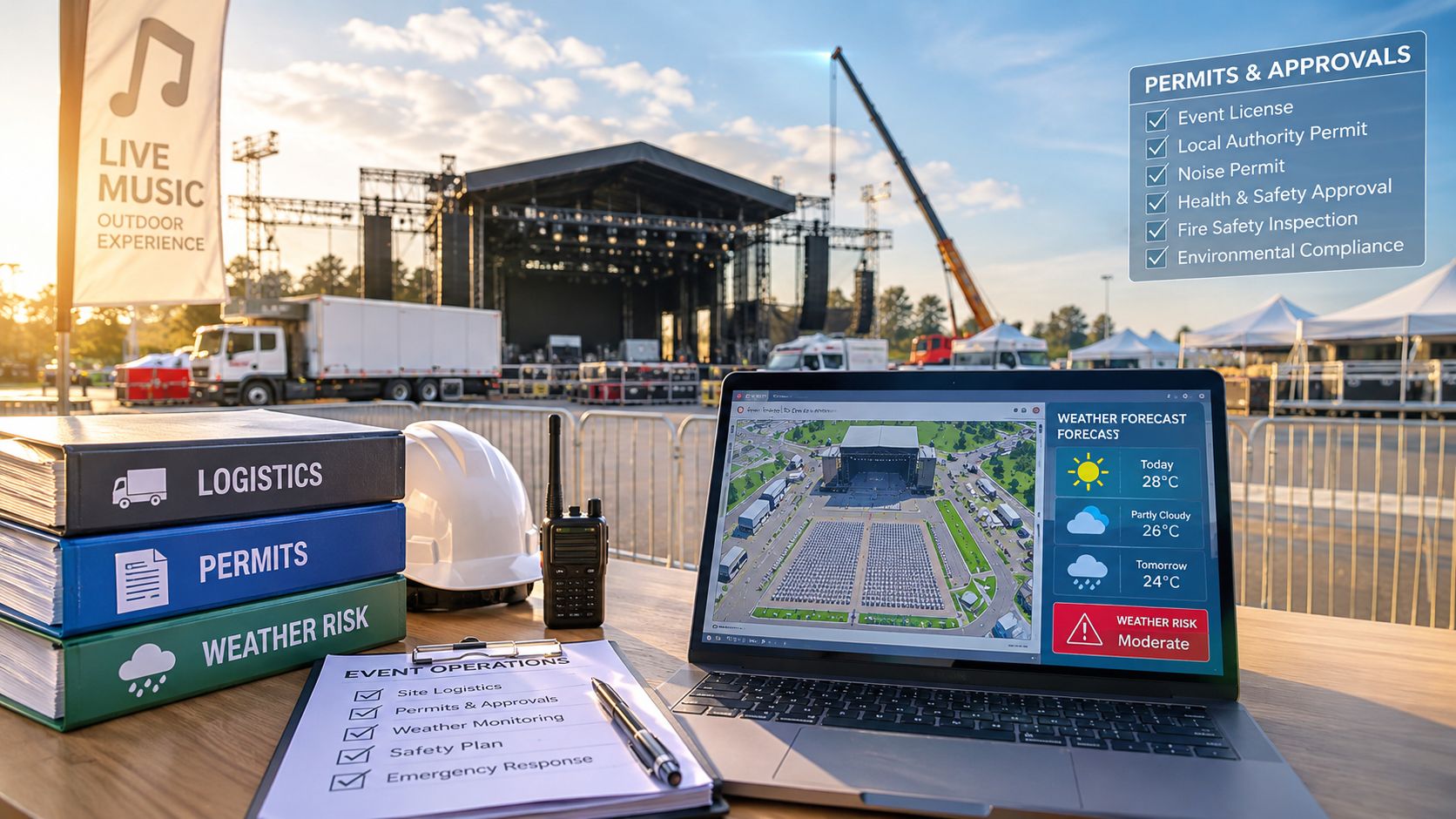
Permits and insurance also need early attention. State parks, springs, marinas, and public waterways can each carry their own rules for group use, equipment staging, and commercial activity. The safest approach is to ask the site operator to specify what's allowed in writing, then align vendor insurance and staffing to that scope. If the answer is unclear, the event is not ready.
Weather should trigger decisions, not debate
Florida weather risk is not abstract. Afternoon thunderstorms, heat, and changing water conditions can force schedule compression or relocation, and that decision should be made by protocol, not by committee in the moment. The best planners define what happens if the day needs to be delayed, shortened, or moved indoors before anyone arrives. That protocol should also name who gets notified, how updates are sent, and which parts of the agenda can be cut without hurting the core experience.
If a weather update changes the event, the communication plan has to be faster than the rumor chain.
That is especially true for outdoor corporate events with business attire, first-time paddlers, or a mixed-age audience. A short, written logistics checklist should cover permits, transport, staging, weather thresholds, backup shelter, and a time buffer for gear handoff. It keeps the event from depending on memory when the schedule gets pressured.
PADL locations can be useful when venue selection needs to stay tied to an actual water access point rather than a generic outdoor space.
Building a Sample Agenda and Run-of-Show Document
A good outdoor agenda protects the parts of the day that create conversation. The instinct is often to fill every minute with programming, but that usually makes people tired and less social. On the water, the most valuable exchanges often happen while guests are getting oriented, changing pace, or sitting together after the activity.
A realistic one-day Florida retreat might start with arrival, check-in, and a short welcome, then move into gear fitting and a safety briefing before the activity begins. After the main session, a transition window for rinsing off, changing, and regrouping matters just as much as the activity itself. Lunch should not be treated like dead time. It should be used as a reset where people can talk without being asked to perform.
The run-of-show document should be built for vendors as much as for leadership. It needs arrival times, contact names, handoff points, meal timing, weather pivot triggers, and who approves changes on site. If the day includes a private gathering or hosted celebration, the schedule should also show which parts are flexible and which parts are fixed. A useful reference for a hosted waterfront format is PADL Party at the Virginia Key Beach Club, especially when comparing a casual social flow against a more formal retreat agenda.
The best run-of-show documents are boring in the best way, everyone knows where to be, when to move, and who owns the next step.
The quiet time in the middle of the day is not wasted space. It's where colleagues talk naturally, compare notes, and leave with a stronger sense of each other than they had at the start. That is usually the value of a well-run outdoor corporate event.
Coordinating Vendors and Activity Operators
Once the agenda exists, supplier management becomes the primary job. The planner has to decide whether to work with a single provider that can manage equipment, instruction, and group coordination, or to stitch together separate vendors for each piece. A single provider often reduces handoff risk and makes on-site problem solving simpler. Multiple vendors can sometimes offer more control or specialized services, but they also raise the chance that one person assumes another person is handling the handoff.
Contracts should answer practical questions, not just legal ones. Cancellation terms, weather handling, capacity, safety staffing, and equipment condition all belong in writing. The pre-event call matters too. It's the moment to verify arrival order, loading access, emergency contacts, radio or phone coverage, and who speaks to guests if the schedule shifts.
A central document folder helps prevent version drift. Approvals, permits, insurance certificates, run-of-show notes, and vendor contacts should live in one place so the planner isn't hunting through texts while a shuttle unloads.
For planners looking at food coordination as part of the vendor mix, start a catering company in the UK is a useful reminder that service businesses rise or fall on clear systems, even when the setting is casual. That same principle applies on the water. The smoothest event is usually the one where every supplier knows the handoff before the first guest arrives.
Designing for Real Connection and Measuring What Matters
Most corporate event planning still overvalues attendance and undervalues connection. That's a mistake, especially outdoors, where the setting can either invite conversation or scatter people into isolated clumps. The easiest way to engineer connection is through transitions, not speeches. Shared check-in, seated meal moments, and a thoughtful end-of-day wrap all help colleagues interact without pressure.
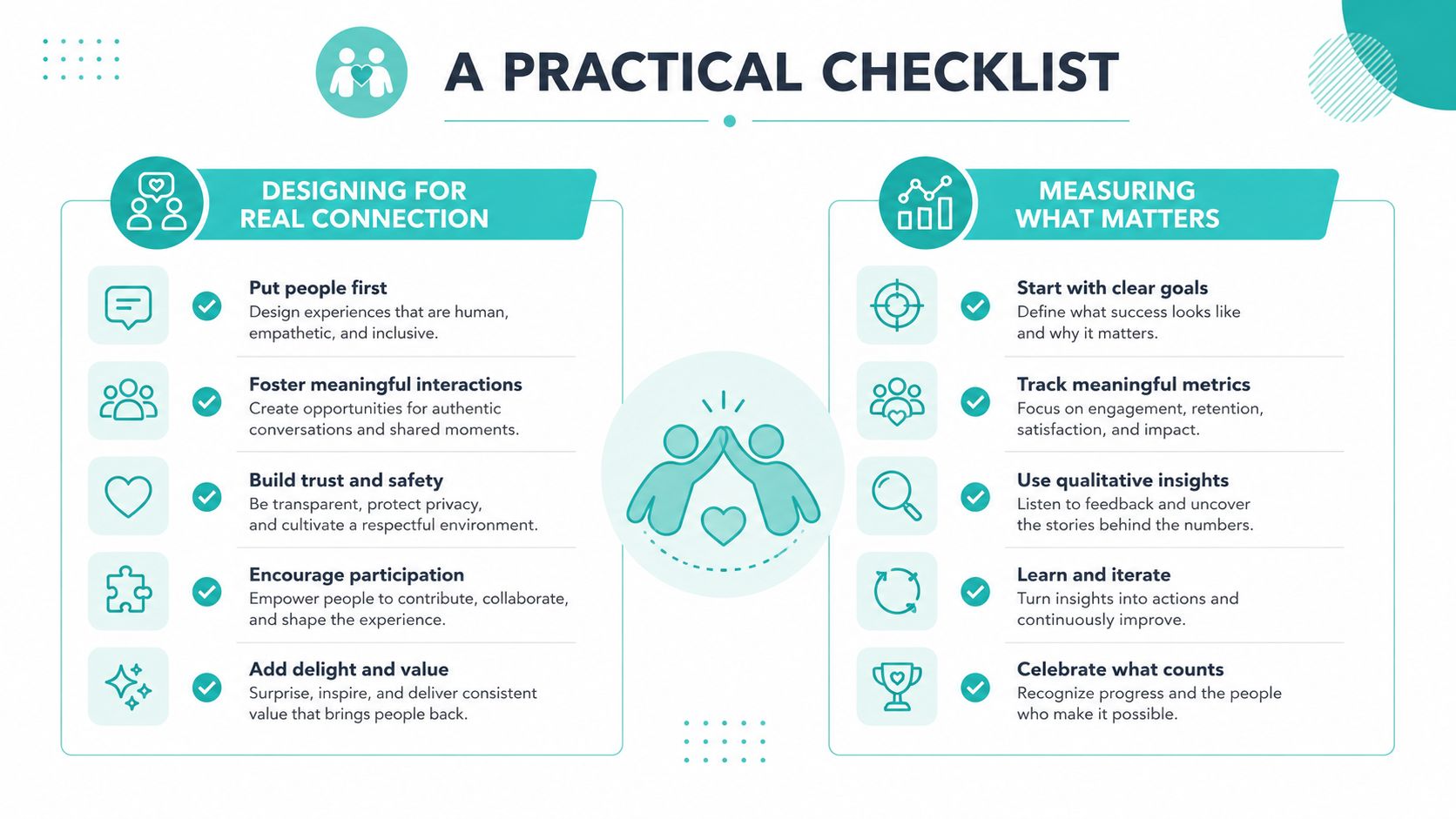
The right metrics are the ones leadership can use. A solid tracking set usually includes registration rate, attendance, NPS, post-event pipeline, and cost per attendee. Those measures keep the event from being judged only by feel, while still leaving room for the qualitative part that matters most, whether people connected in a way that will show up later.
A final-week checklist should be short enough to use under pressure. Confirm the weather protocol, verify vendor arrival order, review attendee communication, check transport timing, and make sure the event owner can approve a pivot quickly if the forecast changes. If the planner can answer those five points clearly, the day usually feels calmer for everyone else.
PADL can support Florida corporate outings with outdoor activity options, equipment coordination, and group-friendly waterfront experiences that fit retreats better than a standard meeting room. For planners who need a venue-and-activity partner for a water-based gathering, PADL is a practical place to start the conversation.