
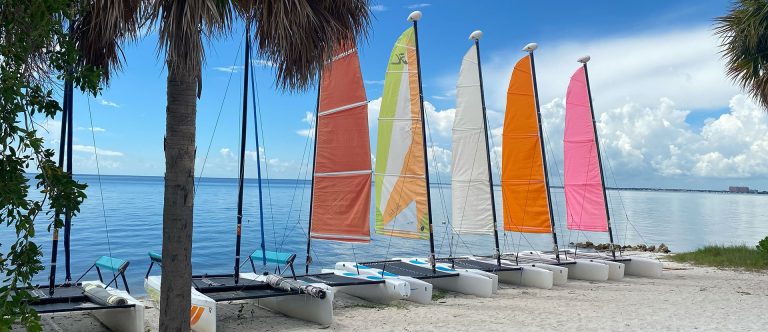
The first time someone steps onto a Hobie catamaran, the questions come fast. Is it tippy? Is it fast? Will I spend the whole lesson trying not to mess up the sail?
- What Your First Sailing Lesson Actually Looks Like
- A simple Florida filter for first-timers
- Questions worth asking before booking
- How to Pick a Sailing School in Florida
- Beginner sailing lesson formats compared
- Lesson Formats, Certification Paths, and What They Cost
- What to do while the boat is moving
- The pre-launch checklist that keeps beginners grounded
- Safety Basics That Belong in Every First Lesson
- Milestones that signal real progress
- Practice frequency matters more than clock time
- A Realistic Progression From First Lesson to Solo Sailing
- Match the boat to the outcome
- Dinghies, keelboats, and catamarans feel very different
- Choosing the Right Boat Type for First Lessons
- Trim the sail until it just works
- Steer with small, calm inputs
- Read the wind before touching anything
- The Three Core Mechanics Every Beginner Learns First
- What to bring and why it matters
The good news is that beginner Hobie sailing lessons are usually simple, active, and surprisingly fun. A good first session teaches a few core moves, lets the sailor feel the boat respond right away, and builds confidence without drowning anyone in jargon. Hobie cats are responsive, stable for their size, and a great fit for people who want sailing to feel hands-on from the start.
Table of Contents
- What a First Hobie Sailing Lesson Feels Like
- The First Skills You Learn on a Hobie Cat
- Why Hobie Catamarans Work So Well for Beginners
- How Long It Takes to Get Comfortable
- Basic Safety for Beginner Hobie Sailing
- Lesson Formats and What They Cost
- How to Choose a Hobie Sailing School in Florida
What a First Hobie Sailing Lesson Feels Like
Most first lessons start on shore with a quick walk-through of the boat, the life jacket, and the controls. Then you launch and get moving quickly. That is part of the appeal. On a Hobie, small changes are easy to feel, so beginners can connect action to result almost immediately.
A strong first lesson does not try to teach everything. It teaches enough to get the sailor steering, trimming, and paying attention to wind direction. That is where the fun starts.
What to bring
Keep it simple.
- Wear clothes that can get wet
- Use sun protection
- Bring secure, non-slip footwear
- Wear a properly fitted life jacket
If the day is calm and the water is manageable, a beginner has a much better chance to focus on the boat instead of fighting conditions.
A good first Hobie lesson should feel lively, not chaotic.
For readers who want a Florida-based starting point for sailing experiences alongside other waterfront activities, the local option is PADL sailing.
The First Skills You Learn on a Hobie Cat
On a Hobie catamaran, beginners usually learn three things first, how to read the wind, how to steer with small inputs, and how to trim the sail so the boat moves cleanly.
Feel the wind first
Before touching a line, the sailor needs to notice where the breeze is coming from. You can feel it on your face, see it on the water, and spot it in the sail when it starts to flutter. Many beginner sessions start on a beam reach, with the wind crossing the boat from the side, because it is one of the easiest and most stable points of sail to learn.
Steer gently and stay balanced
Hobies reward calm steering. Big tiller movements usually create extra work, while small corrections keep the boat moving smoothly. Because a catamaran has a wide platform, many first-time sailors feel more secure than they expect, but balance still matters. Move deliberately and keep the boat settled.
Trim the sail until the boat settles
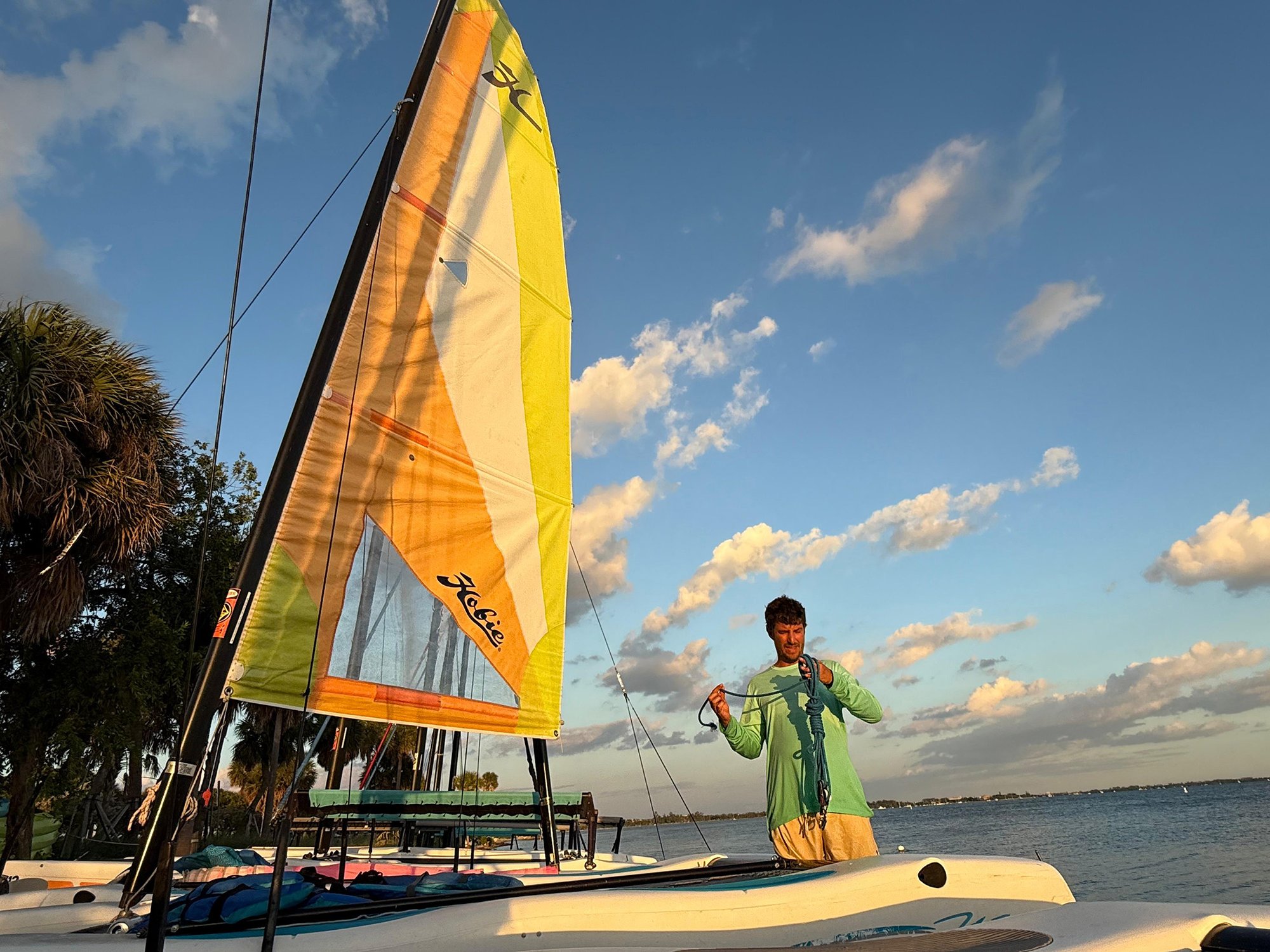
Sail trim sounds technical, but the first version is simple. Pull in until the sail stops luffing and the boat feels smoother. Ease out when the sail loads up too much. Beginners usually know they got it right when the ride goes from noisy and flappy to quiet and steady.
Early progress feels obvious on a Hobie because the boat answers back right away.
A local option for a beginner-friendly starting point is PADL Hobie Sail Club Miami.
Why Hobie Catamarans Work So Well for Beginners
Hobie catamarans give beginners a mix that is hard to beat, speed, stability, and clear feedback. They are playful enough to make the lesson exciting, but broad enough in stance that many new sailors feel comfortable quickly.
What makes a catamaran different
Unlike a single-hull sailboat, a catamaran rides on two hulls. That wider footprint helps reduce heeling and gives many beginners a more confident first experience. It also means the boat accelerates quickly when the sail is trimmed well, which makes cause and effect easier to understand.
That does not mean Hobies sail themselves. Beginners still need to learn wind awareness, timing through turns, and smooth movement across the boat. But for people who want sailing to feel energetic instead of slow, a Hobie is often the right match.
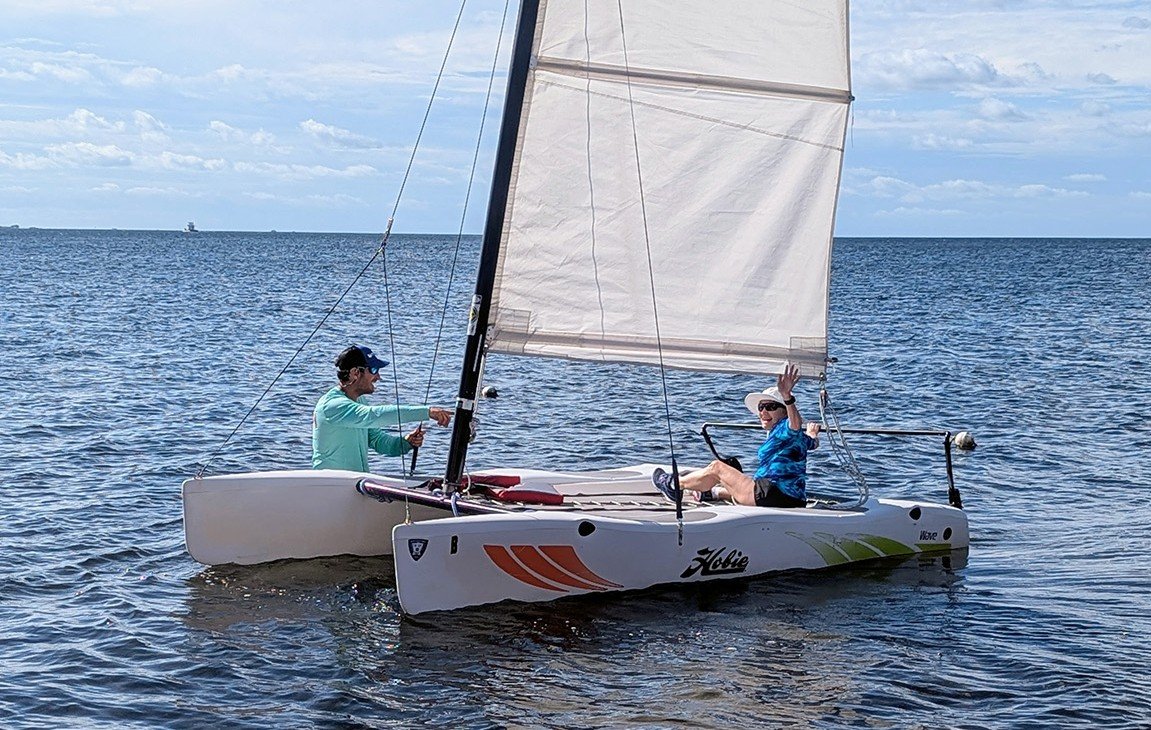
A local example that shows how protected water can support progression is PADL Bay Club at Pelican Harbor. For students who want a more active small-boat path, PADL Hobie Sail Club Miami is a good example of a program built around responsive craft.
How Long It Takes to Get Comfortable
Most beginners can learn the basic loop in an early lesson, steer, trim, tack, and recover from small mistakes. Real comfort takes repetition.
The fastest improvement usually comes from shorter, regular sessions instead of one long gap-filled course. General beginner timelines describe a similar path from early fundamentals to supervised sailing, then to growing solo confidence over time. SailTies’ learning timeline
You do not need to feel fearless. You need to feel repeatable.
For students who want a path that also supports inclusive instruction, PADL’s accessibility and inclusion approach is a useful example of how a program can make early learning easier to access.
Basic Safety for Beginner Hobie Sailing
Beginner safety on a Hobie is not complicated, but it does matter.
- Check weather before launching
- Start in protected water when possible
- Wear a snug, secure life jacket
- Keep movements low and deliberate
- Learn a clean tack before pushing speed
If the life jacket question is still unresolved, a practical place to compare options is find the safest inflatable PFD, because comfort and fit matter when a beginner is learning for the first time.
One common beginner mistake is turning too slowly and getting stuck facing the wind, often called in irons. A steady, committed turn usually solves that.
For learners who want a broader view of access, comfort, and support around outdoor instruction, the resource at PADL accessibility and inclusion fits naturally beside the safety conversation.
Lesson Formats and What They Cost
Beginner sailing lessons commonly cost $50 to $100 per hour for private instruction and $300 to $1,000 per course for group lessons, with broader sailing-lesson spending reaching up to $3,000 depending on instructor level and format. As noted in Improve Sailing’s cost guide, format matters as much as price.
| Format | Typical Cost | Best For |
|---|---|---|
| Group lesson | $300 to $1,000 per course | First-timers who want structure and lower entry cost |
| Private lesson | $50 to $100 per hour | Learners who want direct coaching |
| Certification track | Varies | Sailors who want a longer path toward independence |
For readers who want another way to compare waterfront learning options, PADL experiences is a useful point of reference.
How to Choose a Hobie Sailing School in Florida
A good Florida school for beginner Hobie sailing should make the first session feel manageable. Look for protected water, clear weather policies, small enough groups for real coaching, and a boat setup that matches beginner goals.
Ask these before booking:
- What Hobie model do beginners use?
- How many students are in each lesson?
- Do lessons start in protected water?
- What happens if weather changes?
- What skills are covered on day one?
If a school can answer those clearly, that is a very good sign.
A first Hobie lesson should leave a beginner smiling, a little salty, and ready to go again. If the goal is to learn on a boat that feels active, approachable, and fun from the first outing, PADL is a practical place to start exploring Hobie sailing options in Florida.