
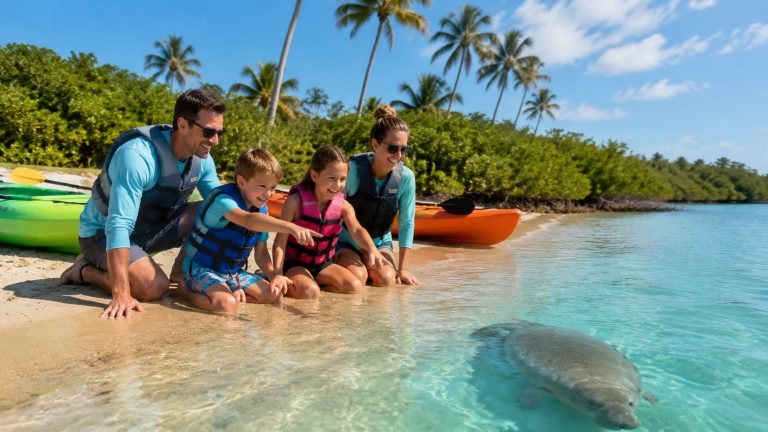
A family can spend an evening scrolling through Florida spring break packages and still have no clear idea where the trip will work. One beach may have heavy crowds, paid parking, and strict access controls, while a quieter launch a short drive away offers a calm paddle, wildlife, and room for children to move at their own pace. The difference isn't the state. It's the planning.
Florida spring break works better when families treat it as an outdoor travel season rather than a resort-strip default. The state's coastline, springs, mangroves, estuaries, and inland waterways create very different experiences, but each comes with its own timing, tide, access, and safety considerations. A good itinerary starts with an activity goal, then chooses the destination around it.
Rethinking Florida Spring Break for Families
The familiar Florida spring break story centers on crowded beaches and college parties. That history is real. The 1960 release of Where the Boys Are helped establish Fort Lauderdale as a collegiate spring-break destination, and historical accounts describe the city as the U.S. spring break capital for the following quarter century. In 1985, about 350,000 college students visited Fort Lauderdale and spent an estimated $120 million during the season, before the city began its aggressive transformation away from rowdy spring-break tourism in 1986. Historical research on Fort Lauderdale's spring-break era puts that shift in useful context.
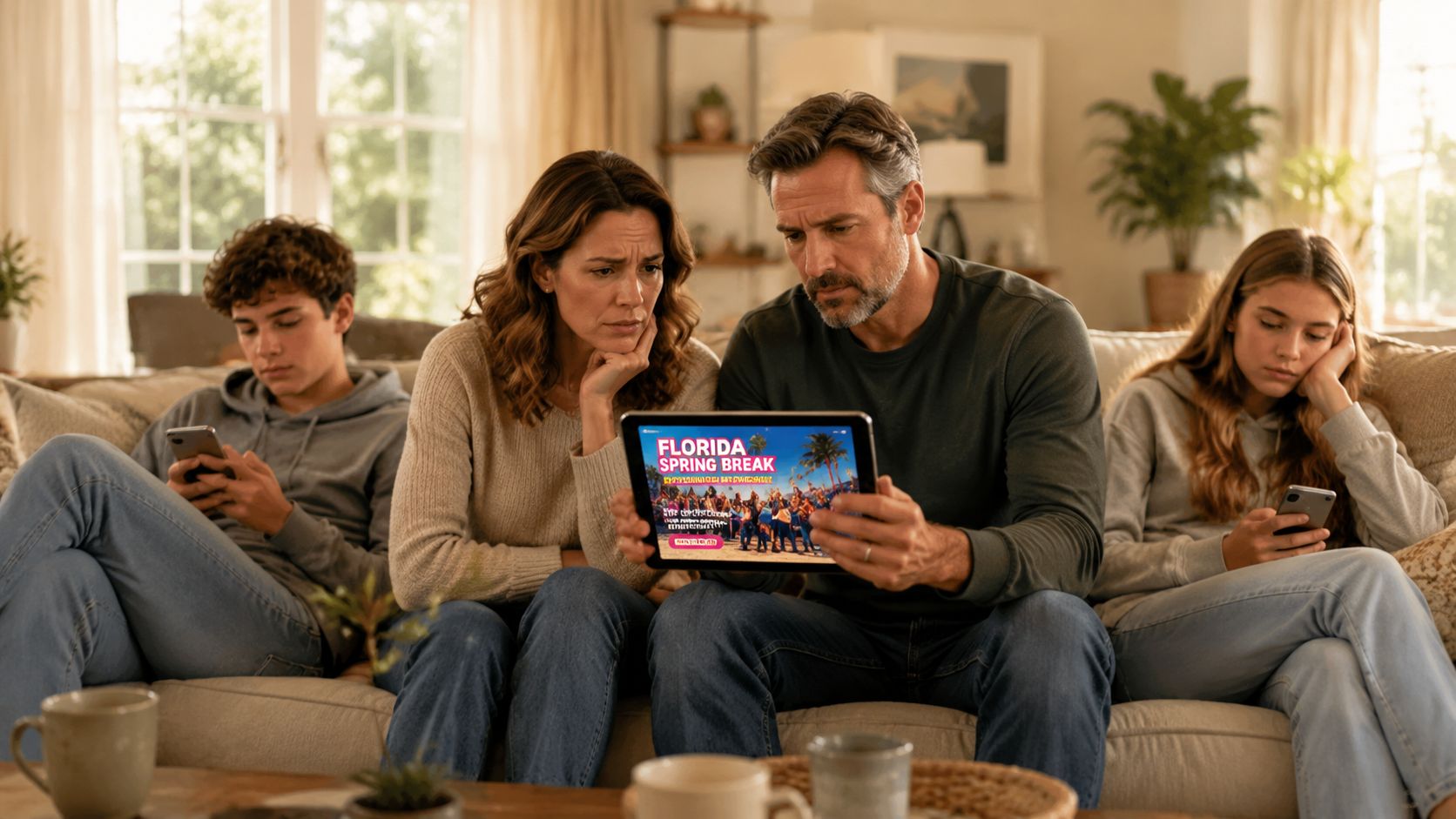
The family version of Florida spring break begins with a different question: what should everyone do outside? A spring-fed paddle through central Florida can suit a family that wants freshwater and wildlife. A shallow coastal outing may work better for children who need frequent breaks. A reef-focused trip can appeal to confident swimmers, while a beach-and-boardwalk plan may be easier for mixed ages.
Choose the experience before the hotel
The strongest itineraries usually revolve around one primary goal:
- Wildlife paddling: Choose a calm river, spring, mangrove edge, or estuary where the group can move slowly and stop often.
- Snorkeling: Look for conditions that match the least confident swimmer, not just the strongest adult.
- Coastal exploration: Barrier islands, tidal flats, and sheltered bays offer variety without requiring every day to be a beach day.
- Skill-building: A lesson or guided outing gives beginners structure and helps parents avoid managing every detail from shore.
Florida's spring-break economy has also grown beyond its student origins. A historical summary reports that Fort Lauderdale's nine-week spring-break period drew about 700,000 visitors in 2004, mostly families and European tourists, with roughly $800 million in spending. College-student visitation had fallen to around 10,000 by 2006 after restrictive policies redirected the party crowd elsewhere. The historical summary of Fort Lauderdale tourism shows why the season now serves very different types of travelers.
Treat logistics as part of the adventure
A family can enjoy Florida's water without chasing the busiest shoreline. The practical work happens before launch: checking tide movement, confirming parking, reviewing local beach rules, and booking equipment for the dates when schools are out. Families looking for structured outdoor activities for children can also review PADL Adventure Camp options when a supervised activity fits the trip better than an unplanned beach afternoon.
Understanding Crowd Patterns and Regional Rules
Florida spring break doesn't arrive as one uniform wave. College calendars, Florida school districts, and out-of-state school breaks create a rolling season that can stretch from late February into mid-April. Florida public schools in 2026 align primarily around the weeks of March 16 and March 23, with most educational institutions using the week of March 16 as their break window. The 2026 Florida spring-break calendar coverage gives families a useful starting point, but individual district and university schedules still matter.
Crowd pressure also changes the practical meaning of a destination. VISIT FLORIDA's Q1 2026 estimate counted 39.88 million visitors arriving in the state from January through March 2026. Orlando International projected more than 7.4 million passengers during the spring-break travel window, with about 53,000 flights and a peak day of roughly 212,000 travelers. Coverage of the statewide and airport projections illustrates why rental pickup, parking, roads, and last-mile travel can become the primary bottlenecks.
Rules change from one coast to the next
Destination marketing often makes neighboring communities look interchangeable. They aren't. A municipality may limit alcohol on the beach, control vehicle access, add seasonal parking charges, or close certain areas overnight. Another county may maintain a quieter operating environment with fewer event-related controls.
Families should confirm four details before choosing a launch:
- Access hours: A beach or ramp may not be available at the time a family wants to start.
- Parking terms: Seasonal rates, payment requirements, and overflow arrangements can change the value of a convenient location.
- Watercraft rules: Some areas limit motorized craft or separate launch zones from swimming areas.
- Event activity: Permitted concerts, festivals, and student events can change traffic and noise even when the beach remains open.
| Region | Peak Crowd Window | Parking Policy | Beach Access Rules | Family Outdoor Rating |
|---|---|---|---|---|
| Miami Beach | Rolling school and college breaks | Seasonal surcharges and controlled access may apply | Enforcement, checkpoints, and controlled Ocean Drive access can affect movement | Moderate for families who plan away from peak strips |
| Panama City Beach | Main March school-break weeks | Busy lots and seasonal demand | Overnight beach closures and alcohol restrictions may apply | Moderate when families choose daytime outdoor activities |
| Daytona Beach | College and school-break waves | Expect event-sensitive demand | Seasonal ordinances can shape beach driving and activity areas | Moderate to good outside the central party zone |
| Cedar Key | Lighter, dispersed seasonal demand | Generally more relaxed planning conditions | Confirm local access and launch rules before arrival | Good for low-key coastal exploration |
| Ten Thousand Islands | Activity depends heavily on launch and weather logistics | Remote access requires advance preparation | Protected-area and boating rules require careful compliance | Good for prepared paddlers, less convenient for spontaneous trips |
Visitors comparing Florida destinations can also learn from Gulf Shores spring break management, especially the broader principle that crowd control works best when families understand restrictions before arrival rather than discovering them at the gate.
Independent mobility data reinforces the value of choosing the right neighborhood and time. Broward County foot traffic averaged 8% higher from March 5 through April 15, 2023 than during the rest of the year, while Panama City quick-service and breakfast visits rose 57.6% and 56.9% during the week of March 11, 2024 compared with an early-January baseline. The reported Florida mobility trends point to a practical pattern: morning food, beach-adjacent services, and parking fill before many families are ready to begin an outing.
Practical rule: Check the county website, beach page, launch operator, and event calendar for the exact date. A guide written for last season may not describe this season's access.
Families can use that information to identify a quieter overlap between acceptable weather, manageable traffic, and open facilities. For wildlife-focused travelers, PADL's guide to manatees in Miami can help shape an urban-water itinerary that doesn't depend on a crowded party beach.
Choosing the Right Destination for Your Crew
Destination selection gets easier when families make three decisions in order: activity, budget, and crowd tolerance. Choosing the hotel first often creates a mismatch. A family may end up paying for a beach location that makes the desired paddle, spring, or reef outing inconvenient.
Start with the primary activity
Calm paddleboarding and manatee encounters point toward spring and estuary environments such as Crystal River or Weeki Wachee. These settings can suit families who prefer slower water, shorter travel from the launch, and wildlife observation over open-ocean exposure.
Ocean kayaking and snorkeling lead in another direction. The Florida Keys and Dry Tortugas offer marine-focused experiences, but boat access, weather sensitivity, and longer travel days make them a better fit for families prepared for a more involved outing. A child who enjoys a short shoreline snorkel may not enjoy a full-day open-water plan.
Families comparing possible regions can use PADL's guide to the best places to kayak in Florida to connect activity preferences with geography before booking lodging.
Match the plan to the budget
Seasonal pricing affects more than the room. Families should account for rental equipment, launch or park fees, parking, guides, meals near the water, and transportation between dispersed attractions. A destination with a cheaper hotel may cost more if every outdoor activity requires a long drive or a private transfer.
Rental availability matters, too. During spring-break weeks, families should confirm whether kayaks, paddleboards, child-sized flotation, snorkel equipment, and guided departures are available for the specific dates. A reservation is more useful than a general statement that rentals exist.
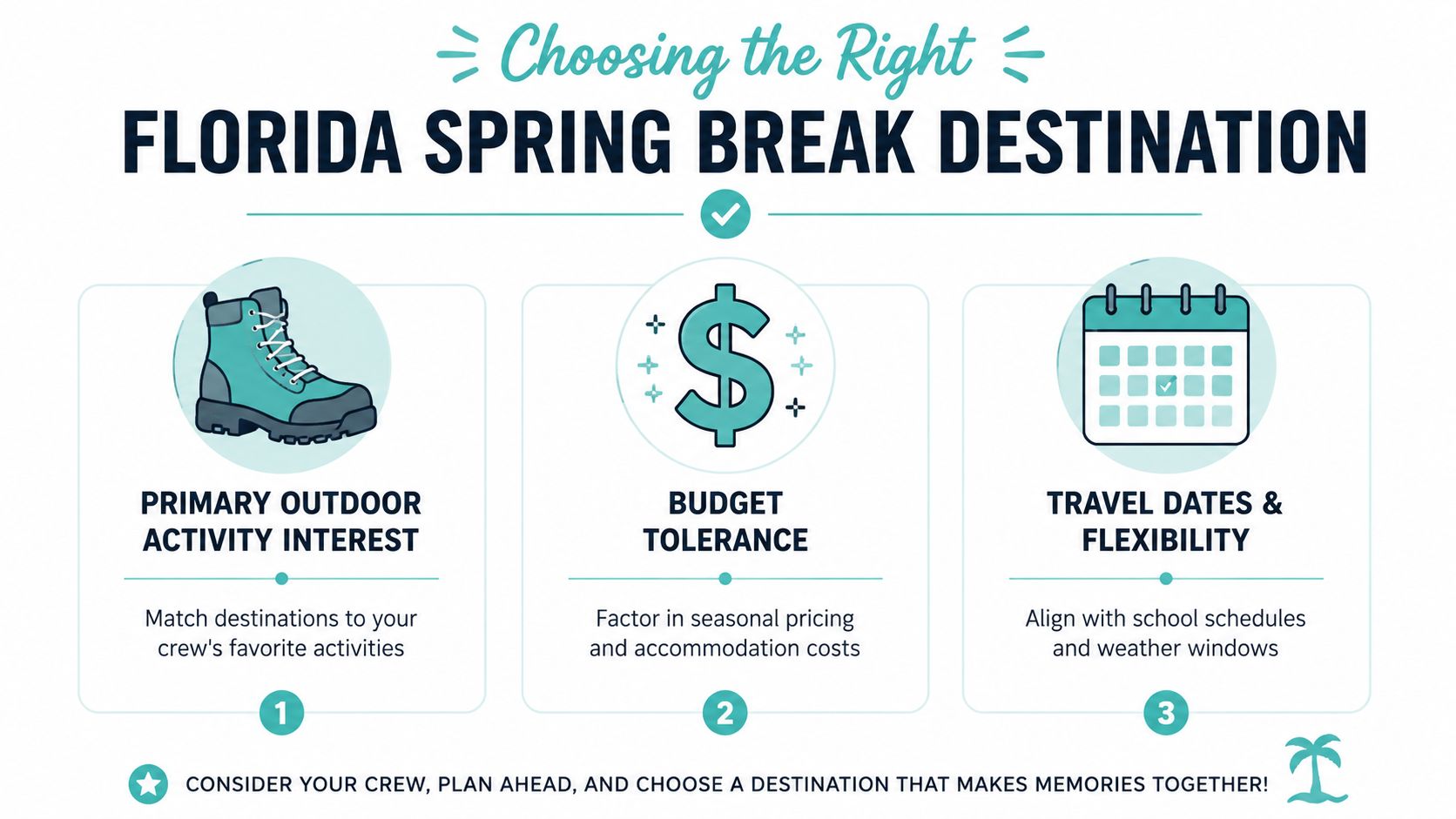
Check timing before committing
Tide charts matter on the coast, while spring runs, water levels, and weather windows matter inland. State park reservation systems and local outfitter calendars can reveal whether the desired launch time is realistic. Families should reserve the highest-priority activity first, then build flexible beach, dining, and rest days around it.
The trade-off is straightforward. The most secluded paddling areas often require longer drives, limited cell service, and more self-sufficiency. Convenient beach towns offer easier meals and rentals, but they can bring heavier crowds, tighter enforcement, and more expensive parking.
A quick pre-booking check should answer these questions:
- Is the main activity suitable for the youngest participant?
- Can the family tolerate the required drive and launch timing?
- Does the budget include parking, gear, guides, and weather-related changes?
- Is there a backup activity nearby if wind, lightning, or closures cancel the water plan?
- Can the family reserve the essential outing before travel?
Top Outdoor Activities for Every Age Group
The right activity depends less on the destination's reputation than on the youngest participant's stamina, swimming confidence, and tolerance for sun and motion. Families often have a better day when adults split the group by ability instead of forcing everyone into one demanding excursion.
Stand-up paddleboarding works well on calm mangrove routes for children who can balance, follow instructions, and stay engaged while moving slowly. Tandem kayaking gives younger children more stability because an adult controls the boat, pace, and steering. It's usually the more forgiving choice when a child tires quickly or becomes distracted.
Compare water activities honestly
Snorkeling ranges from a short shore-based session to a boat-dependent reef trip. Shore access can make it easier to warm up, rest, and leave the water when conditions change. Boat trips may reach more remote sites, but they add fixed departure times, boat motion, current considerations, and less flexibility for a nervous swimmer.
Bioluminescence tours create a memorable experience for teens and adults who can handle late hours. They're a poor match for a child who becomes overtired after dinner. Daytime wildlife encounters, including manatee viewing at Three Sisters Springs, usually fit family schedules more naturally, although wildlife should always be observed without feeding, touching, or harassment.
| Activity | Best Ages | Skill Level | Session Length | Booking Lead Time |
|---|---|---|---|---|
| Calm-water paddleboard loop | Older children and teens | Beginner to intermediate | Short or moderate outing | Reserve during peak weeks |
| Tandem kayaking | Younger children with an adult | Beginner | Short to moderate outing | Reserve boats and child gear early |
| Shore-based snorkeling | Confident swimmers and supervised older children | Beginner to intermediate | Flexible, short sessions | Check access and equipment availability |
| Boat-based reef snorkeling | Older children and adults comfortable on boats | Intermediate | Longer fixed departure | Book early around school breaks |
| Bioluminescence tour | Teens and adults | Beginner with guide | Late evening outing | Advance booking is sensible |
| Daytime manatee viewing | Families with varied ages | Beginner | Flexible daytime visit | Confirm access and tour timing |
A useful family setup is a paddleboarding area with a clear return route. Advanced riders can extend their loop while beginners stay close to the launch, provided the group has a reliable meeting point and adults maintain appropriate supervision.
Families preparing for shore time, rest stops, and active children can use a durable outdoor play gear guide to think beyond the watercraft itself. The practical question is what keeps children comfortable and occupied between launch, lunch, and the next weather window.
For guided mangrove routes, PADL's mangrove kayaking tours offer a structured option for families who want local route knowledge without managing every navigation decision themselves.
Packing and Safety Essentials for Florida Waters
Florida spring break packing needs to account for heat, glare, sudden weather, insects, and changing water conditions. A swimsuit and towel aren't enough for a full day outside, especially when children alternate between paddling, walking, waiting, and eating.
Build a layered water kit
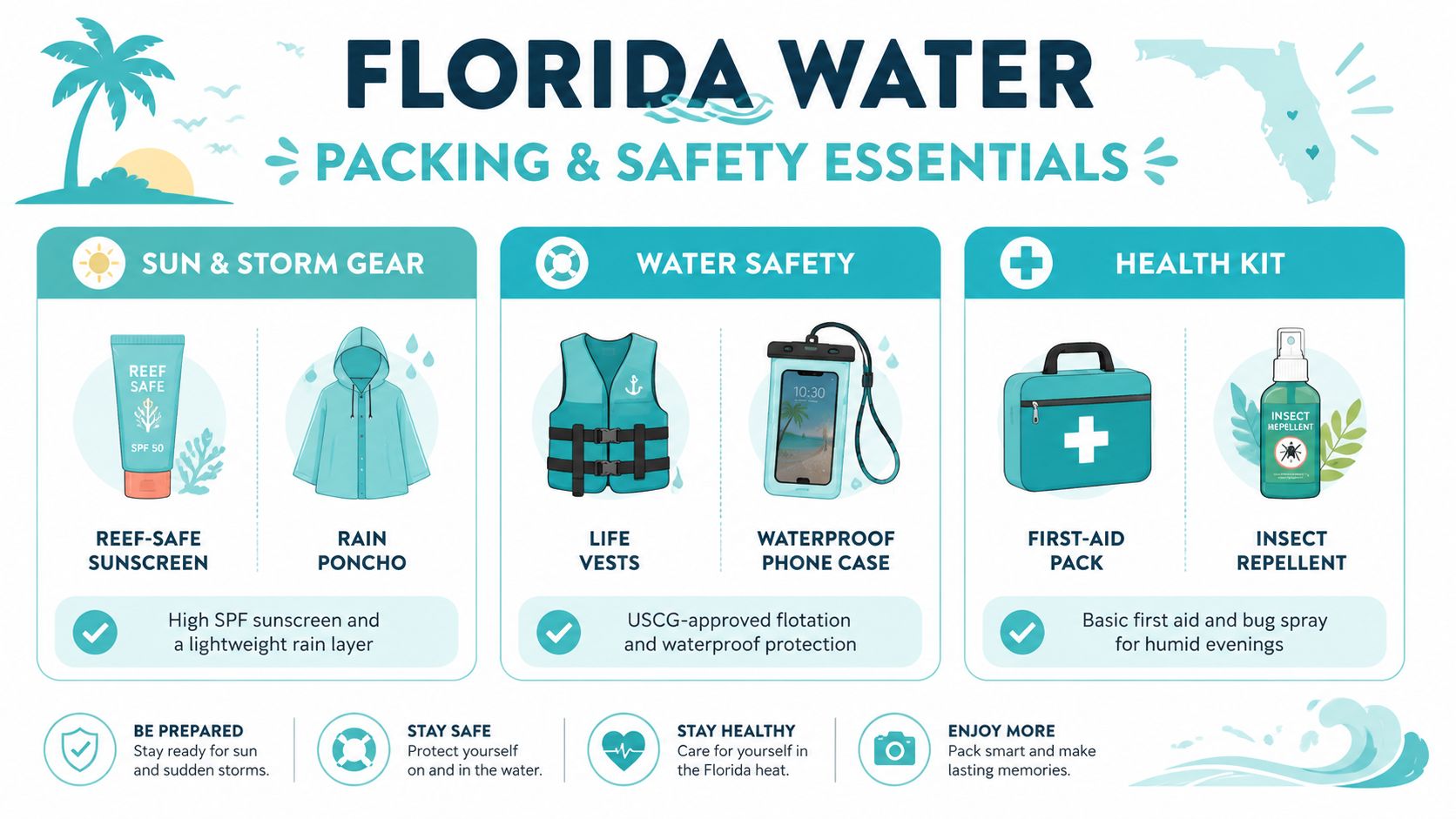
UPF-rated shirts reduce the amount of skin exposed to strong sun, while polarized sunglasses help cut glare and make submerged hazards easier to see. Families should pack broad-spectrum sunscreen, reapply it according to the product label, and bring a lightweight rain layer for fast-moving showers. Where a marine sanctuary or operator requires it, use a reef-conscious formulation.
Each participant needs drinking water that remains accessible during the outing. Insulated containers help keep fluids usable in heat, and electrolyte products can support long active days, particularly when children are sweating and not asking for drinks. Food should stay sealed, especially at beach campsites, because raccoons and other wildlife quickly learn where unattended meals are stored.
Treat weather as a go or no-go decision
Families should check local beach forecasts, marine conditions, radar, and lightning alerts before leaving the lodging. A darkening sky isn't automatically a cancellation, but lightning, a sharp wind shift, building waves, or a deteriorating forecast should end the outing before the group is committed far from shore.
Leave before the children are exhausted. A short, successful paddle is safer and more enjoyable than extending the route until someone is cold, thirsty, or unable to follow directions.
Swimmers should stay near staffed lifeguard towers when possible, check beach forecasts, and never swim alone. A double red flag means the water and/or beach is closed to the public under the cited local advisory. Florida spring-break beach safety reminders should be treated as a starting point, followed by the current beach's posted instructions.
Children under six must wear a properly fitted life jacket while required by Florida boating rules, and families should use U.S. Coast Guard-approved flotation sized for each wearer. The exact rules can vary by activity and vessel, so the operator or launch authority should confirm requirements before departure. A waterproof phone case, first-aid kit, insect repellent, spare dry clothes, and a whistle belong in the day pack.
Florida's seasonal manatee zones require boaters to slow down from April 1 through November 15 in designated areas. The Florida Fish and Wildlife Conservation Commission's seasonal manatee-zone guidance explains why speed control matters. Manatees are protected, and feeding, harassing, or harming them is illegal. Injured, distressed, orphaned, sick, or dead manatees should be reported to the Wildlife Alert Hotline at 888-404-FWCC (3922), as stated in the agency's wildlife guidance.
For a practical checklist before launch, families can review PADL's paddleboard safety guide.
Sample Itineraries for a Week of Adventure
A successful week should alternate demanding activity days with recovery, weather flexibility, and simple local outings. Families shouldn't schedule every major reservation back-to-back. One delayed tour or tired child can otherwise disrupt the entire trip.
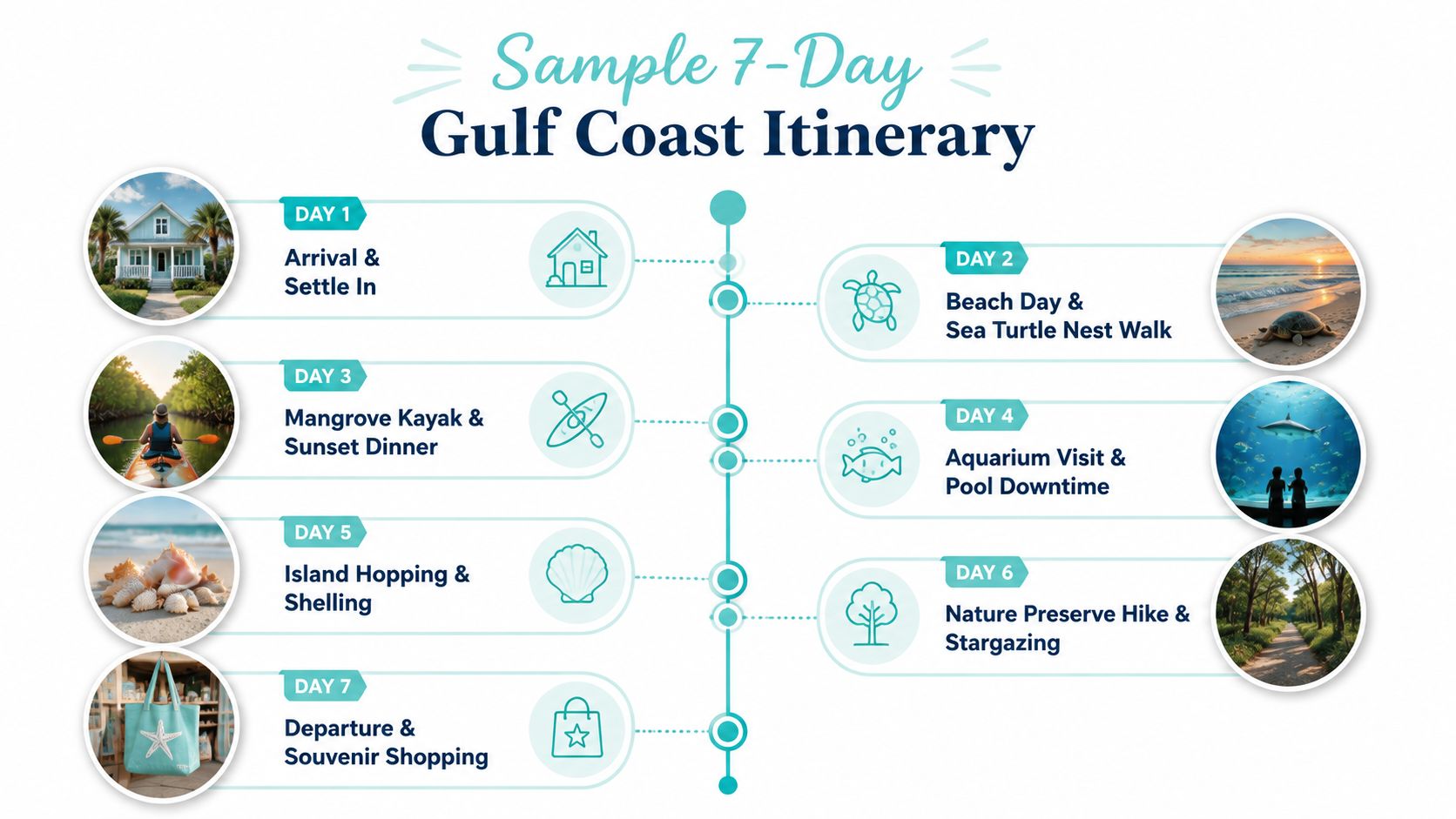
Gulf Coast route
Base the week around Sarasota and Siesta Key, then keep daily drives short where possible.
- Day 1: Arrive, unpack, and check beach access and parking.
- Day 2: Reach the beach early, then leave room for a slow afternoon.
- Day 3: Paddle a mangrove route and plan a relaxed evening.
- Day 4: Use a weather-flex day for an aquarium visit, pool time, or beachcombing during a favorable tide.
- Day 5: Explore an island or shelling area, with supplies packed before departure.
- Day 6: Visit Myakka River State Park or another nature area, then keep the evening quiet.
- Day 7: Shop locally and depart without scheduling a final water activity.
The supplied itinerary visual emphasizes the same useful rhythm, arrival, beach time, kayaking, downtime, island exploration, nature, and departure.
Atlantic Coast route
Use the Space Coast as the base. Front-load the Kennedy Space Center visit and any boat-dependent activity, then leave a buffer before snorkeling at Sebastian Inlet. A1A traffic can turn short coastal transfers into slow ones, so early arrivals and consolidated driving matter.
Bioluminescence belongs on a late day followed by a slower morning. Families with young children should consider replacing it with a daytime wildlife or beach outing.
Springs Country route
North Central Florida rewards a compact plan only when driving distances are accepted upfront. Link Ichetucknee Springs tubing, Rainbow Springs snorkeling, and Ocala National Forest hiking across separate days, with recovery between water-heavy and walking-heavy activities.
Arrive early for the most popular spring access, pack food before leaving the main roads, and download essential directions before entering areas with limited connectivity. Weather flexibility matters here as much as on the coast, particularly when a thunderstorm changes a river or hiking plan.
These itineraries work because they protect the family's energy. The best Florida spring break memory may be the second paddle, not the longest one.
PADL helps families plan Florida outdoor days through paddleboard and kayak rentals, guided experiences, lessons, and access to waterways in coastal and inland recreation areas. Visit PADL to find a suitable outing, check available equipment, and build a spring-break plan around the water rather than the busiest beach strip.